Puno is Peru's gateway to Lake Titicaca and the country's most prominent altiplano city, spread across the steep slopes that rise from the western shore of the lake at 3,830 metres above sea level. It is not a beautiful city — the streets are dusty, the buildings utilitarian, the climate raw — but it is the practical base for almost every trip onto the Peruvian side of the lake, and it carries a strong cultural identity as the heart of southern Peru's Aymara world.
The town itself sits below a hill called Cerro Azoguini, with the main streets descending toward the harbour. The pedestrianised Jirón Lima is the central drag of restaurants and tour agencies. A few blocks west, the Plaza de Armas holds the 18th-century Cathedral of San Carlos Borromeo, one of the great mestizo-baroque facades in the Andes. From the Mirador Kuntur Wasi above town, the whole city, the harbour, and the deep blue of the lake spread out below.
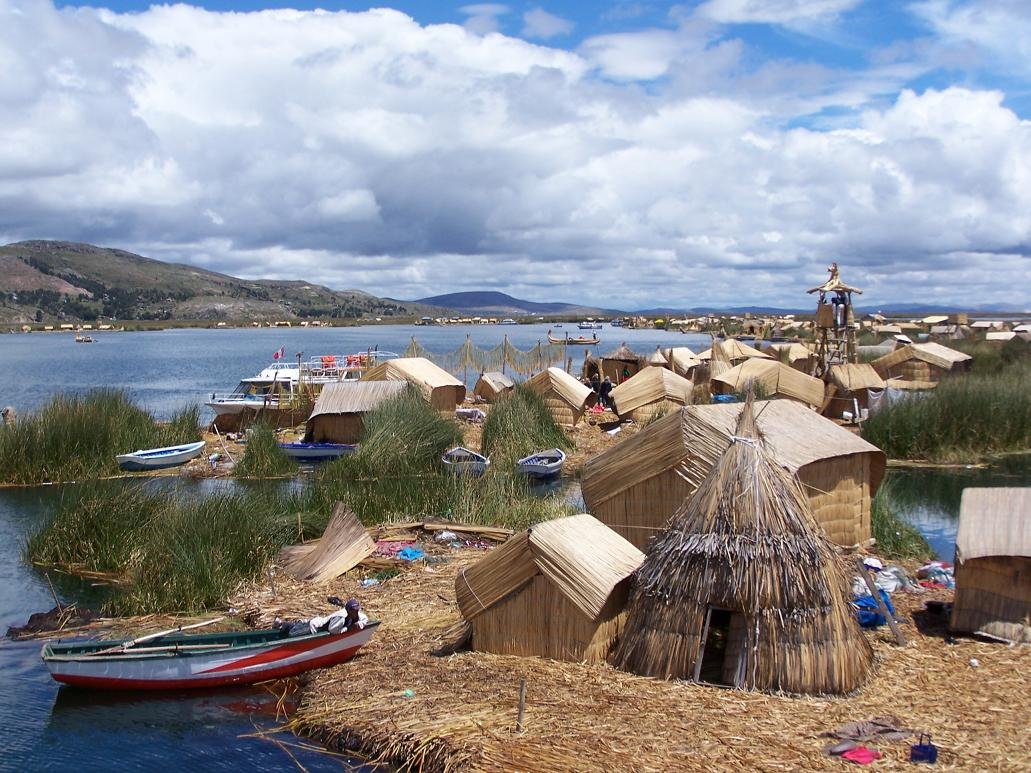
The real attractions are on and around the water. Boats leave the harbour several times a morning for the Uros floating islands, built and rebuilt from cut totora reeds. Day-trip and overnight boats continue to Taquile, famous for its men's knitting tradition, and to Amantani, where families take in homestay guests. Inland, the funerary towers of Sillustani sit on a wind-blasted promontory above Lake Umayo — the standout half-day trip from the city.
Most visitors stay one or two nights and combine a day on the lake with a half-day trip to Sillustani. Time it for the first week of February — when the city explodes into the Fiesta de la Candelaria, one of South America's largest religious festivals — and you will see a different Puno entirely, packed with masked dancers, brass bands, and tens of thousands of pilgrims. Altitude is the main physical challenge. The air is thin enough that the climb up Jirón Lima can leave you breathless on your first day. Move slowly, drink coca tea, and acclimatise in Cuzco or Arequipa before arriving if you can.