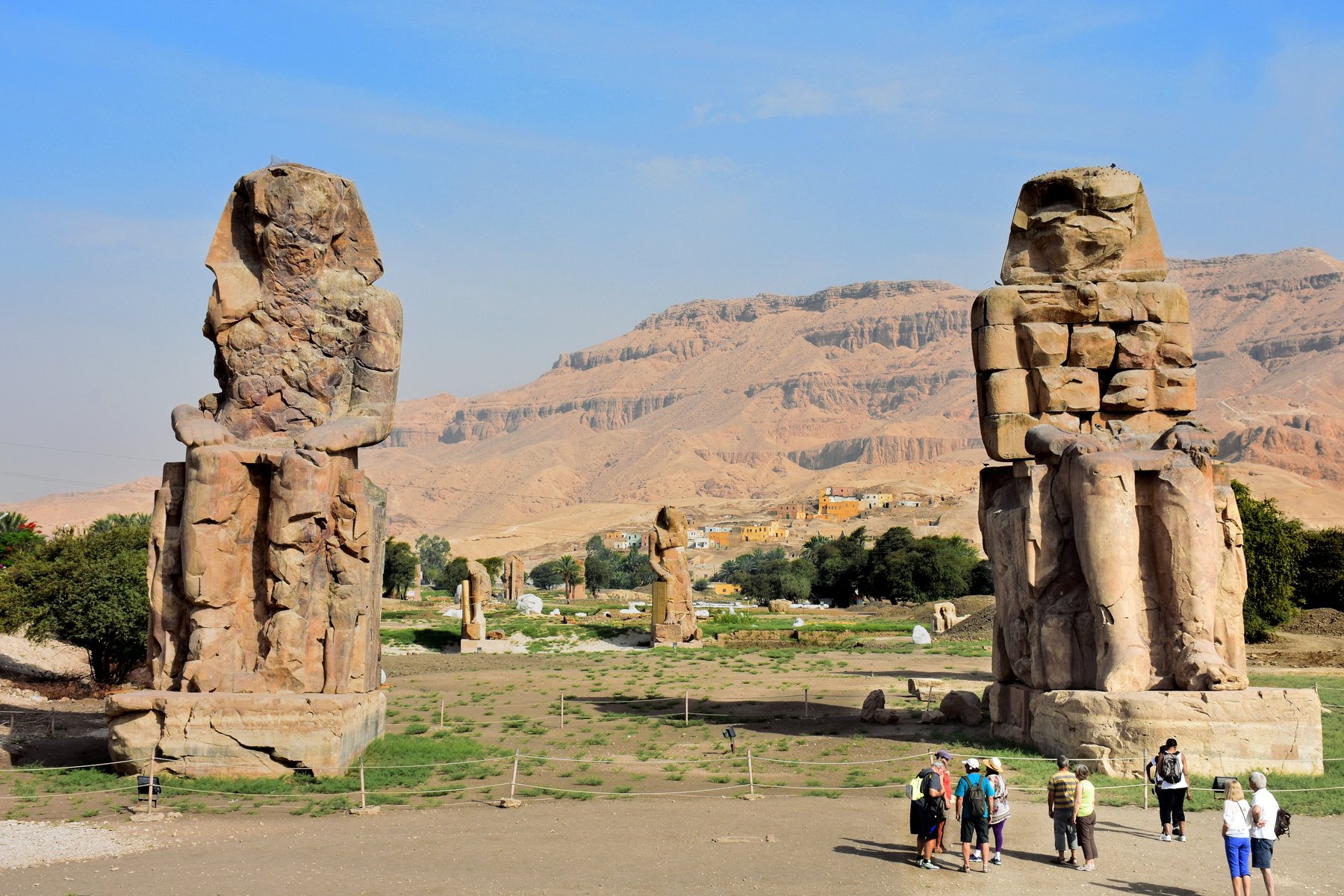
The Colossi of Memnon are a pair of massive stone statues standing 18 metres tall on the western bank of the Nile at Luxor, facing east across the river toward the rising sun. They are the most visible remnant of the funerary temple of Amenhotep III, built in the 14th century BC and once the largest temple complex in ancient Egypt. The Nile's annual floods destroyed the temple over the centuries, but the two quartzite colossi survived.
The statues depict the pharaoh seated on a throne, though their faces have long since eroded away. In antiquity, one of the statues was known for producing a singing or moaning sound at dawn — ancient Greek and Roman travellers came specifically to hear it, attributing it to the mythical Memnon greeting his mother Eos, goddess of the dawn. The sound stopped after Roman repairs in the 3rd century AD.
The Colossi are the first monument you pass when crossing to the west bank. They stand in open ground beside the road and are free to visit. Most travellers see them en route to the Valley of the Kings and the other west bank temples.