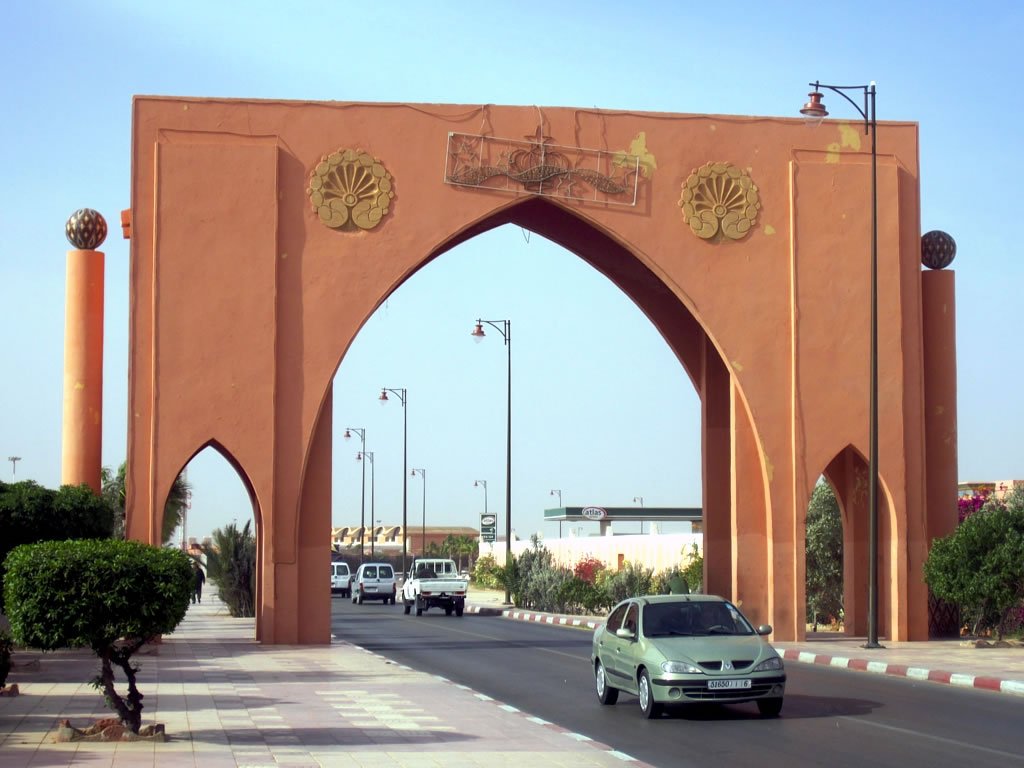
Laayoune (El Aaiún) is the largest city in Western Sahara, with over 200,000 inhabitants and the de facto administrative capital of the Moroccan-controlled territory. It is an unusual place — a city that has seen rapid growth since Morocco took control of the region after the Green March of 1975, and where Moroccan soldiers, UN employees, Sahrawi locals, and Moroccan immigrants looking for work have all come together.
The southern "lower" town was built by the Spanish and is now run-down but makes for an interesting walk. The old Spanish cathedral still bears a rusting sign reading "property of the Spanish government." The Souk Djmaa (chicken market) area has cheap hotels and distinctive architecture — eggshell-domed roofs designed to keep houses cool. The "upper" town, developed since 1975, has striking modern monuments. The Great Mosque stands in the Place du Mechouar, and the Colline des Oiseaux is a landscaped garden where exotic birds are housed in cages with blinds to protect them from sandstorms. The two halves of the city are separated by the dry Saguia el-Hamra wadi.
Laayoune is in a politically sensitive area — the status of Western Sahara remains disputed. Check your embassy’s advice before visiting, and be discreet with photography, particularly around military installations.