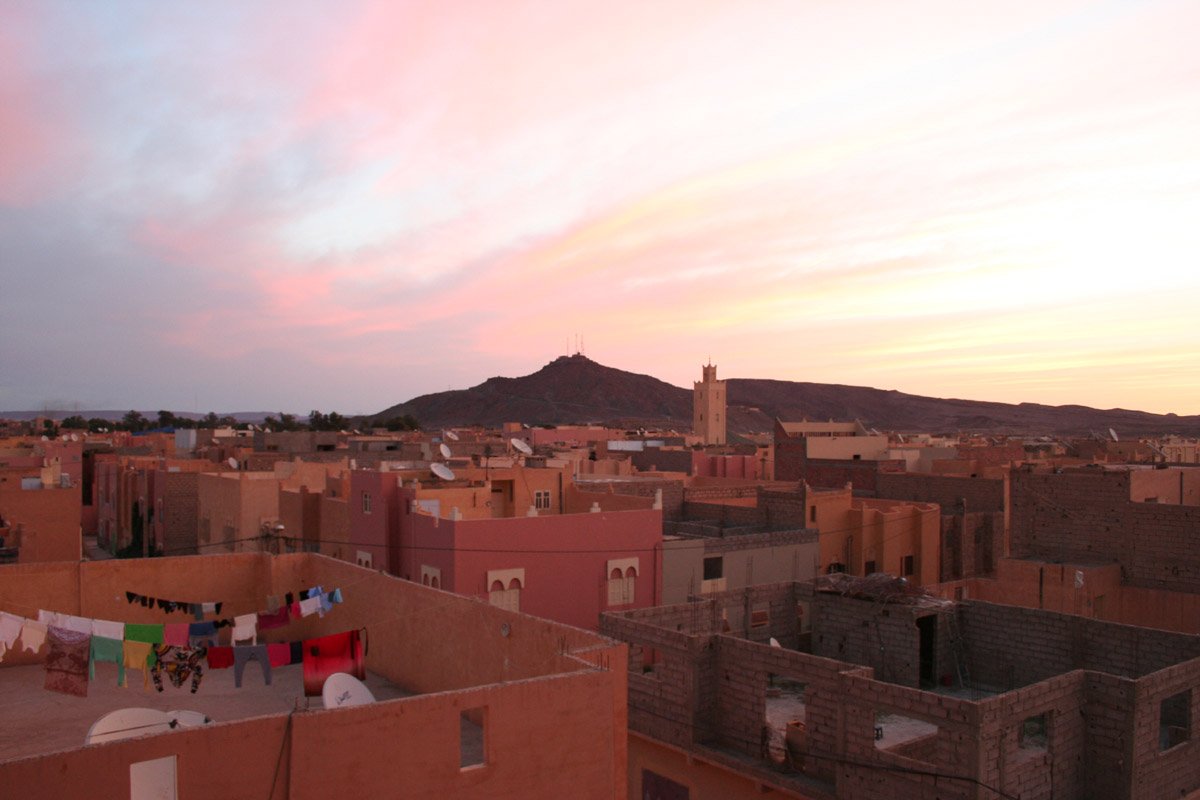
Erfoud
©
Erfoud

Erfoud

Dusty Moroccan desert gateway town near palm groves, fossil country, and the Erg Chebbi dunes.

Erfoud is a French-built administrative town from the 1930s, its dusty red buildings giving it a pleasantly sleepy, almost ghost-town atmosphere. The town itself is modest, but it sits at the gateway to some of Morocco's most extraordinary desert scenery. The road south from Er-Rachidia is spectacular — ancient Berber kasbahs rising from palm groves that stretch as far as the eye can see.

Most travelers use Erfoud as a base rather than a destination. From here you can reach Merzouga and its famous Erg Chebbi dunes, or head to Rissani, a historic oasis town with a crumbling palace and a lively market. If you're lucky, you might experience a full desert sandstorm — a disorienting, all-encompassing event that briefly turns the world orange.

Guide

Day Trips

The reason most travellers stop in Erfoud is what lies around it. Merzouga and the great dunes of Erg Chebbi are 50 km south — the classic Saharan landscape of orange dune crests against a thin line of palm. Rissani, half an hour down the road, is the historic capital of the Tafilalet, with a sprawling souk (busiest on Sunday, Tuesday and Thursday), the ruins of medieval Sijilmassa, and the mausoleum of Moulay Ali Cherif, the founder of Morocco's current Alaouite dynasty.

Guide

Getting Around

Erfoud itself is very small. Avenue Hassan II and Avenue Mohammed V meet at the center, and that's where most things happen. From there you can walk to a couple of nearby kasbahs, or rent a bike to explore at your own pace.

To get to Rissani find a place in a grand taxi, they fill up quickly, especially on market days.

Guide

Getting There

Most visitors arrive from Er-Rachidia, and most leave the same way. The road is spectacular — wide desert plains framed by the Atlas foothills, with kasbahs emerging from the palmeraie. Frequent grand taxis run between Erfoud and Er-Rachidia. For anywhere else, you'll need your own transport or a hired driver.

Guide

Things to Do

Erfoud's appeal is less about the town itself and more about what surrounds it. The main square where Avenue Hassan II meets Avenue Mohammed V is the social hub — a good place to sit with a mint tea and watch the world go by. From the center, short walks lead to a couple of nearby kasbahs, and you can rent a bike to explore the palm groves and earthen fortresses that dot the surrounding oasis.

The big draw for most visitors is the nearby Erg Chebbi dunes at Merzouga, about 50 km south. Erfoud is also known for its marble-like fossil rock — the dark stone quarried here is packed with ancient marine fossils and sold in workshops and shops throughout town.

Guide

When to Go

Visit between October and April. The Sahara summers are brutal — Erfoud sees average highs above 40 °C in July and August, with sandstorm conditions not uncommon, and most of the desert excursions from town become unpleasant or unsafe. October to early November is the date harvest, with the Festival des Dattes taking over the centre for a long weekend of music, processions, and tasting.

December and January are cold at night — drop close to freezing in the dunes — but the days are crisp and the light is at its best. February through April is the most reliable window: warm days, cool nights, clear skies, and dunes still in their winter colour.