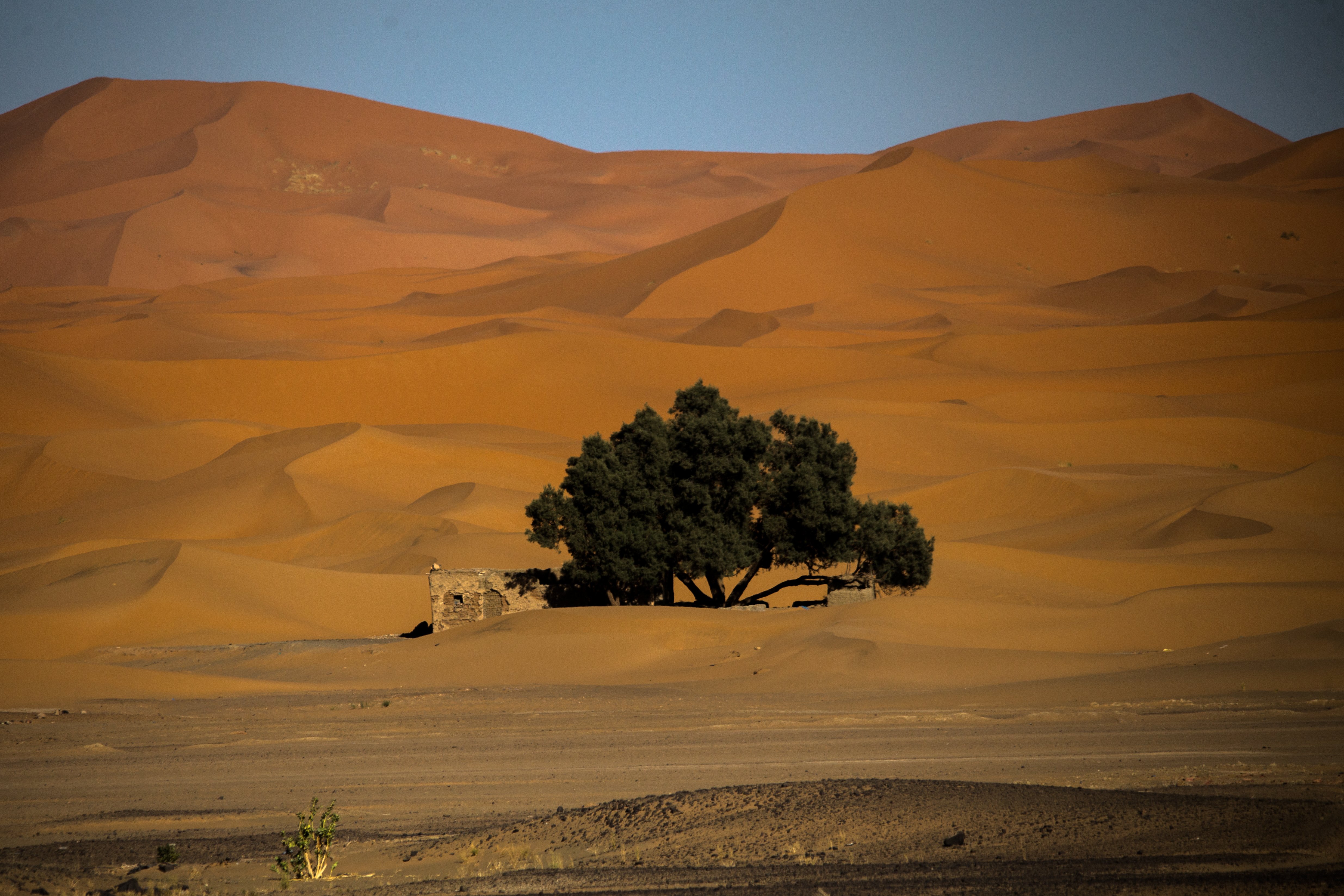
Merzouga
©
Merzouga

Merzouga

Desert-edge Berber village beside Erg Chebbi's high dunes near the Algerian border.

Merzouga is a small Berber village on the western edge of the Erg Chebbi, a 28-kilometre stretch of spectacular sand dunes in southeastern Morocco, close to the Algerian border. The dunes reach up to 150 metres high and shift from pale gold to burnt orange depending on the sun — sunrise and sunset are genuinely unforgettable, and for most visitors Erg Chebbi is one of the single best experiences in Morocco.

The usual programme is a camel trek from the village out into the dunes, overnight in a desert camp (ranging from basic Berber tents to full glamping with beds and ensuite bathrooms), and a sunrise return. Longer three- to five-day treks cover a wider sweep of the desert; 4×4 trips reach the nomadic encampments, the fossil quarries, and the seasonal Lake Dayet Srji, where pink flamingos appear after spring rains.

Merzouga is a long drive from anywhere — 8–10 hours from Marrakech or Fes via the Dadès and Todra gorges. Most visitors arrive as part of a longer southern Morocco loop. The nearest town of any size is Rissani to the north.

Guide

Getting There

Merzouga is a long way from anywhere. The nearest airport is at Errachidia (ERH), about 150 kilometres north, which has connections to Casablanca; from there it is two hours by road. The more commonly used airports are at Ouarzazate (WAZ, about 320 kilometres west) or Fes (FEZ, about 390 kilometres north).

The classic approach by road is the southern Morocco loop: Marrakech south over the Tizi n'Tichka pass to Ouarzazate, then east through the Dadès Gorge and Tinerhir (for the Todra Gorge), then on to Erfoud and Rissani before reaching Merzouga. This drive from Marrakech takes 8–10 hours without stops, and most travelers break it into two days. From Fes via Ifrane and Midelt is an alternative northern route, equally scenic, taking around 7–8 hours.

Buses (CTM and other companies) run from Marrakech, Fes, and Casablanca to Rissani, from which shared taxis cover the 25 kilometres to Merzouga. The journey is long and the connections are not always reliable. Most travelers on a tight schedule hire a car or book a guided tour for the southern loop.

Guide

Things to Do

Merzouga exists for one reason: the dunes. The village has grown up purely to serve travelers heading into Erg Chebbi, and nearly everything worth doing here is connected to the sand. Camel treks, overnight desert camps, 4WD excursions, and sunrise watching on the crest of a 150-metre dune are the core activities. Beyond the dunes themselves, the fringes of the desert hold a seasonal lake with flamingos, a village with living Gnawa music traditions, and roads that push toward the Algerian border through stony hammada.

Guide

When to Go

The desert climate at Merzouga means extreme heat in summer (June to August), when temperatures regularly exceed 45°C and the village is nearly deserted. This is not a time to visit unless you specifically want solitude and don't mind the heat.

The best months are October to April. Spring and autumn — September to November and March to April — are ideal: warm days, cool nights, and manageable crowds. October and March are particularly good. Winter (December to February) can be cold at night, occasionally very cold (below zero in the dunes), but daytime temperatures are comfortable and the light is excellent. This is also when Dayet Srji is most likely to have water and flamingos.

The camel trek overnight requires warm layers even in shoulder season: desert temperatures drop sharply after sunset and the predawn hour before sunrise can be genuinely cold. The summer months, if you must go, are best done at altitude — the Dadès and Ziz valleys to the north are significantly cooler.