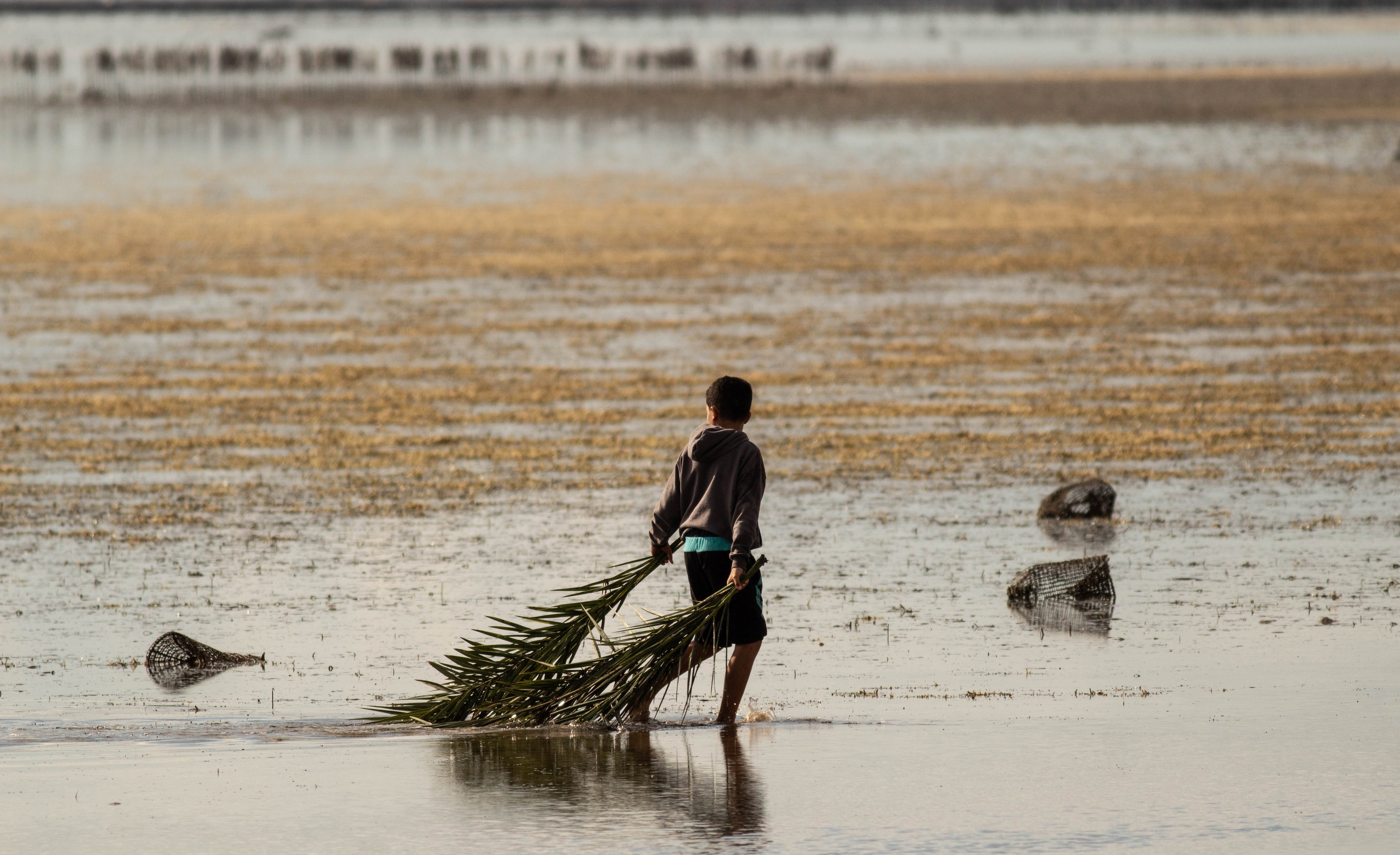
The Kerkennah Islands lie about 20 km off the coast of Sfax in the Gulf of Gabès — a flat, sandy archipelago, mostly two main islands (Gharbi and Chergui) connected by a Roman causeway. Nothing here rises more than 13 metres above sea level. The horizon is enormous, the light is hard and clean, and the water is shallow enough that you can wade out a hundred metres before it reaches your waist. The whole place feels like a different country from mainland Tunisia: slower, quieter, more Berber than Arab, and visibly poorer.
The islands are best known for their traditional fishing — the charfia, V-shaped traps built of palm fronds stuck into the shallow seabed, have been used here since antiquity and are now recognised by UNESCO as intangible cultural heritage. Most of the population still lives from the sea and from date palms. The villages are small and mostly built in a low, whitewashed local style, and donkey carts are still as common as cars. Remla is the administrative centre and the largest settlement; the ferry from Sfax docks at Mellita on the western island.
This is a place to slow down and do very little. The beaches are long, flat, and largely empty; a small ribbon of low-key tourist hotels sits at Sidi Frej on the eastern island, mostly catering to French and Tunisian families. The ruins of the Roman fort at Borj El Hissar stand at the western tip, slowly being undermined by the sea. The bicycles you can rent at most hotels are the right way to explore — the whole place is flat, the roads are quiet, and distances are short. Three or four days is plenty.