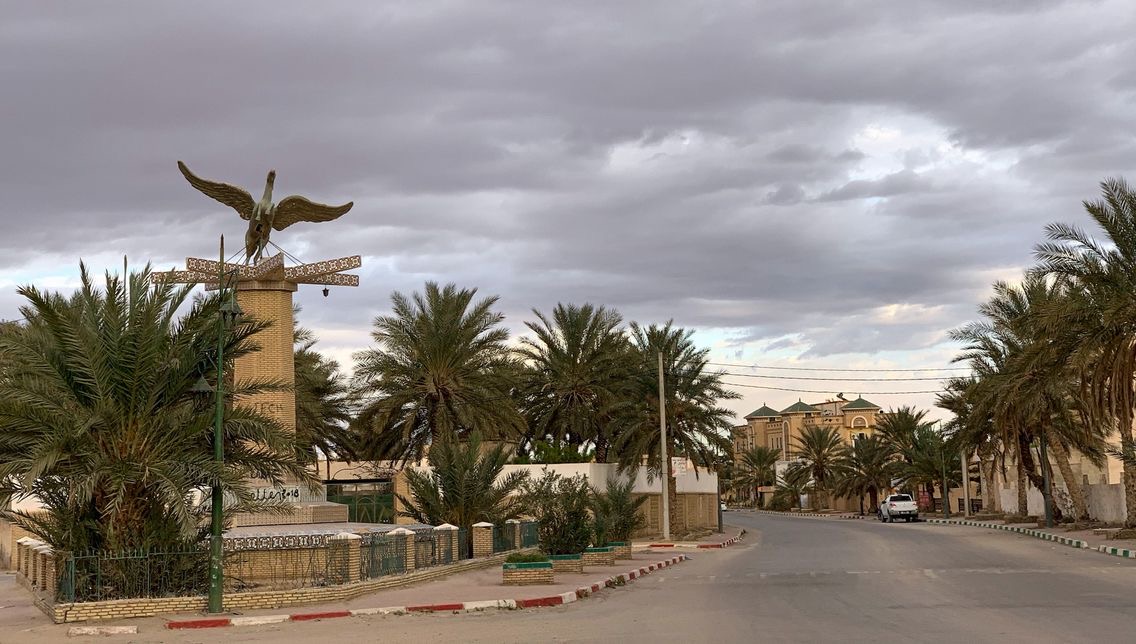
Tozeur sits on the northern edge of Chott el-Jerid, the vast salt lake that dominates southwestern Tunisia. Once a waystation for trans-Saharan caravans trading with the Mediterranean coast, it is now famous above all for its dates — more than 200,000 palms in the palm grove draw their water from hundreds of natural springs, and the groves are extraordinary.
The Ouled el-Hadef medina is the finest reason to come here. Its architecture is unlike anywhere else in Tunisia: intricate geometric brickwork in warm ochre, with patterns that vary from house to house and lanes that branch and merge without logic. The Dar Chariet museum occupies a reconstructed Tunisian palace and displays rare manuscripts, ceramics, jewellery and the material culture of the Saharan trade routes. The medina is also a good hunting ground for souvenirs — locally woven carpets and Berber jewellery in particular.
Tozeur is the main base for excursions into the surrounding desert. The mountain oases at Tamerza and Chebika, about 70 km north, are dramatic — spring-fed palm groves and waterfalls tucked into bare limestone canyons. The Chott el-Jerid causeway crosses 75 km of glittering salt flat south to Kebili: stop partway and walk onto the crust.
Tozeur lies 450 km south-west of Tunis, 95 km south-west of Gafsa, and 210 km west of Gabes.