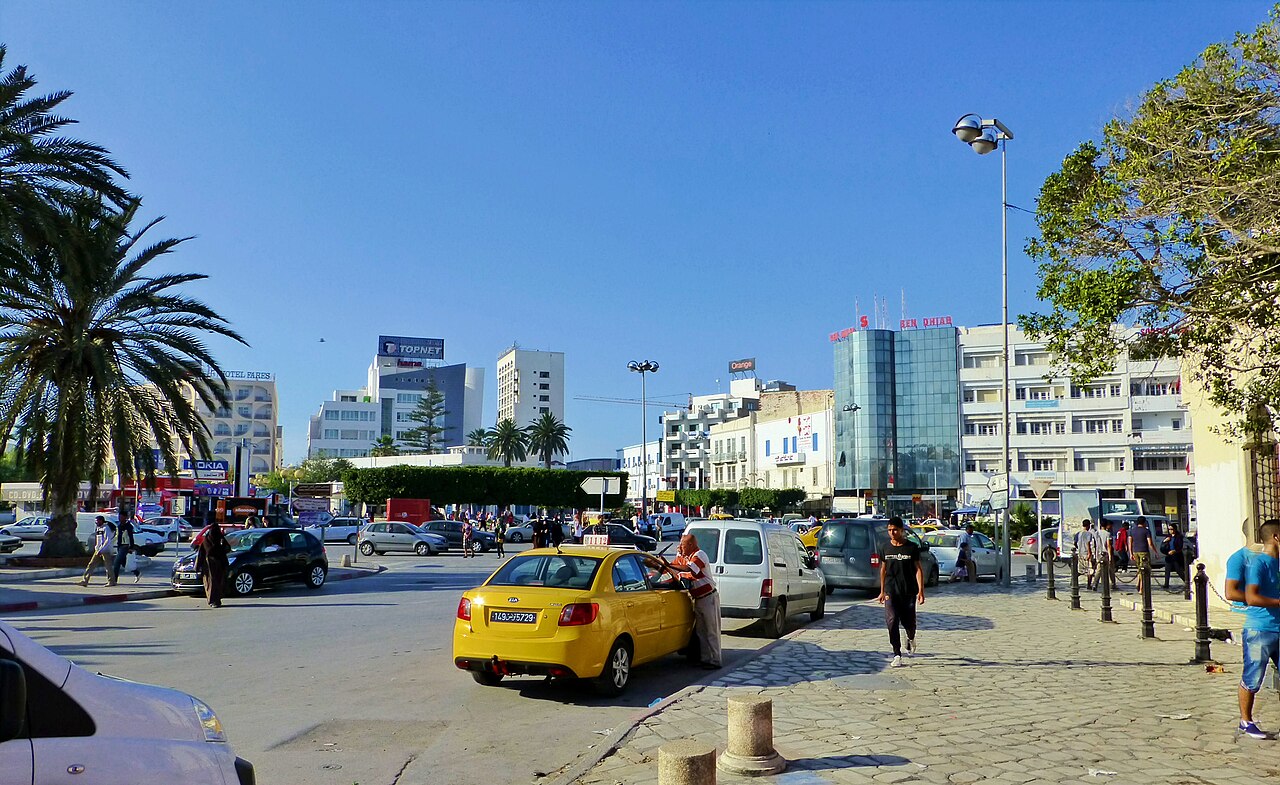
Sousse is Tunisia's third-largest city and the main beach resort on its central coast — a city of about 270,000 people about 140 km south of Tunis, with a long sandy Mediterranean beach fringed by resort hotels and a UNESCO-listed medieval Medina at its heart. It is the easiest beach destination in Tunisia for European travellers (flights direct from several European cities to nearby Monastir Airport) and is the country's best combination of classic Mediterranean beach resort and proper Arab-Islamic old town.
The Medina, surrounded by 9th-century walls, is one of the best-preserved in North Africa. At its heart stand the two defining buildings of early Islamic Sousse: the Great Mosque, begun in 851 CE in a severe fortified style that borrows directly from the earlier Ribat next door — a Byzantine-era coastal watchtower converted into an Aghlabid monastery-cum-fortress for Muslim warrior-monks guarding the coast against Christian raids. The Ribat can still be climbed for a fine view of the Medina and the harbour. A short walk away, the Sousse Archaeological Museum, housed in the old Kasbah, holds the second-finest collection of Roman mosaics in Tunisia after the Bardo in Tunis — a reminder that Sousse is the modern successor of the Roman city of Hadrumetum, once one of the most important cities of Roman Africa. Beneath the city lie the remarkable Catacombs of Sousse, one of the largest early Christian burial complexes outside Rome.
Beyond the Medina, Sousse is a working Tunisian port and university town, with a pleasant Corniche running out to the resort strip of Port El Kantaoui 10 km north — a mock-Andalusian marina village built from scratch in the 1970s that is now the main concentration of upmarket hotels. The beaches in both the city and the resort are good: long sandy stretches and shallow warm water. From Sousse you can easily day-trip to Kairouan (Islam's fourth holiest city, and home to one of the oldest mosques in North Africa), to Mahdia (a quieter old port town further down the coast), to Monastir (another Ribat and the birthplace of Habib Bourguiba), and even to El Jem with its spectacular surviving Roman amphitheatre — the third-largest in the Roman world after the Colosseum and Capua.