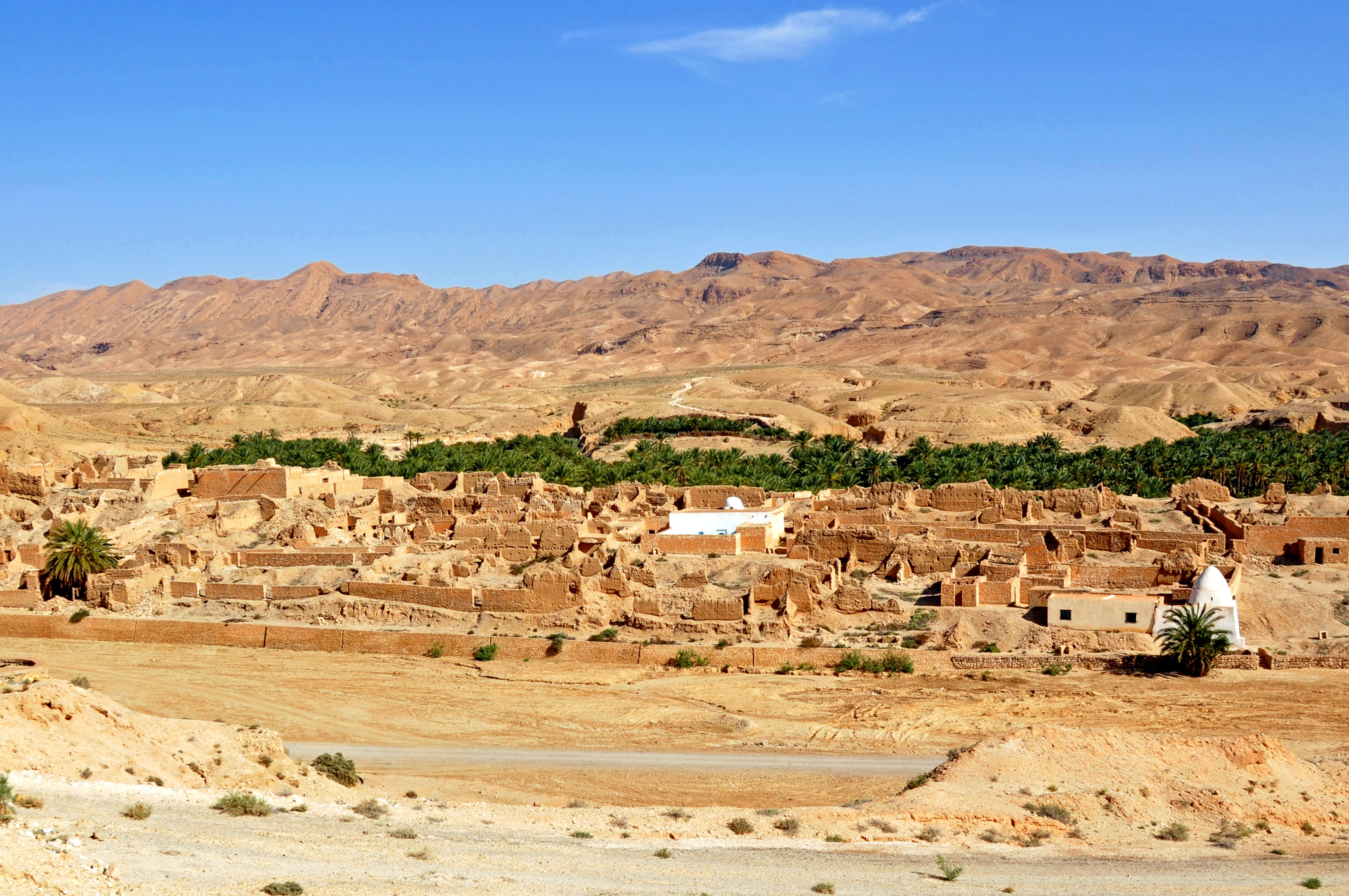
Tamerza
©
Tamerza

Tamerza

Western Tunisian mountain oasis of waterfalls, ruined stone houses, and canyons near the Algerian border.

Tamerza, also written Tamaghza, is the largest of the mountain oases on Tunisia's far western edge. It sits where the Sahara rises into the Atlas foothills, with palms and running water tucked under bare ochre cliffs. The village itself is quiet, but the setting is one of the most dramatic in southern Tunisia.

The old settlement, Tamaghza el Gdima, was abandoned after catastrophic floods in 1969. Its roofless stone houses still stand above the modern village, sun-baked and partly collapsed, with the same colour as the surrounding rock. Nearby, the Tamerza waterfall drops into a small gorge that feels improbable after the dry desert road.

Tamerza is usually visited with Chebika and Mides in a half-day circuit from Tozeur. That is a sensible way to see the three oases, but Tamerza rewards a slower stop: climb through the old village, walk into the canyon, and wait for the late light to bring out the red and gold in the cliffs.

The Algerian border is close and firmly closed to travellers. Stay on marked roads and paths, carry water, and take local advice after rain; the same wadis that make the oasis green can turn violent during flash floods.

Guide

Getting There

Tamerza is about 70 kilometres northwest of Tozeur by road. The usual route follows the paved desert road past Metlaoui and the mountain-oasis turn-offs, and takes around 90 minutes without stops. Most travellers visit on a 4WD or minibus excursion from Tozeur that also includes Chebika and Mides.

Independent travel is possible with a rental car, but public transport is poor and not useful for a one-day visit. Bring water and sun protection even in winter; shade is limited outside the palm groves. After heavy rain, ask locally before entering narrow gorges, as flash floods are the serious danger in this part of Tunisia.

Guide

Things to Do

Tamerza is a small oasis rather than a town of many sights. The point is the contrast: water and palms in a bare mountain landscape, abandoned stone houses above a modern settlement, and canyons cut through rock that was once seabed. Most visitors combine it with Chebika and Mides, but it is worth lingering long enough to walk the old village and the waterfall gorge without rushing back to the vehicle.