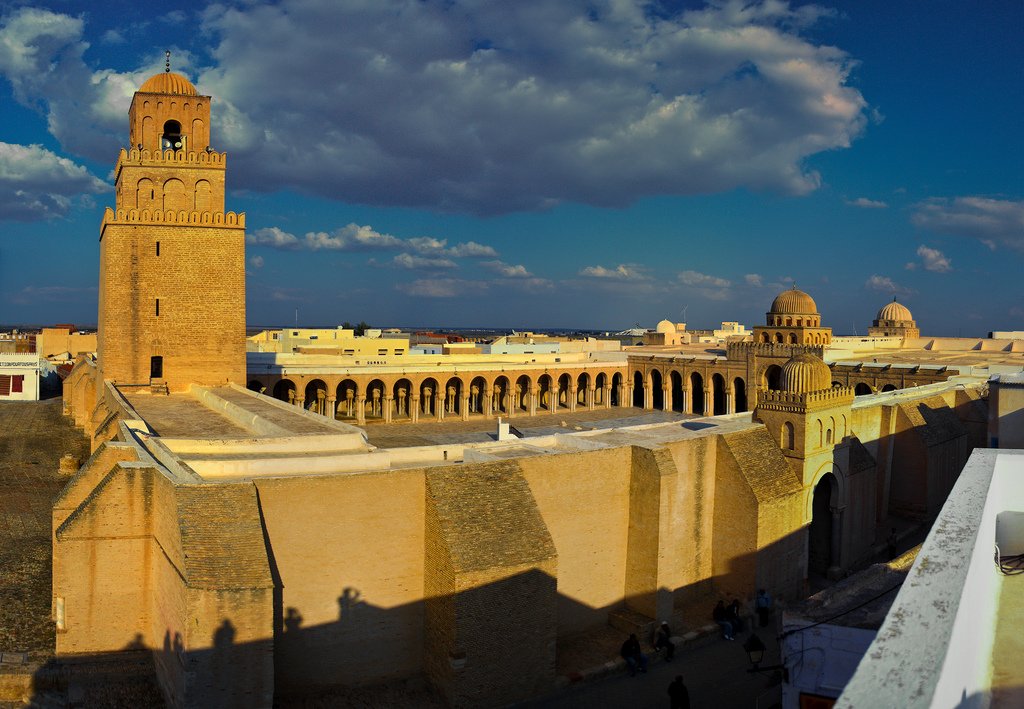
Kairouan is one of the great Islamic cities of North Africa. Founded in 670 AD as the first Arab capital of the Maghreb, it is widely regarded as the fourth holiest city in Islam after Mecca, Medina, and Jerusalem — a claim that may be debated, but the city's religious significance is beyond question. Seven pilgrimages to Kairouan are said to equal one to Mecca.
The Great Mosque (the Mosque of Uqba) is the centrepiece: a vast, austere fortress of prayer founded in the 7th century and rebuilt in the 9th, with a forest of recycled Roman columns inside and a massive minaret that dominates the skyline. Elsewhere in the medina you will find the Mosque of the Three Doors — one of the oldest decorated facades in the Islamic world — the Zaouia of Sidi Sahab (the "Barber's Mosque"), and the Aghlabid Basins — huge 9th-century reservoirs that once supplied the city's water. The medina itself is a UNESCO World Heritage Site, less touristed than Tunis and all the more atmospheric for it.
Kairouan also makes the best makroud in Tunisia — date-filled semolina pastries soaked in honey that you should eat at the stalls in the medina before they cool. The carpet souk is the place to find genuine Kairouan kilims and knotted rugs at prices considerably below what you would pay in the coastal resorts.