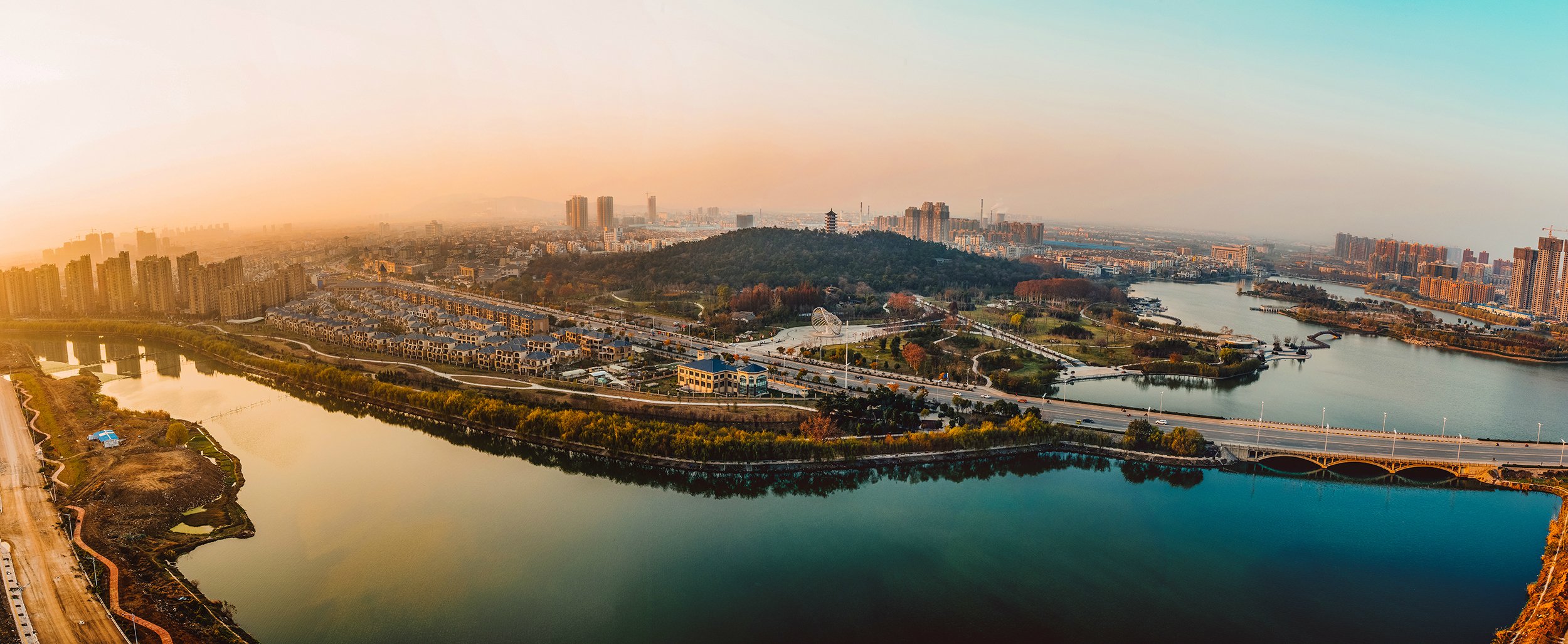
Bengbu sits on the Huaihe River in northern Anhui, a transit city whose name — Clam Wharf — speaks to its origins as a market on the water. The name is slightly misleading now: the city has grown into a prefecture of over three million people, and clams are less prominent than coal terminals and chemical plants. But Bengbu has an identity that distinguishes it from other mid-sized Chinese cities: it is the acknowledged birthplace of Huagudeng, a form of Sizhou drama and folk dance that has been recognized as an intangible cultural heritage. Performances are occasionally staged at local theaters and during festivals.
The Gaixia battlefield, just south of the city, is where Xiang Yu — the rebel general who nearly toppled the Han Dynasty — made his last stand in 202 BCE. The site isn't dramatically preserved, but Chinese visitors come with a sense of historical pilgrimage. Long Lake, a natural scenic area on the city's edge, is more rewarding for casual visitors: bridges, pavilions, and boat rentals on a stretch of water that becomes particularly pleasant in early summer when the lotus is in bloom.
The Bengbu Museum at Civic Plaza has a solid collection of local archaeological finds, including artifacts from the Shuangdun site — a Neolithic culture unique to this stretch of the Huaihe valley, known for its distinctive pottery with symbolic markings. The collection is better than the museum's modest presentation suggests.
Rail connections are excellent: Bengbu is one of the main stops on the Beijing-Shanghai high-speed line, putting Nanjing thirty-five minutes away and Shanghai just over an hour. It makes a plausible overnight stop if you're traveling between northern China and the Yangtze Delta, though most visitors treat it as a platform to change trains rather than a destination.