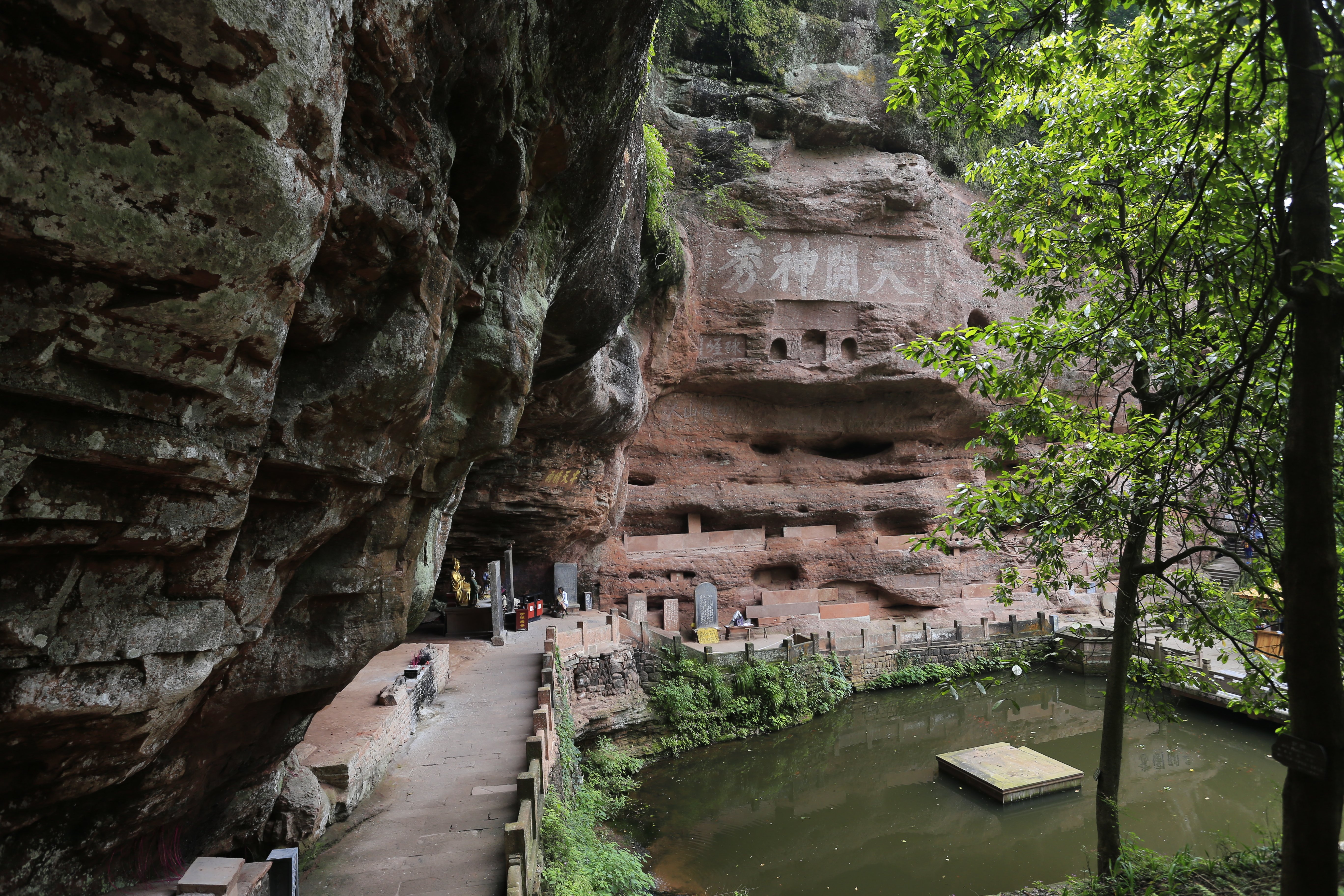
Qiyun Mountain is the Taoist counterpart to the Buddhist peaks that define most of Anhui's sacred landscape. One of China's four great Taoist mountains, it rises to 585 meters in Xiuning County, about 33 kilometers west of Huang Shan city — which makes it eminently combinable with a visit to the Yellow Mountains while offering an experience that is entirely different in character. Where Huang Shan overwhelms with granite grandeur, Qiyun is intimate and layered, its red sandstone cliffs pocketed with temples, shrines, and inscriptions accumulated over more than a thousand years of religious use.
The mountain's name means Cloud-High Mountain, a poetic reference to the mist that collects around its sandstone formations. The cliffs are riddled with niches and overhangs that have been converted into temple spaces; the main religious site — the Xuantian Grand Temple — is dedicated to Xuantian Shangdi, a Taoist deity associated with the north and with martial virtue, and the complex of shrines and halls built into the rock face is one of the most atmospherically sited religious structures in the province. Stone steps connect the various levels, and carved inscriptions from visiting poets and officials cover many of the cliff surfaces.
The literary connection is taken seriously here. Li Bai, Tang Yin, and Yu Dafu all left inscriptions, and the tradition of carving one's visit into the rock continued for centuries — the cliffs function as an open-air archive of Chinese literary and official culture. The Taoist community that maintains the mountain is small, and the quieter sections away from the main shrine routes preserve a meditative atmosphere that the more famous mountains have long since lost.
A cable car runs to the upper sections for those who prefer not to climb. The Dengfeng Bridge at the mountain's base — a Ming dynasty stone arch that served as the formal entrance for pilgrims — is worth a look before or after the climb. The mountain is easily reached from Tunxi (Huang Shan city) by bus or taxi, making it a natural half-day excursion from a base in southern Anhui.