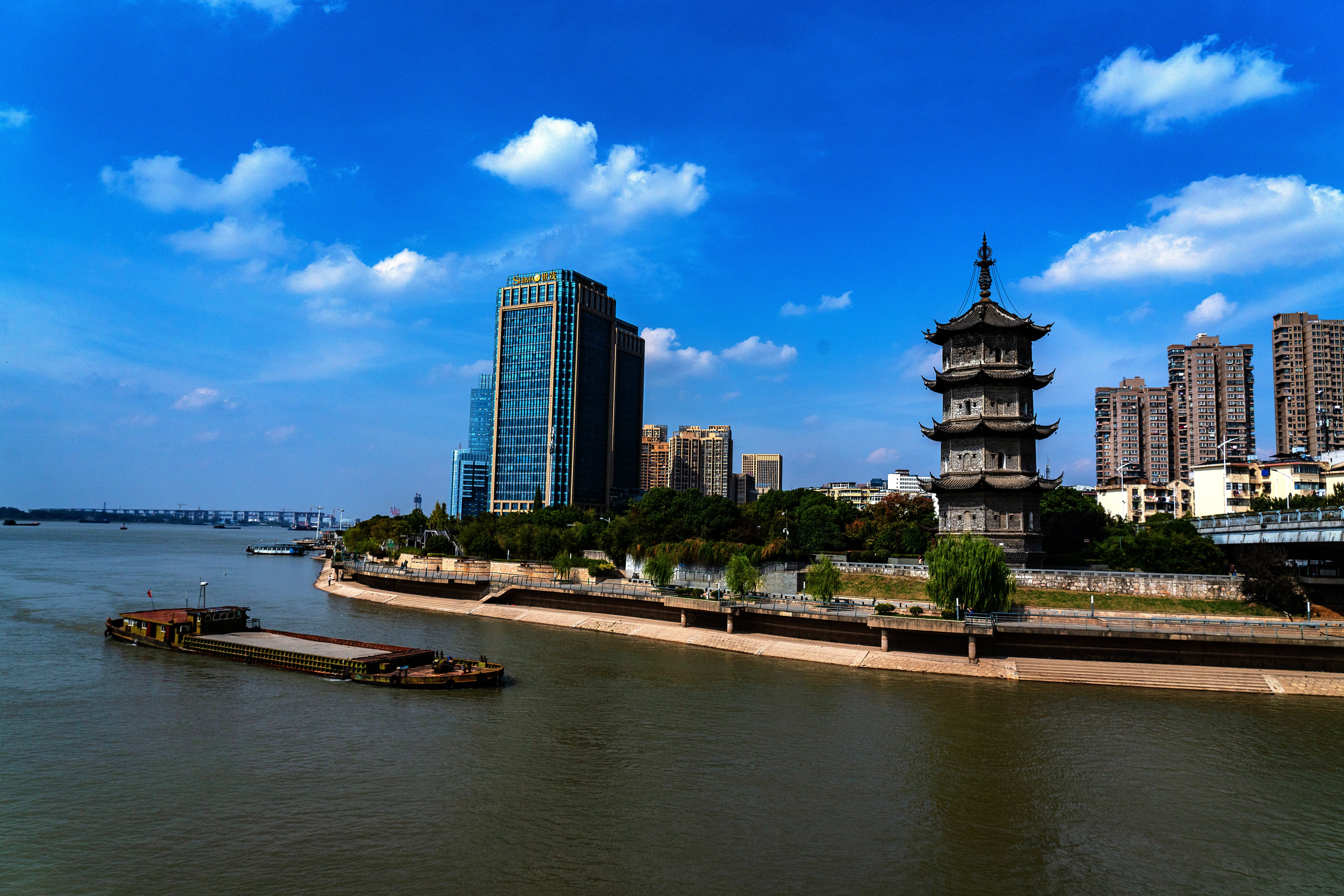
Wuhu is a Yangtze port city that has spent most of its modern history in Nanjing's shadow, close enough to the Jiangsu capital (forty minutes by high-speed rail) that it has never quite developed a distinct tourist identity of its own. That proximity cuts both ways: it means Wuhu is well-connected and relatively cosmopolitan for a city of its size, but it also means visitors who could be in either place usually choose Nanjing.
The city repays an afternoon well enough. Mirror Lake, a large urban lake at the center, is genuinely pleasant for walking; the willows and lotus beds are at their best in summer. Guangji Temple, a Tang Dynasty Buddhist complex on the lake shore, has been extensively restored but retains the Zhe Pagoda, a Northern Song structure that is one of the more authentically aged things in the city. The Yangtze Riverside Park, stretching along the northern bank, offers river views and is popular for evening strolls. St. Joseph Cathedral, a late-19th century Catholic church from the treaty port era, is an unexpected piece of missionary architecture tucked into the city's older streets.
Wuhu's strongest card is its food. The city is known across Anhui for its fermented fish dishes — a tradition rooted in the old practice of preserving Yangtze catch in salted crocks — and for hand-pulled shrimp noodles, a regional specialty that has become an identity marker. The night food markets along the river are the best way to experience this.
Fantawild Adventure, a large domestic theme park on the city's eastern edge, is by any measure the most visited attraction and keeps families occupied for a full day. Maren Qifeng Scenic Area, a mountain park outside the city, offers hiking, a glass-bottomed bridge, and river rafting for visitors seeking something more active.