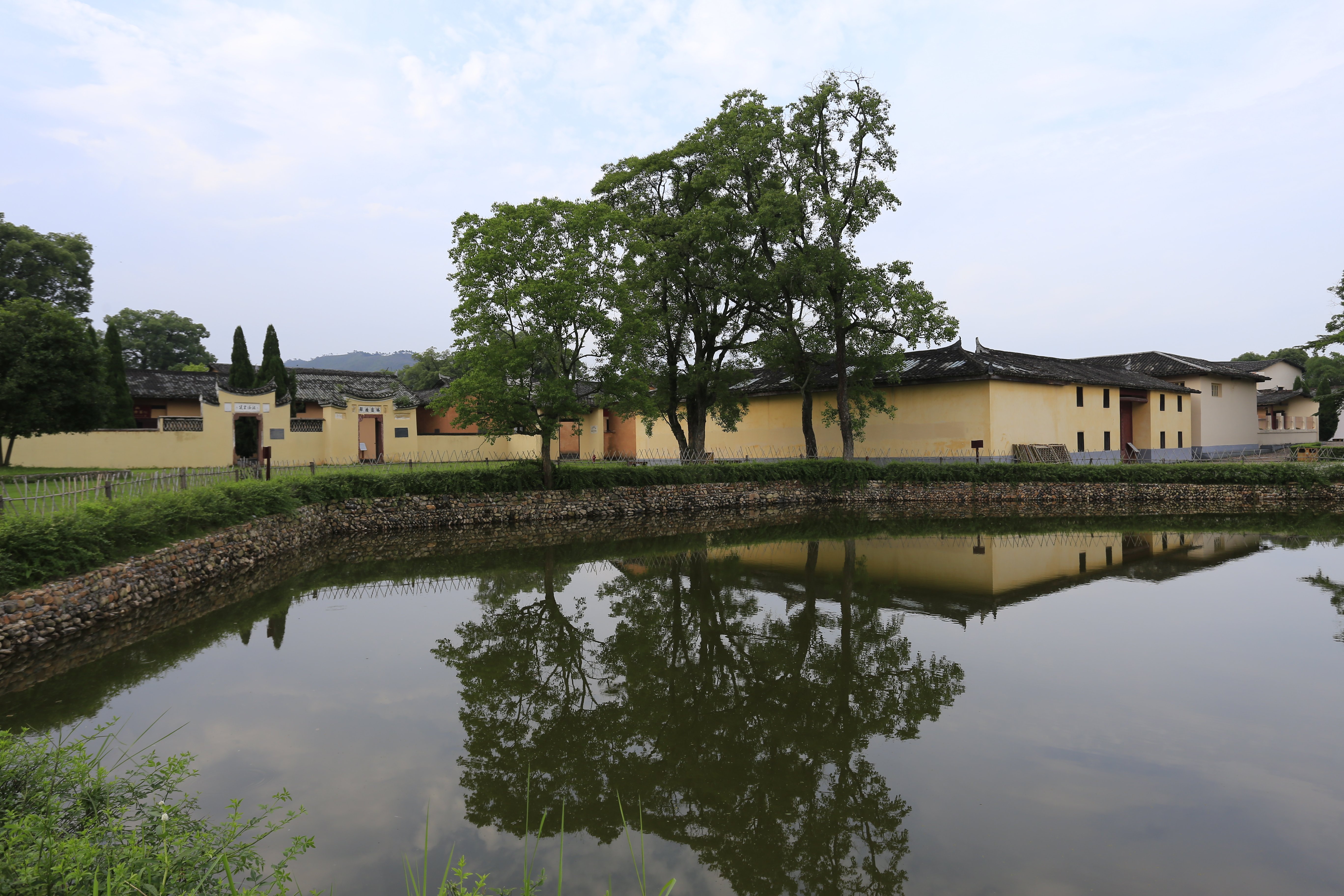
Ruijin occupies a distinctive place in modern Chinese history: it served as the capital of the Chinese Soviet Republic from 1931 and was the departure point for the Long March in October 1934, when the Red Army abandoned its base and began the year-long retreat that would eventually reach Yan'an. The city calls itself the "Cradle of the People's Republic of China," and the Yeping revolutionary sites are the primary draw — a cluster of modest earthen buildings where Mao Zedong, Zhou Enlai, and Zhu De lived and worked during the Jiangxi Soviet period. The scale of these structures is striking: the leaders of what would become the world's most populous state were working from extremely basic conditions.
The city is administratively part of Ganzhou prefecture and shares the Hakka cultural character of southern Jiangxi. Beyond the revolutionary heritage, the surrounding mountains offer solid hiking and scenery that most visitors overlook entirely. Luohanyan Scenic Area, a short drive from the city center, features rock formations, waterfalls, and old-growth forest that would attract considerably more visitors if the revolutionary sites weren't so dominant in the city's self-presentation. Tianmu Hot Springs provides a straightforward counterpoint to a day of political history.
High-speed rail now connects Ruijin to Ganzhou and, by extension, to Shenzhen in a few hours, stripping away the relative isolation that long characterized the place. "Red tourism" — the Chinese domestic travel phenomenon centered on Communist Party historical sites — brings considerable visitor numbers, primarily from mainland Chinese travelers on patriotic education itineraries. Independent foreign visitors are rare enough to attract friendly curiosity.