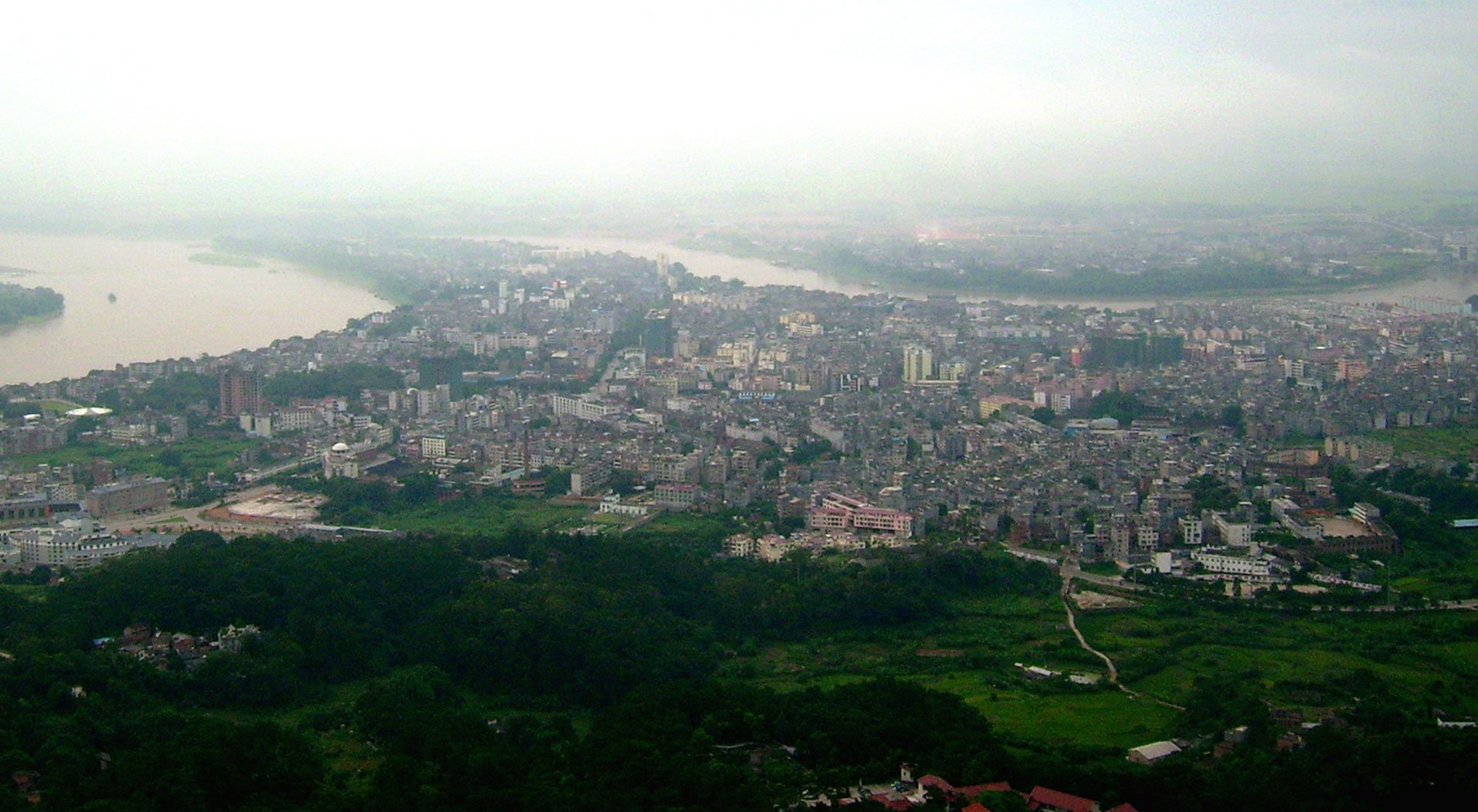
Guiping is a mid-sized city in central Guangxi, on the Xun River south of Liuzhou, and its primary historical distinction is being the place where Hong Xiuquan launched the Taiping Rebellion in 1851 — one of the most destructive civil conflicts in human history, which killed somewhere between twenty and thirty million people over fourteen years before the Qing dynasty suppressed it. The Jintian Uprising Site, where the rebellion began, is now a park with a museum and ruins that takes the history seriously rather than packaging it for easy consumption.
West Mountain, a forested hill above the city, has been a sacred site for both Buddhists and Taoists for over a thousand years and today contains a scatter of temples, pavilions, and teahouses connected by paths through the trees. Guiping's tea — grown on these slopes — is famous enough within China to be the city's other main claim to recognition, and the tea grown on West Mountain has been cultivated here since the Tang dynasty. A cable car makes the summit accessible if the climb seems excessive; the views over the river and the surrounding karst are good. The Xishi Temple, built directly into the limestone outcrops on the mountain's western face, is the most architecturally interesting of the hillside shrines.
The East Pagoda, a fifty-metre structure from 1573, is the tallest historic pagoda in Guangxi and stands in the city with enough presence to be worth a look. Longtan National Forest Park, outside town, offers forest walks and some decent karst scenery without the crowds or entrance fees of the more heavily promoted parks further north.
Guiping is 90 minutes from Nanning on the high-speed rail, and it sits on the route between Nanning and Wuzhou for travellers heading to or from Guangdong. It is not a major destination, but for anyone interested in Taiping history or in seeing a Guangxi city that functions primarily for its own residents rather than tourists, it offers more than its modest reputation suggests.