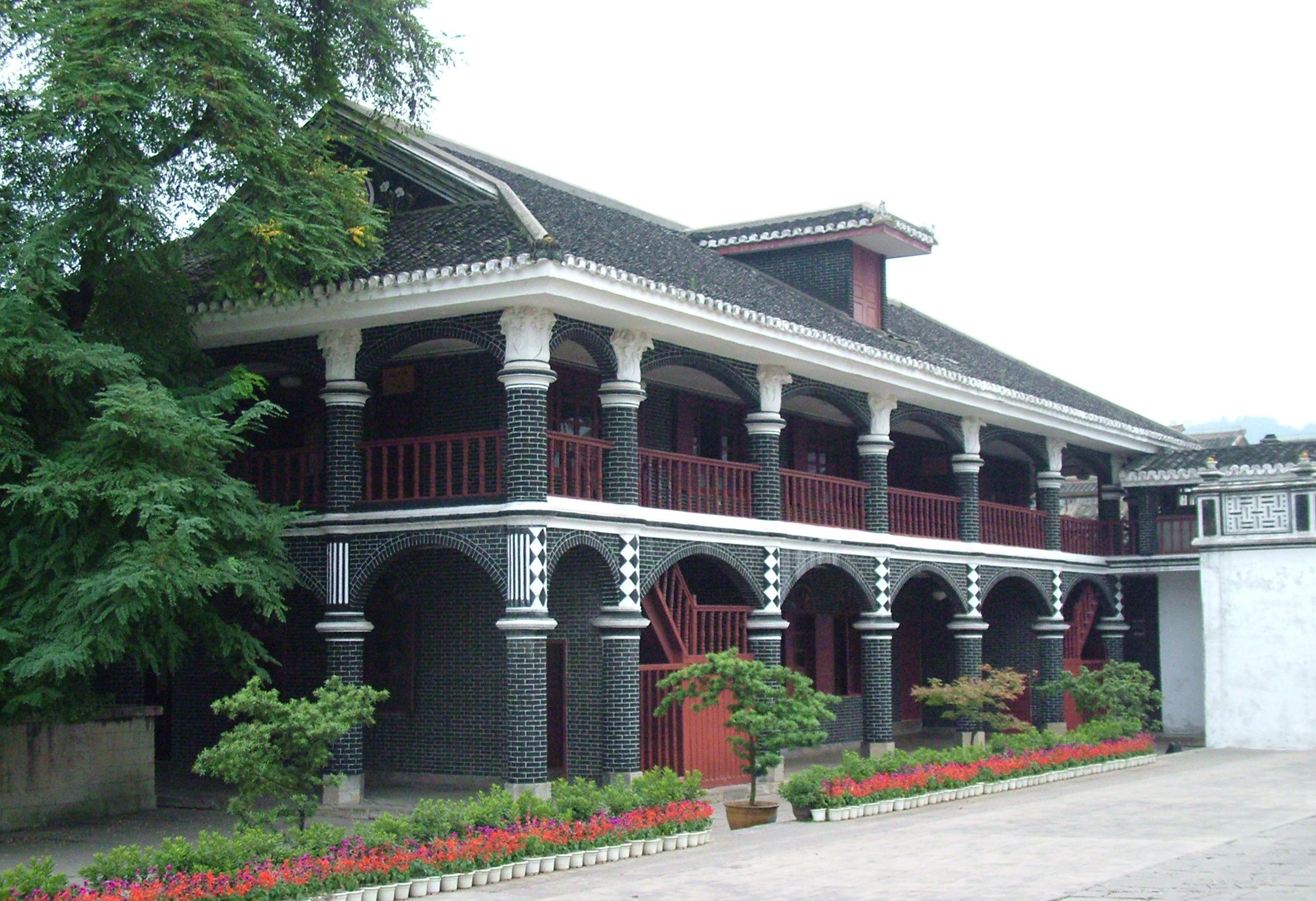
Zunyi is where the Chinese Communist Party saved itself. In January 1935, during the Long March, the Red Army was being destroyed — three-quarters of its original force had been lost to Nationalist attacks and the disastrous frontal assaults ordered by Soviet-advised commanders. The Zunyi Conference replaced those advisors and elevated Mao Zedong to effective military command. The subsequent Long March strategy — endless movement, guerrilla tactics, avoiding pitched battles — is what allowed the Party to survive. The conference site, a preserved two-storey brick building on the old commercial street, is now a museum and one of the most visited revolutionary sites in China. Whether or not you find this history stirring, it's hard not to appreciate the weight of what happened in those rooms.
The old town around Zunyi has been restored in 1930s merchant style — the commercial architecture of Republican-era provincial China, with carved wooden shopfronts and covered walkways. It's deliberately nostalgic, more carefully maintained than organically alive, but the scale is human and the restaurants are good. The Yangliujie Catholic Church, where the Red Army's political directorate was based during the conference, makes an unusual counterpoint to the official revolutionary narrative. The Puji Bridge, a red sandstone arch dating to the Southern Song dynasty, is among the oldest structures in the city.
Maotai town lies about 150 kilometres to the southwest, in the Chishui River valley. The town is where China's most expensive and most fetishized liquor is produced — a fermented sorghum baijiu that smells like overripe fruit and jet fuel and costs as much per bottle as a decent Burgundy. The Moutai distillery complex dominates the town, and the smell of fermenting grain follows you everywhere. Whether or not you want to drink the liquor, this is genuinely one of the more unusual industrial landscapes in China.
West of Zunyi, towards the Sichuan border, the Chishui Danxia area contains one of China's designated UNESCO World Heritage landscapes — dramatic red sandstone formations cut by rivers and surrounded by bamboo forests. The combination of geological spectacle, red rock against green bamboo, and genuine remoteness makes it worth the effort. Getting to Zunyi from Guiyang takes about 50 minutes on the high-speed train.