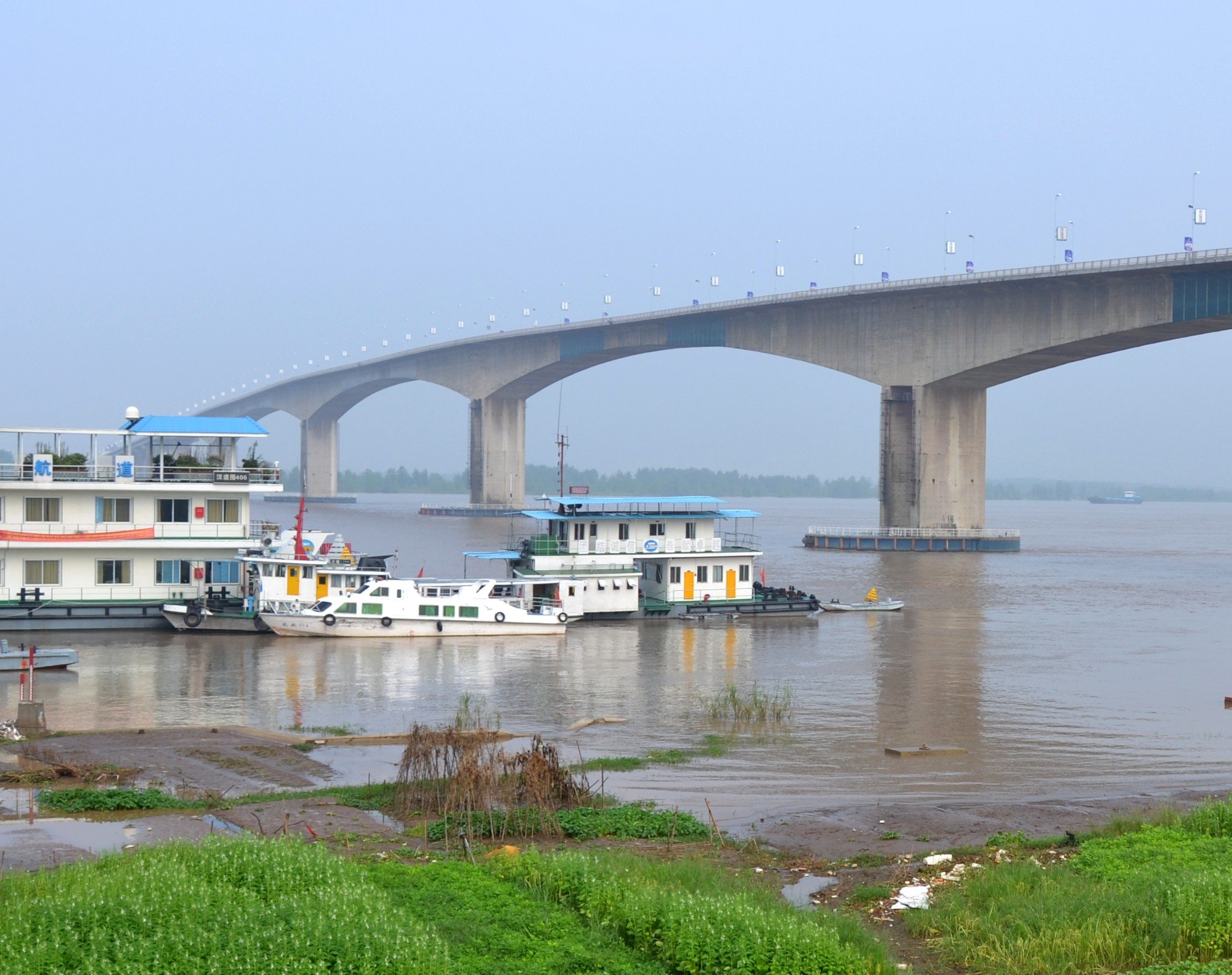
Huangshi is an industrial city on the south bank of the Yangtze in southeastern Hubei, about a hundred kilometres east of Wuhan. It grew up around its mineral deposits — copper, iron, and coal — and the landscape still bears the marks of intensive extraction that began in earnest during the early decades of the People's Republic. The Daye copper mines, nearby, have been worked for over three thousand years, making them among the oldest continuously operated mines in China. The Huangshi National Mine Park — its name a deliberate echo of the American original — is built around the open-cast iron ore pit that was Daye's largest workings, and it is an arresting industrial landscape: terraced walls of red and ochre rock dropping several hundred metres to the pit floor.
The Daye Iron Mine Museum, attached to the park, documents the full arc from ancient bronze-casting through to twentieth-century socialist industrial production. It is more interesting than it sounds, partly because the ancient metallurgical history of this region is genuinely remarkable — the Shang and Zhou dynasty bronzes from Hubei required copper from somewhere, and Daye was a significant part of the answer. The Tonglushan Ancient Copper Mines, a short drive from Daye city, preserve smelting furnaces and mine shafts from the Bronze Age in remarkable condition. The Huangshi Museum in the city centre covers regional history more broadly and is free.
Huangshi is not a destination in the conventional sense, and the city makes no particular effort to present itself as one. The Yangtze riverfront at Huangshigang has been developed as a park, and it is a decent place to watch river traffic. The city is also notable as the terminus of one of Hubei's first modern railway lines — a heritage that the station still quietly acknowledges. Hot springs in the surrounding area attract weekend visitors from Wuhan.
The city is most usefully treated as a half-day stop between Wuhan and the Poyang Lake area of Jiangxi, or as a base for reaching Tiantangzhai, the mountain scenic area that straddles the Hubei-Anhui border in the hills to the northeast. Huangshi is easy to reach by train from Wuhan's main stations.