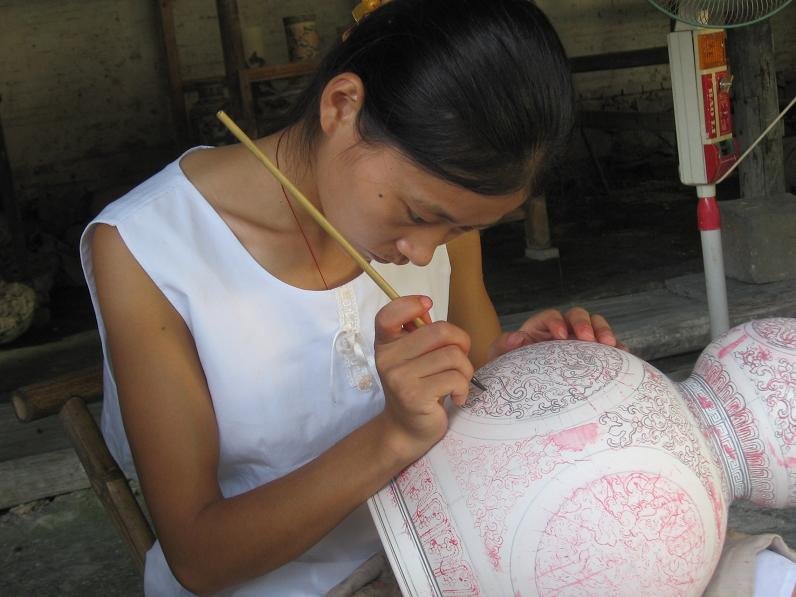
Jingdezhen (景德镇) has been making porcelain for nearly two thousand years, and it still takes the whole enterprise extremely seriously. The city supplied the imperial court for centuries, and the blue-and-white ware that became synonymous with "china" around the world originated here during the Yuan dynasty. If ceramics interest you at all — as art, craft, or industrial history — this is one of the most rewarding stops in eastern China.
The Ancient Kiln Folk Customs Museum preserves the traditional multi-chamber climbing kilns and shows the full production process, from mixing clay to the finished glaze. More interesting to most visitors is Taoxichuan, a regenerated factory complex of red-brick buildings along a canal that has become a loose neighbourhood of studios, galleries, and small cafés. Hundreds of young artists have moved here from across China and abroad — drop into any open door and you'll likely find someone at a wheel or a kiln. Sanbao Village, a short drive out of town, is a quieter version of the same idea, with studios scattered among bamboo and rice fields.
You can take a class almost everywhere, ranging from a quick afternoon of hand-building to multi-week intensive courses. The markets around the old city sell everything from mass-produced tourist ware to genuinely excellent contemporary pieces — take your time and look carefully, because the good stuff is mixed in with the ordinary.