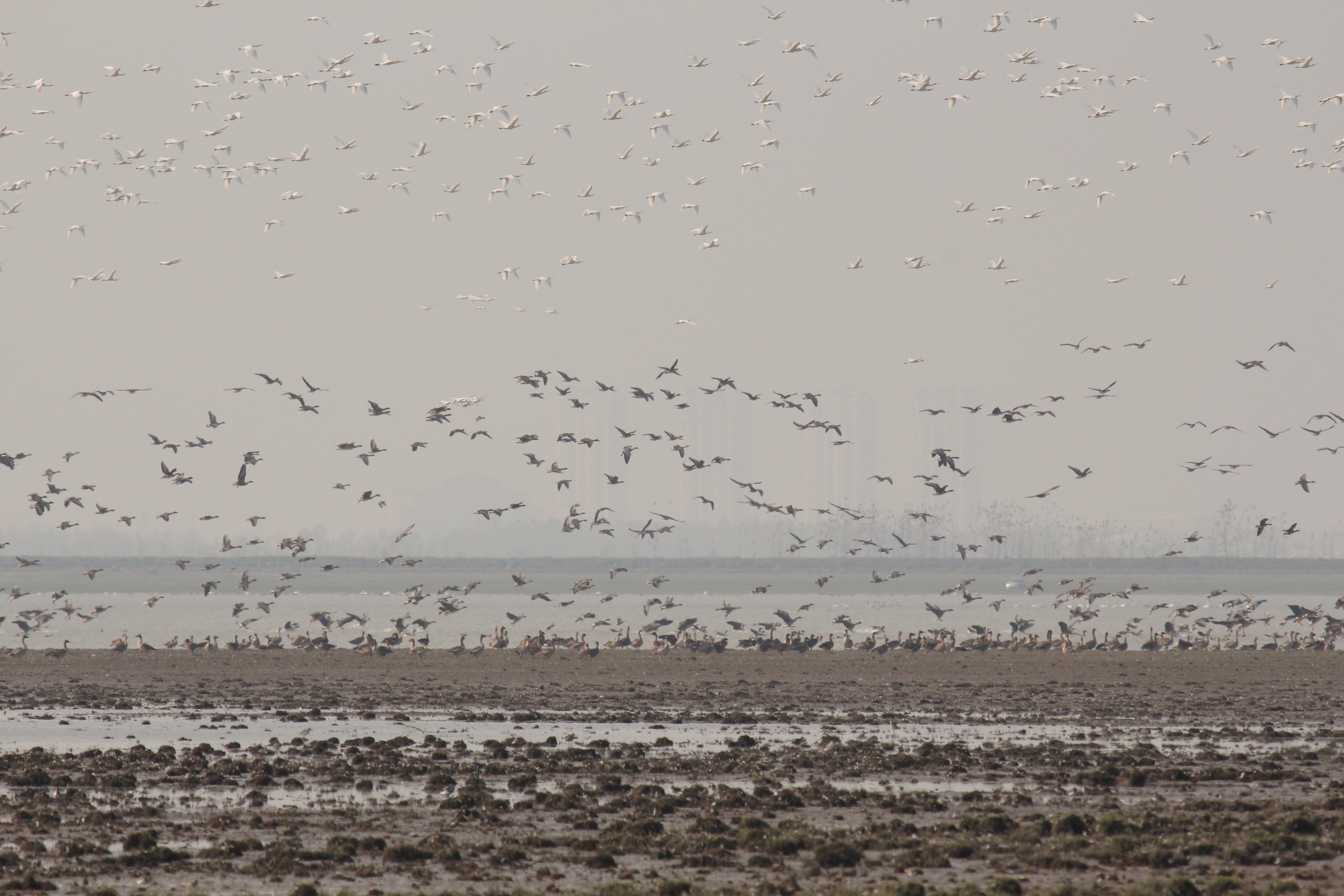
Northern Jiangxi freshwater lake whose seasonal wetlands hold East Asia's great winter bird migrations.
Poyang Lake is China's largest freshwater lake and one of the most important wetland ecosystems in East Asia. Fed by five major river systems and draining northward into the Yangtze, it occupies a basin in northern Jiangxi that expands dramatically during the summer flood season and contracts to a fraction of its peak size in winter droughts — a fluctuation that creates a mosaic of open water, exposed mudflats, and reed beds that shifts with the seasons. In normal wet years the lake stretches over 3,200 square kilometers; in severe drought years it has fallen below 200.
The winter months, counterintuitively, are the best time to visit. The falling water levels concentrate migratory birds onto the remaining wetlands in extraordinary numbers, and Poyang Lake has become one of the premier birdwatching destinations in Asia. The Siberian crane wintering grounds hold up to ninety percent of the world's critically endangered Siberian cranes, alongside hundreds of thousands of other migratory birds. The lake holds Ramsar Wetland designation, and lake boat tours from Wucheng Town offer the most dramatic viewing at dawn. The scale of the winter migrations is genuinely remarkable.
The lake sits near Jiujiang in the north and is accessible from Nanchang by bus. The 1363 Battle of Poyang Lake, fought between rival rebel armies contesting the collapsing Mongol Yuan dynasty, is considered by some historians the largest naval engagement in history — an unlikely distinction for an inland Chinese lake, but the scale of the fleets involved bears it out. Water quality and lake levels have come under pressure from upstream dam operations and agricultural runoff, making a visit now — before further degradation — more urgent than it might otherwise seem.
Guide
Getting There
Poyang Lake is most conveniently accessed from Nanchang or Jiujiang, both of which have high-speed rail connections from major Chinese cities. From Nanchang, buses run to Wucheng (on the southwestern shore) in about two to three hours; this is the main birdwatching base. From Jiujiang on the northern shore, the lake is more accessible by car or taxi.
Wucheng Town (吴城) is the principal base for winter birdwatching. It sits at the confluence of the Xiu River and the lake and has guesthouses, boat operators, and guides who work the wetland reserve. The town can be reached directly by bus from Nanchang's main bus terminal. For the nature reserves on the southwestern shore, hired vehicles from Wucheng provide the most practical access to specific viewing areas.
Guide
When to Go
The single most important factor in planning a visit to Poyang Lake is timing your arrival during the winter birdwatching season. From late October through March, the lake levels drop and the migratory birds arrive in extraordinary numbers. Peak crane numbers are usually in December and January, when Siberian cranes — the rarest of the species that winter here — are most concentrated on the southwestern reserves. February and March see the cranes beginning to depart but ducks and geese remaining in large numbers.
Summer visits (June to September) coincide with the highest water levels and the least birdlife. The lake is large and beautiful but feels empty of its signature wildlife. Spring (March to May) is transitional; autumn (October to November) marks the arrival of the first winter migrants and is an excellent time for a first visit if December-January feels too cold.