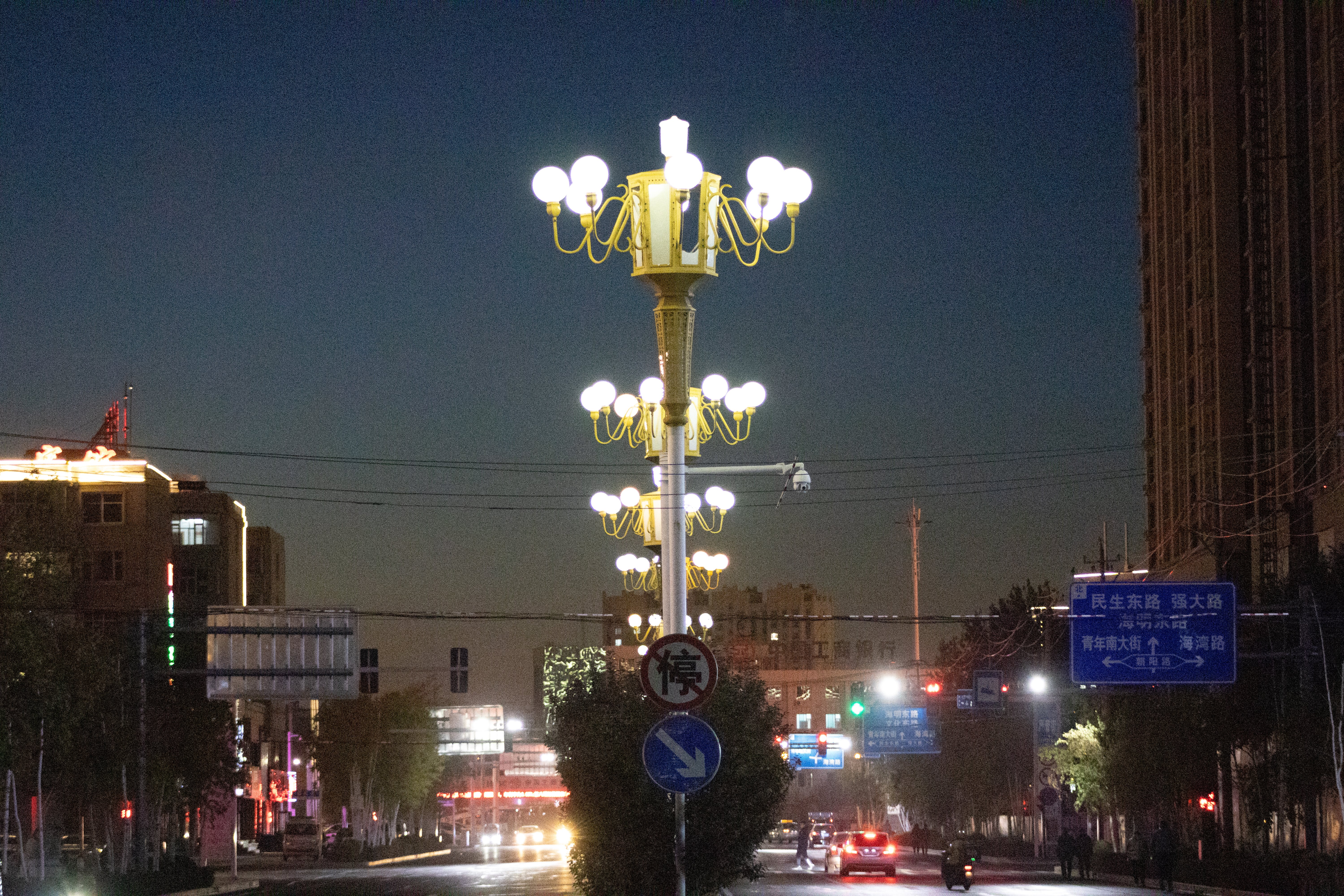
Baicheng occupies the northwestern corner of Jilin Province, where the landscape opens into grassland and wetland on the edge of the Mongolian steppe. The city itself is an agricultural and light-industrial centre that dates its modern form to the early twentieth century, when railways arrived and the surrounding land was opened to farming. It is not a place most travellers to Jilin Province ever reach, and this obscurity is itself part of its character — the city functions for the people who live in it, without particular attention to outsiders, and has the comfortable self-sufficiency of places that don't depend on tourism.
What draws the occasional visitor to the Baicheng area are two nature reserves that protect landscapes you cannot easily find in the more developed parts of the province. The Xianghai National Nature Reserve covers wetlands, marshes, and grasslands where large numbers of cranes — including red-crowned cranes — stop during migration, and where the flat open horizon of the Mongolian grassland begins to assert itself against the agricultural plain. The Momoge National Nature Reserve, at 1,440 square kilometres, contains rivers, islands, swamps, and grassland and supports 193 recorded bird species. Both reserves are serious wildlife destinations for birders and naturalists, but are low-key and largely unvisited compared to the better-publicised nature sites in the province.
The Jiangjiadian Grassland on the city's outskirts offers a more accessible version of the steppe landscape, with yurts available for accommodation, a racecourse, fishing, and the kind of open-country activities associated with Inner Mongolia but available here without the longer journey. The Liao Dynasty ruins at Chengsijiazi — eight-hundred-year-old castle remnants — are a reminder of the succession of nomadic and agricultural states that controlled this corridor before modern borders fixed the landscape in place.
Getting to Baicheng involves a five-hour train journey from Changchun or a three-to-four hour bus. The city is a reasonable base for exploring the western grasslands and nature reserves, and accommodation in the centre is adequate. Local food runs to the northeastern staples — heavy grain dishes, mutton influenced by Mongolian proximity, and the pickled vegetables that see people through the long winters.