Kulgam
©
Kulgam

Kulgam

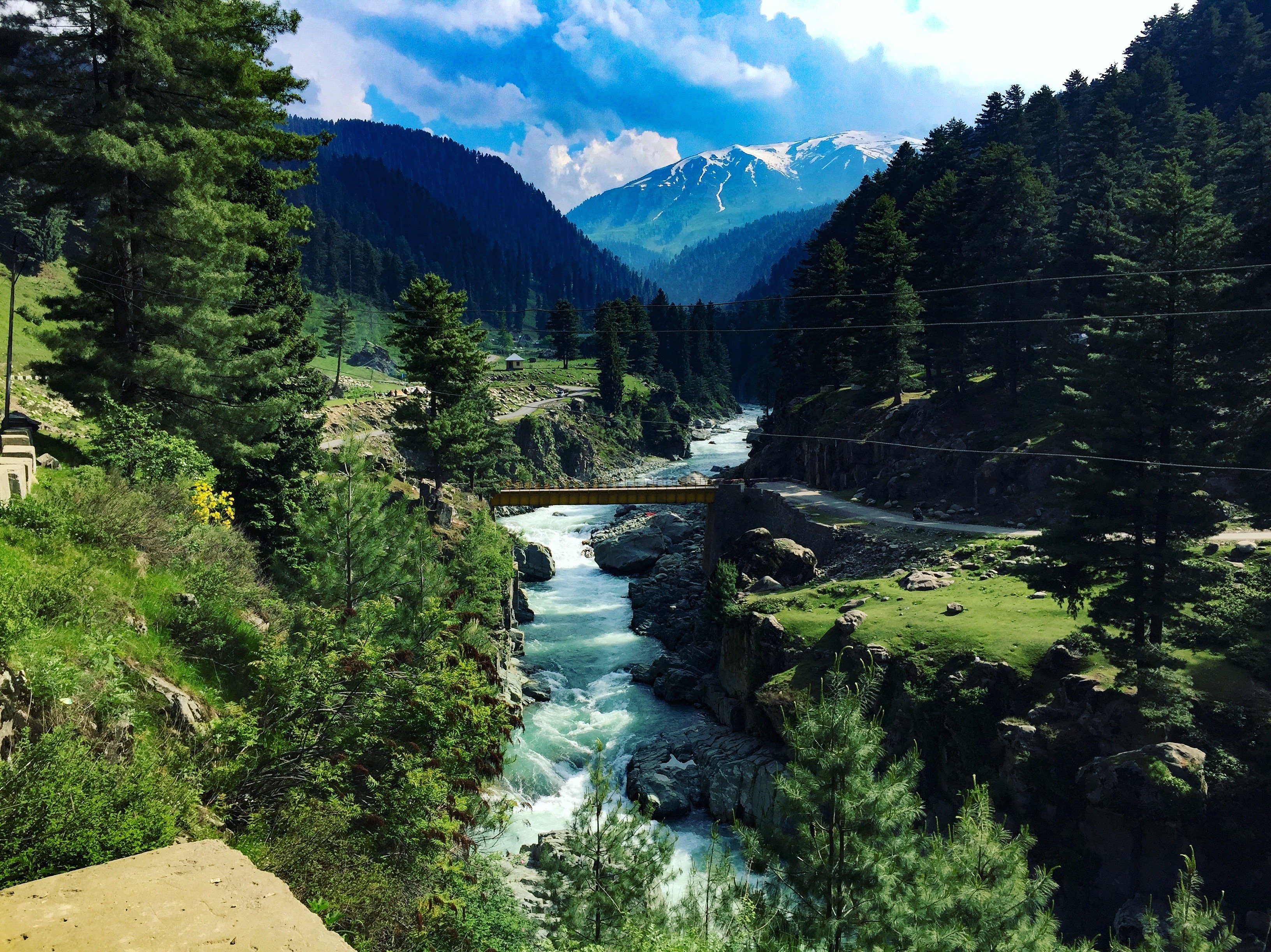
Southern Kashmir town among rice paddies and apple orchards, with Aharbal Falls up the Veshaw valley.

Kulgam is a small town in the southern Kashmir Valley, sitting at 1,739 metres on the banks of the Veshaw river with the foothills of the Pir Panjal mountains rising across the valley. It is the district headquarters and known locally as the rice bowl of Kashmir, surrounded by rice paddies and apple orchards.

The main draw for visitors is Aharbal, a spectacular waterfall in the Kulgam district where the river Veshaw drops off a cliff edge. The falls are fed by Konsarnag Lake, a high-altitude glacial lake that makes a rewarding multi-day trek from the valley floor through alpine meadows grazed by Gujjar nomads. The scenery along the Veshaw valley is quintessential Kashmir — green, lush, and backed by snow-capped peaks.

In Kulgam town, the shrine of Syed Simnan Sahib — a 14th-century mystic from Iran who settled here — is an important pilgrimage site with a handsome deodar wood structure overlooking the river.

Guide

Eating Out

Kulgam is not a place to come for cosmopolitan dining. The town has a handful of small Kashmiri dhabas along the main road, serving the same dishes you would find anywhere in the valley but at half the price of Srinagar's tourist restaurants.

Try wazwan — the traditional Kashmiri multi-course meat feast — at one of the family-run places near the bus stand. A simpler everyday meal is rogan josh (lamb in a red gravy of Kashmiri chillies and fennel), goshtaba (pounded lamb meatballs in yogurt), or dum aloo (potatoes in a spiced sauce) with steamed rice. Vegetarians should ask for haakh (collard greens) or nadru (lotus root) preparations.

For tea, the local kahwa — green tea with cardamom, cinnamon, almond, and saffron — is excellent and served everywhere. Noon chai, a pink salty tea, is the everyday Kashmiri breakfast drink and an acquired taste.

The road from Kulgam to Aharbal passes orchards and roadside stalls selling apples in season; bring a few for the walk.

Guide

Getting There

Kulgam is about 70 kilometres south of Srinagar, on the southern edge of the Kashmir Valley, with the road continuing south toward Anantnag and the Jawahar Tunnel that links the valley to Jammu and the rest of India.

By road. Shared taxis (sumos) and minibuses leave the TRC bus stand in Srinagar throughout the day, taking around two hours via Pampore and the new highway. Private taxis are easy to hire from Srinagar for around 2,500-3,500 rupees one way. From Pahalgam or Gulmarg, the journey is two to three hours by taxi.

By train. The Kashmir Valley railway connects Banihal in the south with Baramulla in the north; the nearest station to Kulgam is at Anantnag, about 25 kilometres east, with several daily services from Banihal and Srinagar. From Anantnag, a shared sumo or local bus reaches Kulgam in 40 minutes.

By air. Srinagar International Airport (SXR), 80 kilometres north, has flights from Delhi, Mumbai, Jammu, and a handful of other Indian cities. Pre-paid taxis run from the airport to Kulgam for around 3,000 rupees.

A word of practical caution: Kashmir's security situation can change quickly. Check current Indian government advisories before booking, especially in summer; curfews and road closures do happen.

Guide

When to Go

Kulgam sits at 1,739 metres, lower than Pahalgam or Gulmarg, so the seasons are milder but still distinctly four-season.

Spring (March-May) is the prettiest time. The apple and almond orchards across the district come into blossom from late March; the rice paddies start to flood and shimmer green. Temperatures sit pleasantly in the low 20s C by day, cool at night. Aharbal Falls are at full flow with the snowmelt.

Summer (June-August) brings warm, dry weather with daytime temperatures around 25-30°C. This is the season to trek to Konsarnag: the high meadows are open, the lake free of ice, and Gujjar herders move up with their flocks. Book trips in advance — this is also the peak season for domestic tourism in the valley.

Autumn (September-November) is the second great season. The chinar trees that line the river turn fiery red and gold; the air is crisp and clear; the harvest of rice and apples is in full swing. Wonderful for photography, less crowded than summer.

Winter (December-February) is cold — temperatures drop below freezing, snow blankets the higher passes, and Aharbal sometimes partly freezes. The lake trek is impossible. Most tourists ski at Gulmarg instead, but a peaceful, snowy Kulgam has its own appeal if you can take the cold.