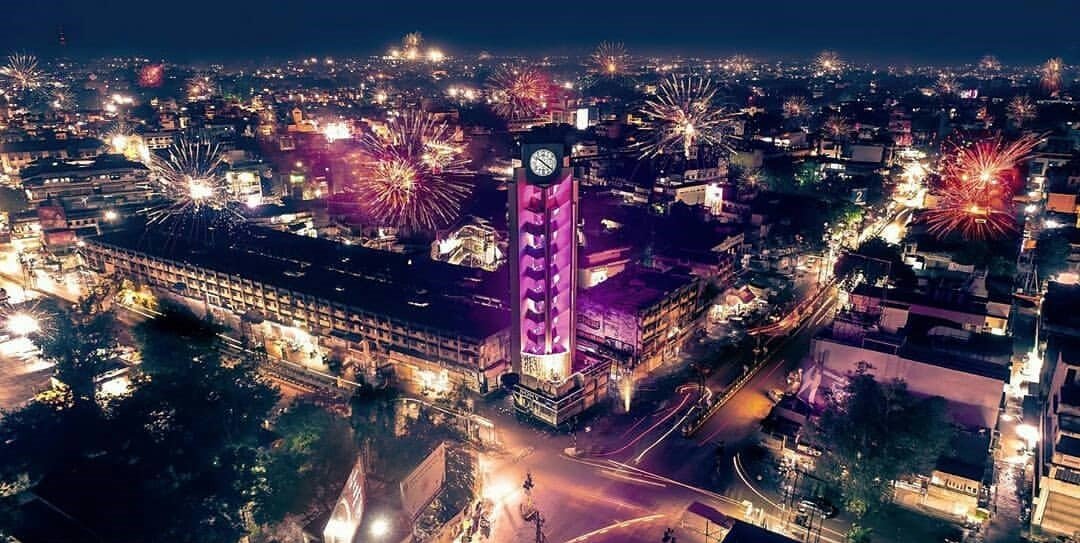
Khandesh market town in northern Maharashtra, used as the rail base for the Ajanta Caves.
Jalgaon is a prosperous market town in the Khandesh region of northern Maharashtra, best known as the most convenient base for visiting the Ajanta Caves — one of India's supreme artistic and archaeological treasures. The town sits on the main Mumbai–Kolkata rail line, making it easy to reach from both coasts, and a steady stream of travellers passes through on their way to the caves.
The town itself is a working commercial centre rather than a tourist destination. Jalgaon district produces around two-thirds of Maharashtra's banana crop, and the markets along the main bazaar streets reflect that agricultural wealth. It's a functional, unpretentious place — somewhere to arrive, rest, and head out to the caves early the next morning.
The Ajanta Caves lie about 60 km northeast of town, a UNESCO World Heritage Site comprising 30 rock-cut Buddhist sanctuaries carved into a horseshoe-shaped gorge. The paintings inside — some of the finest surviving examples of ancient Indian art — date from the 2nd century BCE to the 6th century CE. The caves were abandoned and forgotten for over a millennium before a British officer stumbled upon them in 1819. Allow a full day; the site requires serious walking and deserves unhurried attention.
Ellora, with its even larger complex of Buddhist, Hindu, and Jain cave temples, lies about 150 km to the south near Aurangabad — a longer excursion but worth it if time allows.
Guide
Getting Around
Within Jalgaon: Auto-rickshaws are plentiful and cheap. Most hotels and guesthouses are within a few kilometres of the railway station. Drivers at the station know the main accommodation areas.
To Ajanta: State buses run from the Jalgaon bus stand to Fardapur junction throughout the day (roughly 1.5–2 hours). From Fardapur, transfer to the MTDC shuttle that runs to the cave entrance — private vehicles are not permitted beyond the shuttle bus parking area. A taxi or private vehicle directly from Jalgaon takes about an hour and costs considerably more but offers flexibility to leave at your own pace. Book through your hotel or at the prepaid stand outside the railway station.
To Aurangabad: Regular buses and shared taxis cover the 152 km to Aurangabad, the gateway to Ellora and the major regional transport hub. The journey takes 3–4 hours by bus.
Guide
Getting There
By rail: Jalgaon Junction is on the main broad-gauge Mumbai–Kolkata line, making it well-connected in both directions. Frequent express trains run from Mumbai (roughly 7 hours), Pune, and Nagpur. This is the easiest way to arrive.
By air: The nearest airport is at Aurangabad (151 km to the south), with connections to Mumbai, Delhi, and Hyderabad. Pune airport is 377 km away and Mumbai's airports are about 425 km.
By road: National Highway 6 passes through Jalgaon, and state bus services connect the town to Aurangabad, Dhule, Nashik, and other regional centres. Buses to the Fardapur junction for Ajanta run throughout the day.