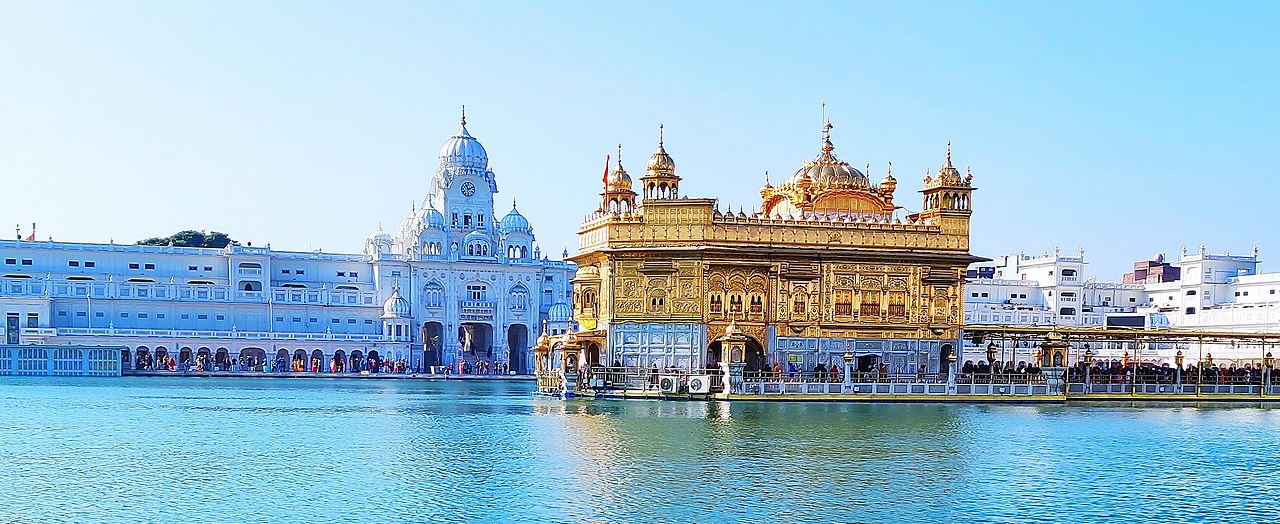
Amritsar is the spiritual heart of Sikhism and one of the most compelling cities in India. It is built around the Harmandir Sahib — the Golden Temple — a complex so serene and so strikingly beautiful that it tends to silence even the most jaded traveler. The langar (community kitchen) at the temple feeds 50,000 to 100,000 people every day, free of charge, regardless of religion. Eating here, sitting cross-legged on the floor beside pilgrims from across India and the world, is one of those experiences that actually earns the word unforgettable. Directly opposite the temple's entrance stands the Akal Takht, the highest temporal seat of Sikh authority.
Beyond the temple, Amritsar wears its history openly. Jallianwala Bagh, site of the 1919 massacre in which British troops killed hundreds of unarmed civilians, is a five-minute walk away — a quiet garden with walls still pocked by bullet holes. The Partition Museum, opened in 2017, is the world's first museum dedicated to the 1947 Partition that tore the Punjab apart. The Wagah Border ceremony, held each evening at the Pakistan frontier 30 kilometers west, is theatrical nationalism at its most operatic: equal parts military drill, sporting event, and patriotic spectacle.
The city itself is dense, noisy, and full of life. The streets around the Golden Temple complex are a good place to eat, wander, and get thoroughly lost. The food scene is legitimately excellent — Amritsar is famous across India for its kulcha, its lassi, and its amritsari fish. The Durgiana Temple, about 2 km away, is a Hindu counterpart to the Golden Temple, built deliberately in a similar style and far less visited.