Jodhpur is dominated by the Mehrangarh Fort, one of the most impressive in India. Perched on a 125-metre cliff above the city, its massive walls seem to grow directly from the rock. The fort alone could fill a day, with its ornate palaces, an excellent museum, and sweeping views of the old city below -- a dense cluster of houses painted in shades of blue, originally a Brahmin tradition that the whole neighbourhood eventually adopted. Seen from the ramparts at sunset, it really does look like a sea of indigo.
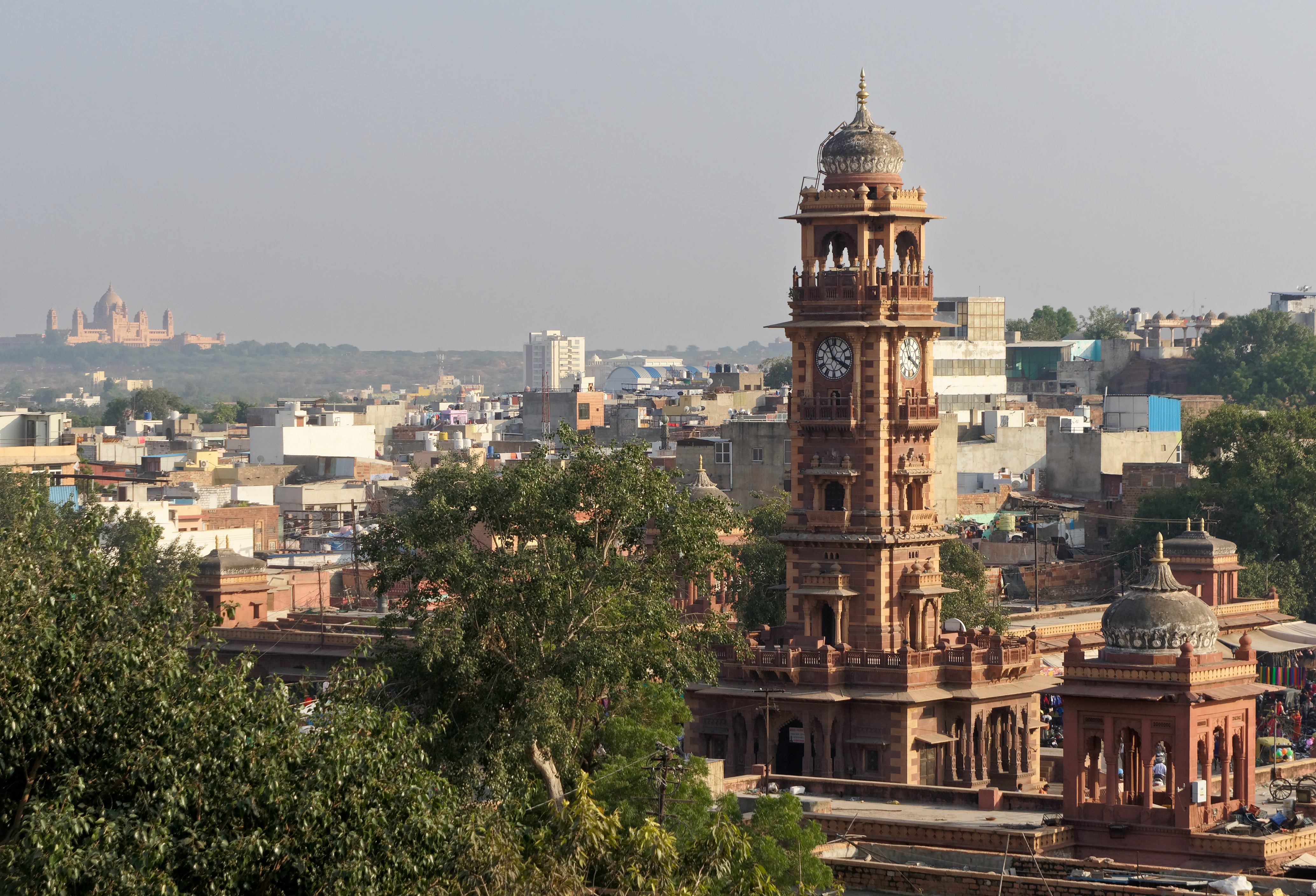
The old city beneath the fort is a tangle of winding lanes, stepped wells, and street markets. Sardar Market, around the Ghanta Ghar (clock tower), is the liveliest bazaar -- spices, bandhani textiles, brassware, and the local snack everyone has come for: mirchi vada, a fat green chilli stuffed with spiced potato, dipped in gram-flour batter and deep-fried. Eat it hot with sweet tamarind chutney and a glass of makhaniya lassi.
On the southern edge of town stands the Umaid Bhawan Palace, a sprawling 1940s sandstone pile that is part royal residence, part luxury hotel, part museum. The vintage car collection is worth the ticket on its own. Just below the fort, the white marble cenotaph of Jaswant Thada is a quieter counterpoint to Mehrangarh's bulk.
Jodhpur sits at the edge of the Thar Desert and is the natural stopping point between Jaipur and Jaisalmer. Two days is enough for the main sights; a third lets you slow down and wander the blue lanes properly.