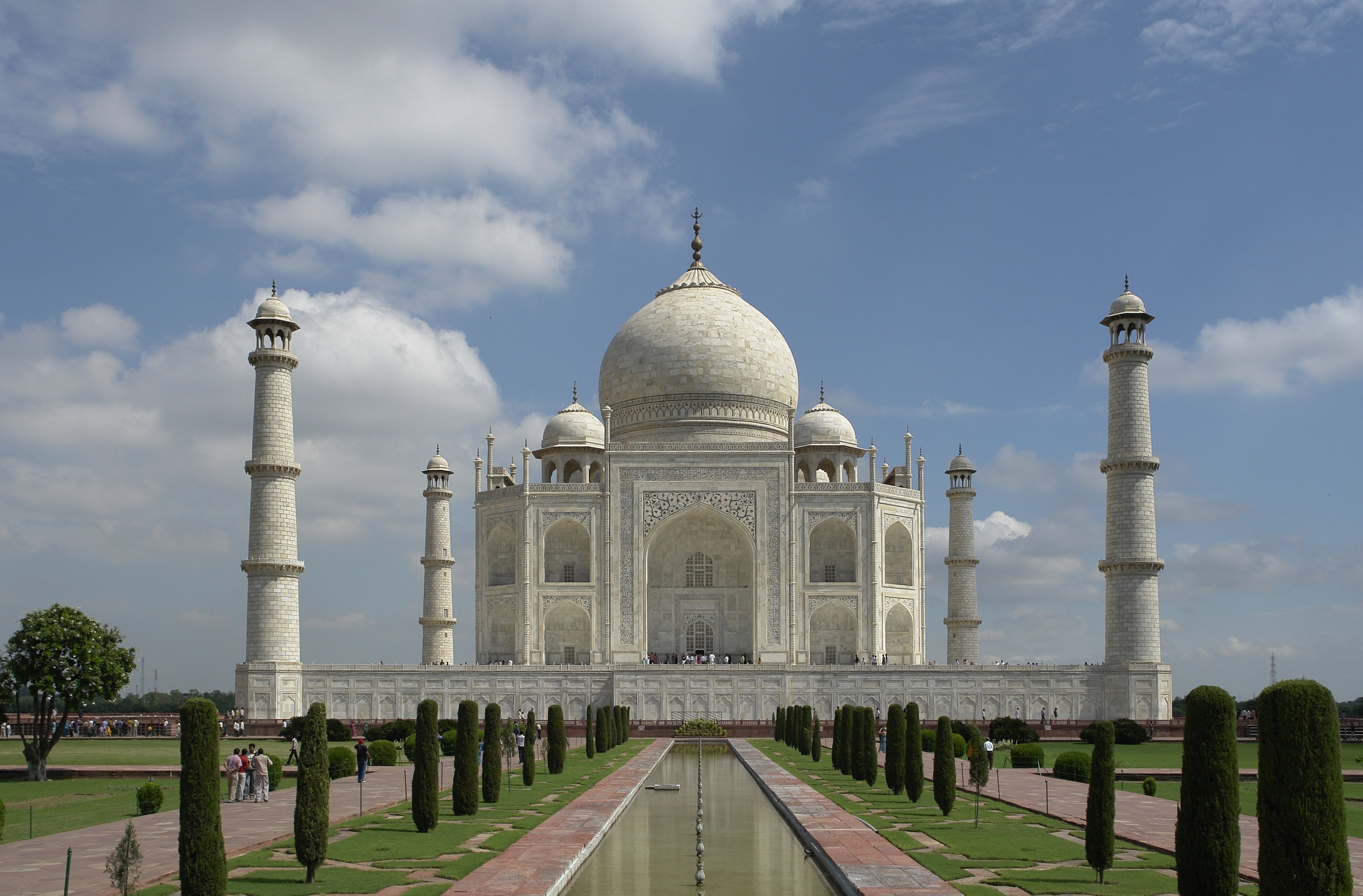
People come to Agra for one thing: the Taj Mahal. The mausoleum that Shah Jahan built for his wife Mumtaz Mahal — twenty years of work, twenty thousand craftsmen, a building of white marble that seems to change colour with the hour — is the single most famous monument in India and one of the few that lives up to every expectation. See it once at dawn, once at sunset, and you will not regret coming.
But the city has much more than the Taj. The vast red sandstone Agra Fort sits on the river two kilometres upstream — it was here that Shah Jahan was eventually imprisoned by his son Aurangzeb and where, according to tradition, he spent his last years staring across the Yamuna at the tomb of his wife. The exquisite small marble tomb of I'timad-ud-Daulah on the opposite bank is sometimes called the "Baby Taj" and is in many ways more delicate than its famous neighbour. Further out, Fatehpur Sikri, the perfectly preserved red sandstone capital that Akbar built and then abandoned, is one of the great sights of India.
Agra itself is a busy, traffic-jammed Uttar Pradesh city of two million people. The historic core has decent restaurants, marble inlay workshops in the Kinari Bazaar area, and a few quietly remarkable smaller monuments — the Chini ka Rauza, the Mehtab Bagh viewpoint across the river, and Akbar's Tomb at Sikandra. Most travellers visit on a day trip from Delhi on the morning Gatimaan or Shatabdi Express, but the city rewards an overnight stay: the Taj at sunrise is unforgettable, and the second day frees you to see Fatehpur Sikri. From here, the road runs east to Varanasi and south-west to Jaipur on the standard Golden Triangle tour.