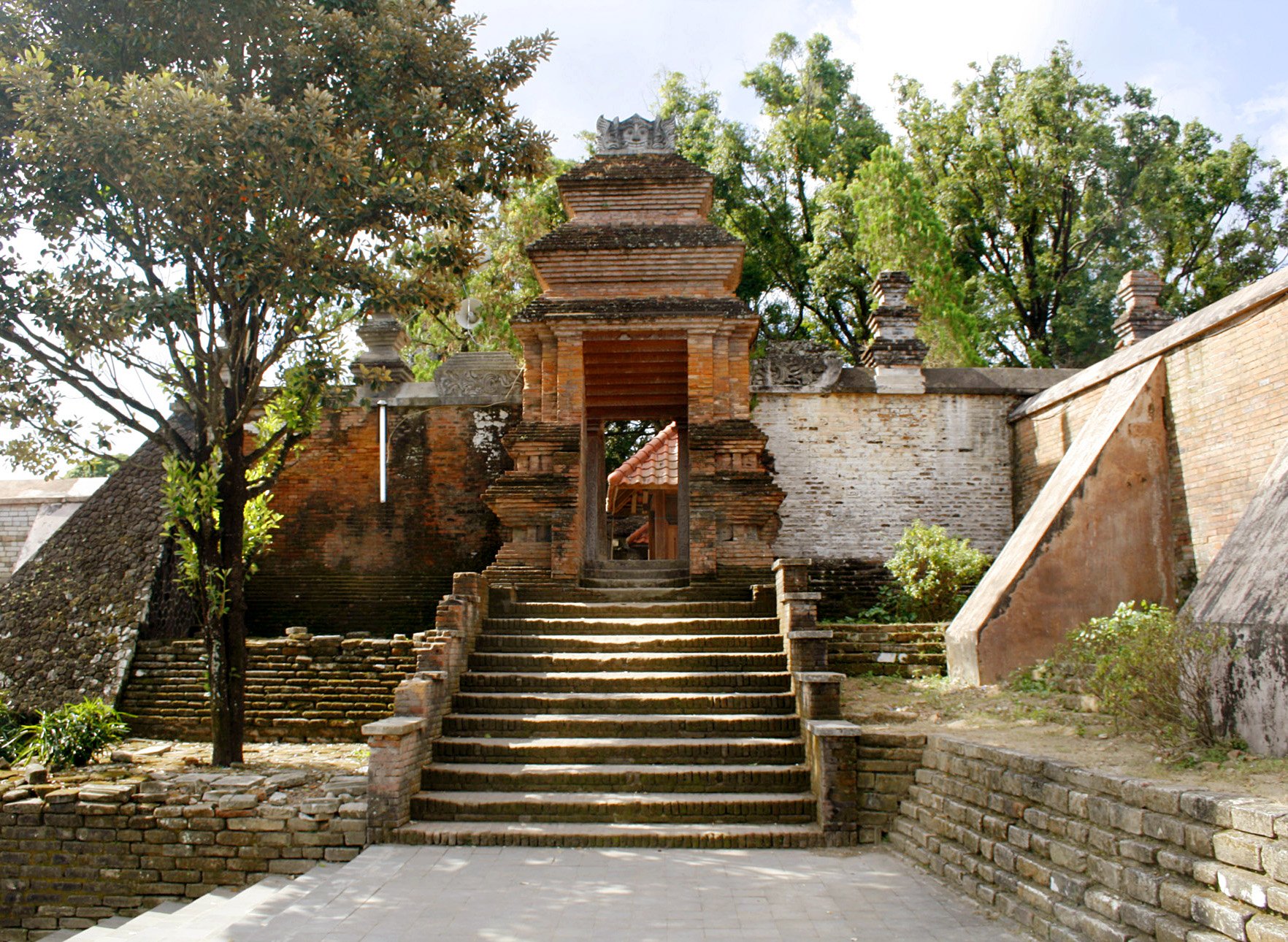
Kotagede is a historic district on the southeastern edge of Yogyakarta, and the original heart of the Mataram Sultanate before the court moved to its current location. Today it is best known for its silver workshops, where craftsmen produce intricate filigree and repousse work that you can watch being made and buy directly from the source. The main silver street runs along the road from the old Cinema Palace junction and is well worth an afternoon wander.
The spiritual centre of the district is the Grand Mosque complex, one of the oldest mosques in Java. The compound feels more like a kraton (palace) courtyard than a place of worship — high stone walls carved with relief panels, a broad shaded yard with sapodilla trees, and a massive bedug (ceremonial drum) that is as old as the mosque itself. Nearby, the Tomb of Panembahan Senopati, the founder of the Mataram Sultanate, draws pilgrims and history enthusiasts alike. His successors, including Sultan Agung Hanyokrokusumo who famously attacked Batavia, were later interred at the royal necropolis at Imogiri.
Beyond the mosque, the lanes around Pasar Kotagede hide a handful of well-preserved Joglo houses — the classic noble residences of Java, with high hipped roofs and carved teak beams — most of them lived in, some open to visitors as small private museums.