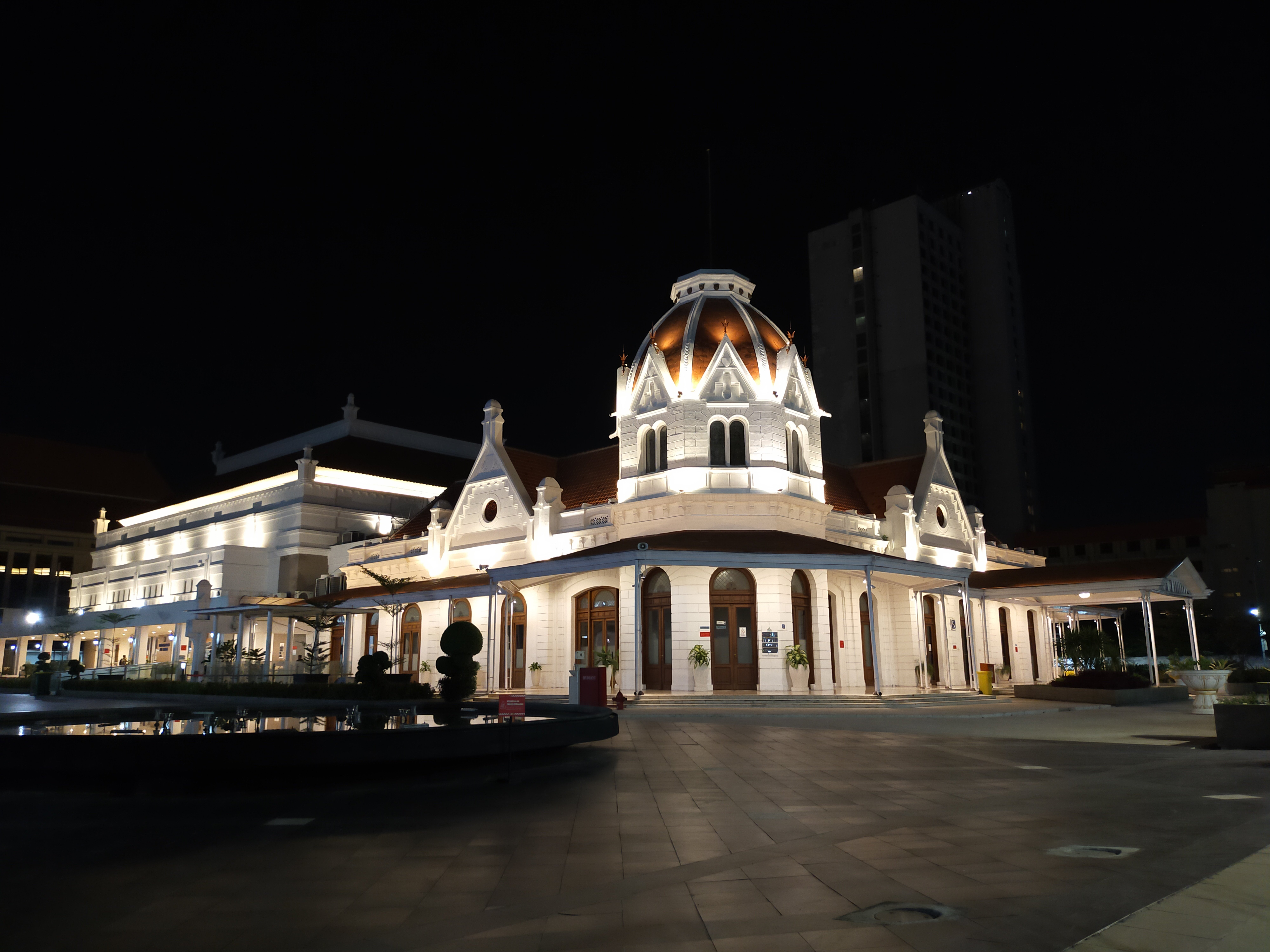
Most travelers pass through Surabaya on the way to the ferry for Bali or Sulawesi, but Java's second city has more to offer than just its port. With over 3 million people, it has the bustling energy of an Asian megacity, genuine historic character, and excellent food.
Start at Jembatan Merah (Red Bridge), the centre of the old colonial quarter. Dutch warehouses and trading houses line the nearby streets, and Chinatown's Pasar Pabean is just around the corner. In the Arab quarter, Masjid Ampel — one of the oldest mosques in Java — is reached through a covered bazaar on Jalan Ampel Suci. The Kalimas harbour still works the way it has for centuries, with Bugis pinisi schooners loading and unloading cargo for the outer islands.
Surabaya earned its title "City of Heroes" in November 1945, when local fighters held off British and Dutch colonial forces in one of the defining battles of the independence revolution. Tugu Pahlawan (Heroes Monument) marks the spot, and the nearby Hotel Majapahit was the scene of the flag incident that sparked the fighting. The House of Sampoerna museum, in a beautifully restored Dutch colonial compound, is the best museum in the city.
The modern city centres on Tunjungan Plaza, the main shopping hub. The zoo houses Indonesian species including Komodo dragons and Sumatran tigers. The Soviet-era submarine monument — a KRI Pasopati submarine dismantled and reassembled in a public park — is one of the stranger attractions in Southeast Asia. Surabaya also makes a good base for day trips to Malang, Madura island, and the volcanic landscapes of Bromo-Tengger-Semeru National Park.