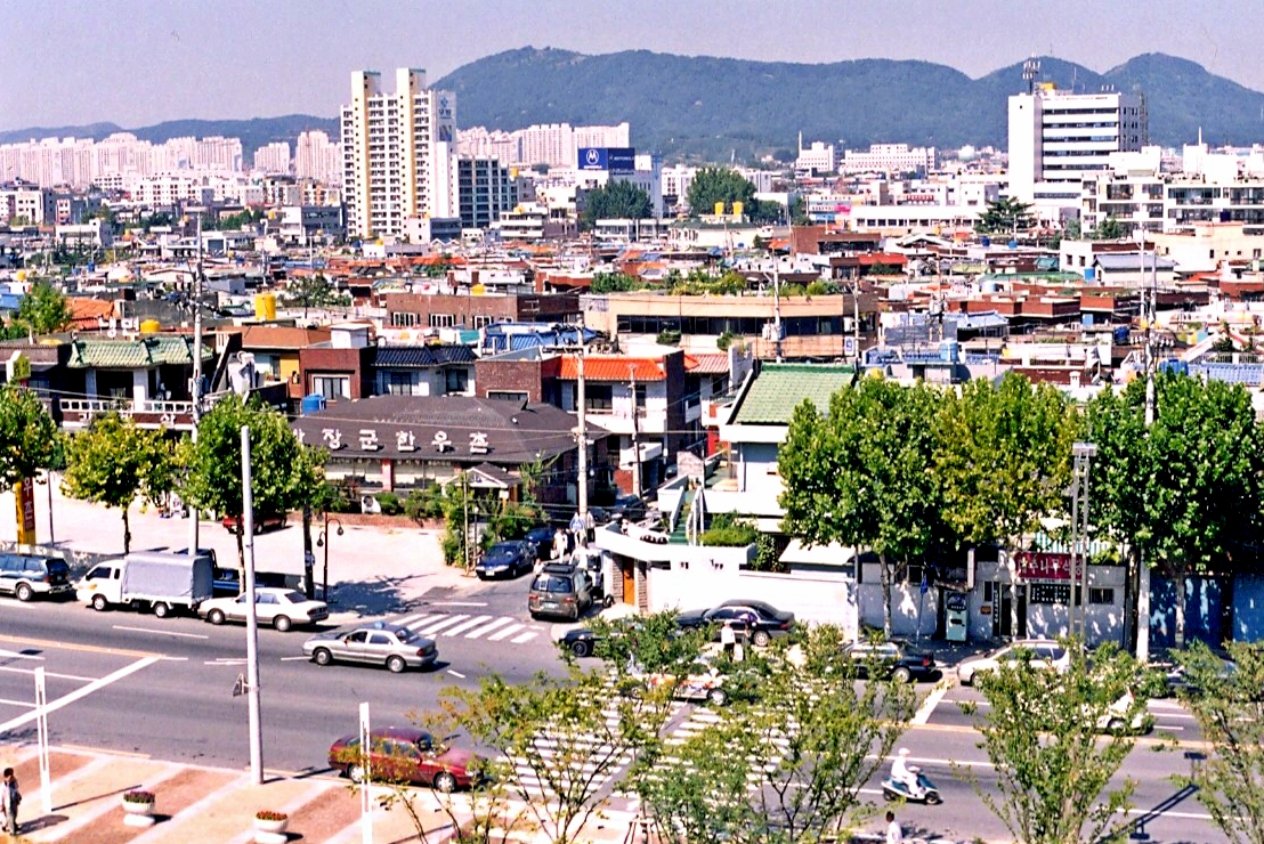
Daegu is South Korea's third-largest city, sitting in a valley in the southeast of the country. The geography traps heat and humidity in summer, making it one of the hottest cities on the mainland — nicknamed "Dafrican" by Koreans — while winters are milder than Seoul. The city is historically a textile and fashion centre and was long known for its apples; today it is a manufacturing and service hub with two universities and a lively youth culture.
Mount Palgong on the northern outskirts is the main natural draw: a forested mountain accessible by cable car or bus, with several Buddhist temples on its slopes and good views over the surrounding basin. Donghwasa Temple, a short bus ride from the city, has a colossal 33-metre outdoor seated Buddha visible from the approach road and a temple complex dating to the 5th century.
In the city, Seomun Market is one of Korea's largest traditional markets, at its best on weekday mornings and during the Friday-Saturday night market. Dongseongno is the main pedestrian street, packed with cafes, restaurants, and clothing shops, and the focus of the city's evening life. Gyeongsang-gamyeong Park preserves a Joseon-era provincial administrative compound in the city centre. Suseong Lake in the southern district is the favoured evening promenade for locals.
Daegu is well connected: the KTX links it to Seoul in about 1 hour 40 minutes and to Busan in around 40 minutes.