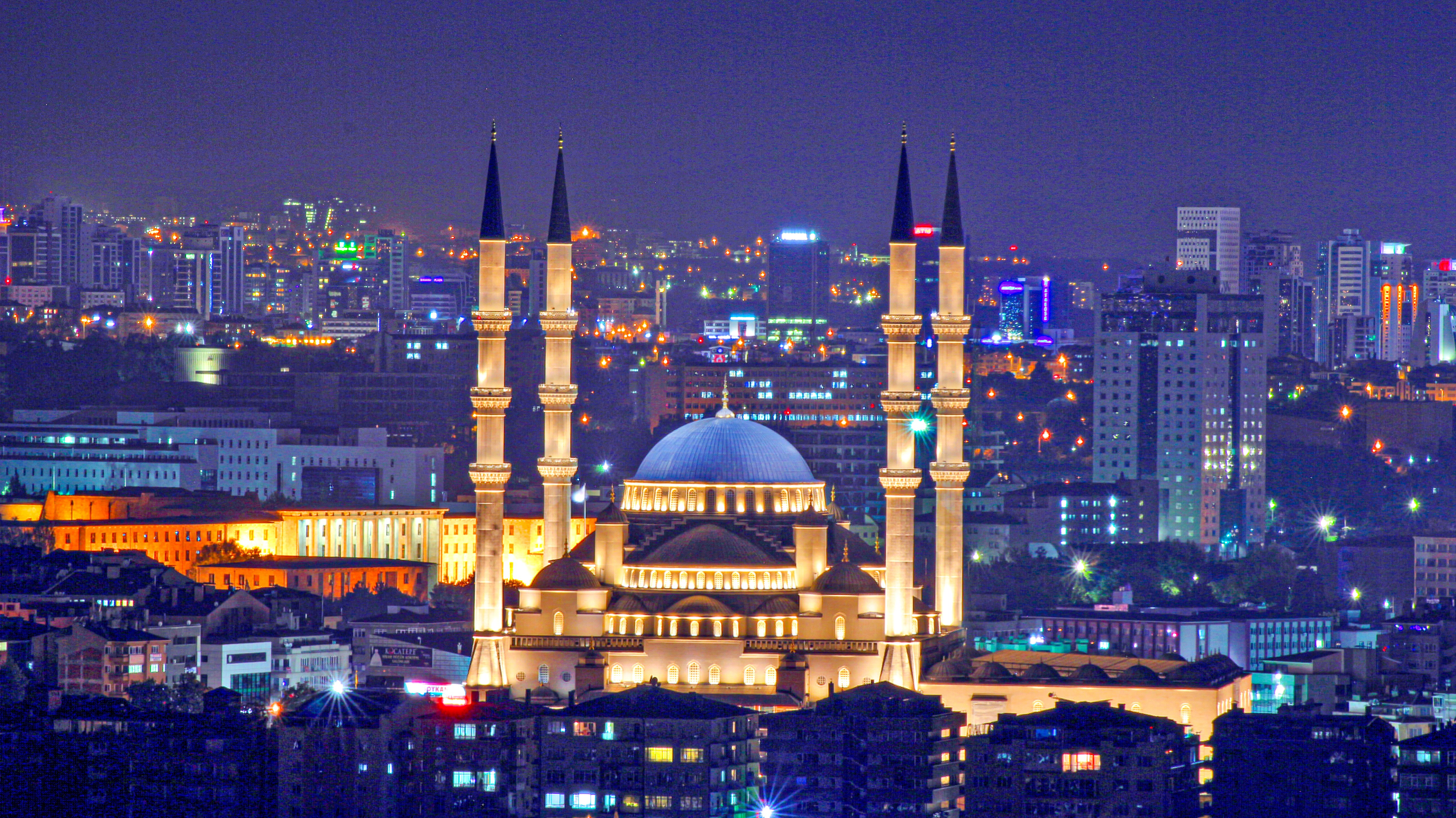
Ankara is a very old city that does not have much to show for that fact. Founded around 2000 BCE, it gained its modern prominence in 1923 when Mustafa Kemal Atatürk chose it as the capital of the new Turkish Republic — partly because it was far from the occupied Istanbul, and partly because it was a defensible inland city from which to build a nation.
The most interesting part of Ankara is Ulus, the old city built on two volcanic hills with winding, steep streets and an atmospheric bazaar. The main sight is Ankara Castle, which overlooks Ulus from a volcanic outcrop, its Byzantine walls incorporating fragments of Roman stonework. Nearby, the Temple of Augustus is famous among historians for the Res Gestae — the only surviving complete inscription of Augustus's official account of his reign — carved on its interior walls. The adjacent Hacı Bayram Mosque is an active pilgrimage site, and the Aslanhane Mosque has one of the finest surviving Seljuk wooden interiors in Turkey. The Roman Baths are also in the Ulus neighbourhood.
The Museum of Anatolian Civilizations should not be missed by anyone with an interest in history — it is one of the finest archaeological museums in Turkey, with a particularly strong collection of Hittite material, housed in a restored 15th-century Ottoman bazaar. The Anıtkabir — Atatürk's mausoleum — is an impressive piece of mid-century monumental architecture and is free to enter. The Ethnography Museum near Anıtkabir is quieter and has an excellent collection of Anatolian folk arts. For a different kind of historical honesty, the Ulucanlar Prison Museum documents modern Turkey's political history with unusual directness. The Kocatepe Mosque dominates the Kızılay skyline and is worth visiting for its interior.