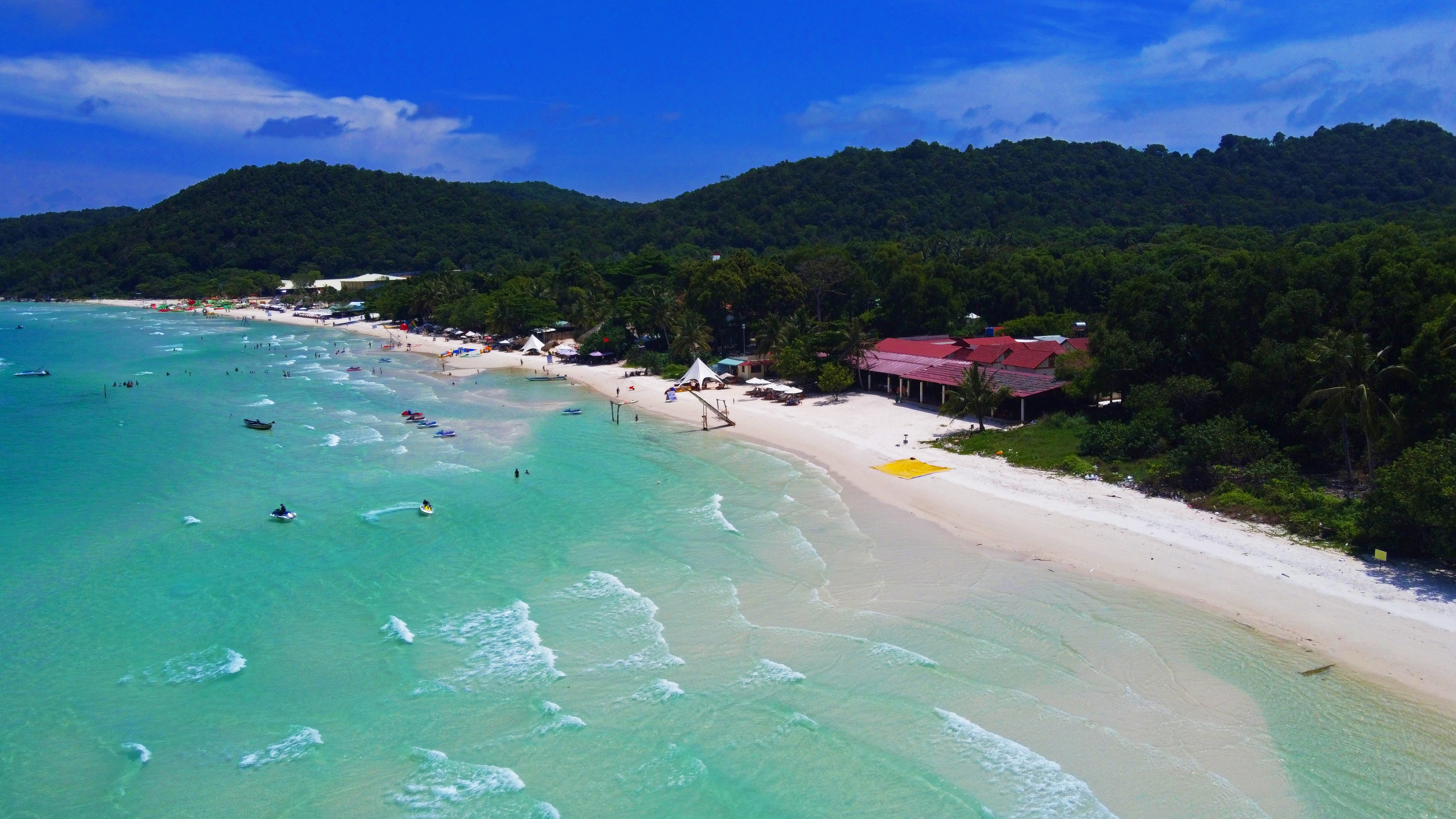
Phu Quoc is Vietnam's largest island and its most ambitious tourist project. Lying in the Gulf of Thailand off the southwestern coast, it is closer to Cambodia than to the Vietnamese mainland, and that geographic isolation gave it a century-long reputation as an obscure, unhurried place famous for fish sauce and pristine beaches. That reputation is increasingly historical: the island has been transformed in the past decade by a massive resort development programme, and parts of it now look like a tropical version of any other large-scale beach destination.
But the development hasn't reached everywhere. The northern third of the island is protected as Phu Quoc National Park, a fragment of old-growth tropical forest that shelters deer, civets, and a remarkable variety of birds. The east coast fishing villages — Ham Ninh and Rach Vem — still look and function as they have for generations. And the beaches on the west coast, where the water is warm and calm and the sunsets are long and orange, are genuinely beautiful even with the resorts behind them.
Long Beach (Bai Truong), stretching 20 km down the west coast south of Duong Dong town, is the main tourist strip. Sao Beach (Bai Sao) in the south is regularly cited as one of the best beaches in Southeast Asia: white sand, clear water, gentle waves, and a backdrop of palm-covered hills. Getting there from the main resort areas requires effort, which helps keep it manageable.
Duong Dong, the island's main town, is a genuine working settlement with a fish market, a night market, and streets that function for residents rather than purely for tourists. The island's most important product is still nuoc mam — fish sauce made by fermenting anchovies in barrels for twelve months — and the factories around Duong Dong are open to visitors.
Phu Quoc connects to the mainland by daily flights from Hanoi, Ho Chi Minh City, and several international hubs, and by ferry from Ha Tien and Rach Gia. The international airport opened in 2012, and since then the pace of change has been rapid.