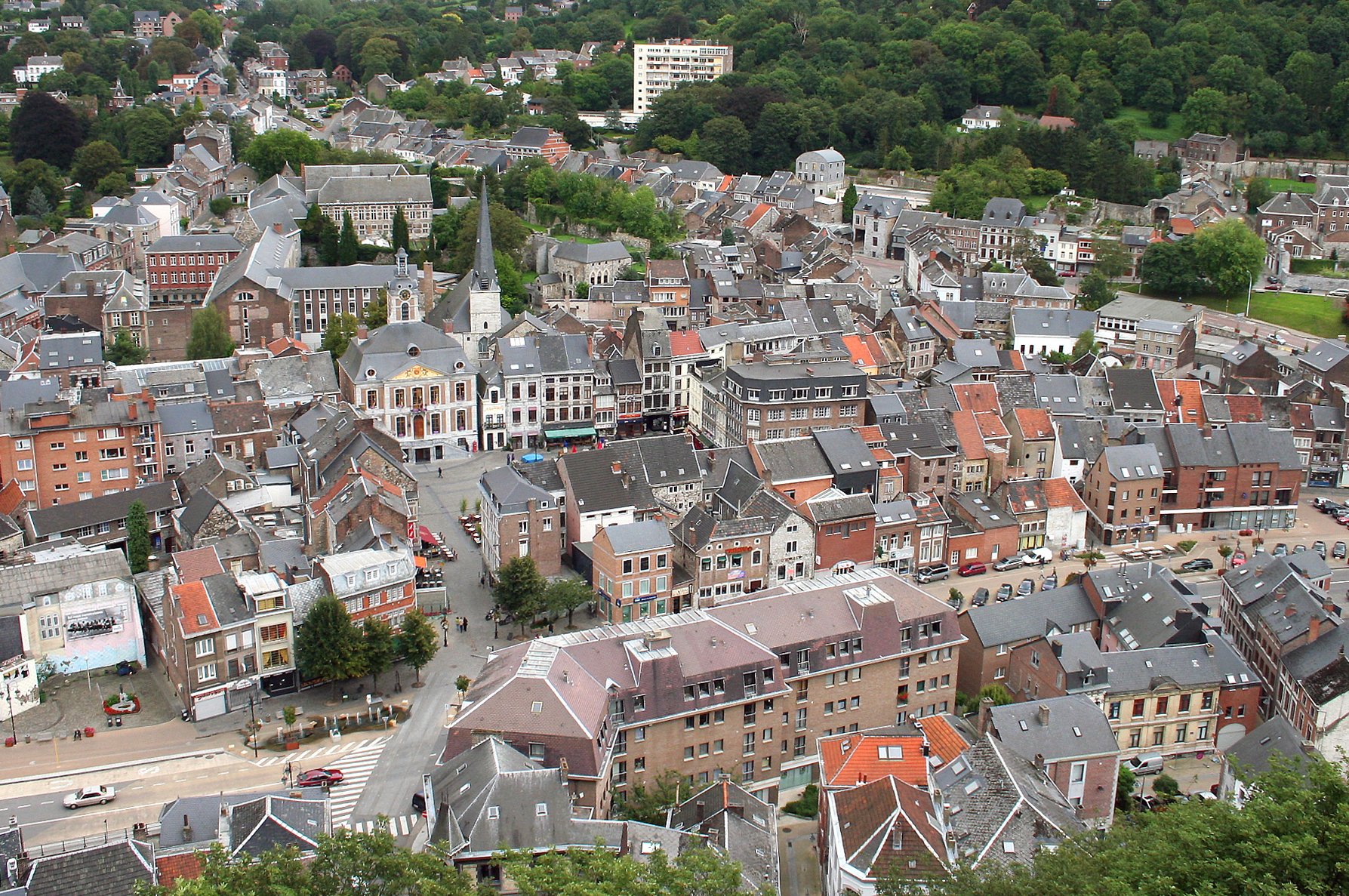
Huy is a small Walloon town on the Meuse River, roughly halfway between Namur and Liege. It has been a crossroads since Roman times, and the river, the bluffs, and the citadel above make it one of the more attractive stops in the Meuse Valley.
The town's landmark is the Collegiate Church of Notre-Dame, a 14th-century Gothic church with an enormous rose window — the Li Rondia — that is considered one of the finest in Belgium. Inside, the treasury holds a collection of medieval metalwork from the Meuse Valley workshops that were famous across Europe.
Above the town, the Citadel of Huy sits on a bluff overlooking the river. The current fort dates from the early 19th century and was used as an internment camp during both World Wars. It now houses a museum on the Nazi occupation, and the views from the ramparts are worth the climb. A cable car (télépherique) runs up from the town centre in summer.
The Grand Place is pleasant without being spectacular — a few cafes, the town hall, and the copper fountain called the Bassinia, one of four symbols of Huy that appear on the town's coat of arms: the bridge, the rose window, the citadel, and the fountain. Three kilometres south, the ruins of Solières Abbey make a worthwhile excursion into the Hoyoux valley.
Huy is an easy stop on the train line between Namur and Liège, about 25 minutes from either city.