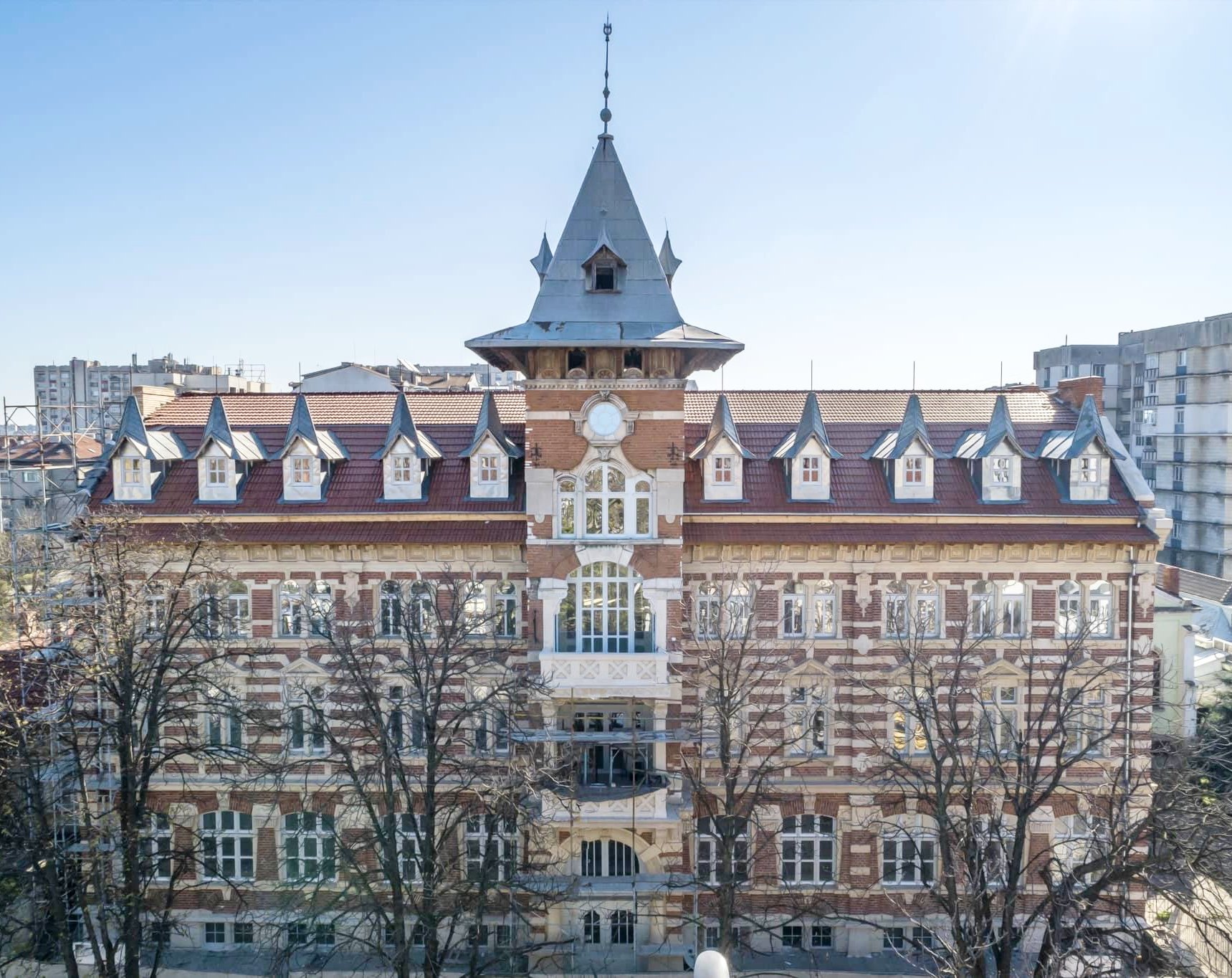
Ruse is Bulgaria's main Danube port and its most architecturally surprising city. Sitting on the southern bank of the river directly opposite the Romanian city of Giurgiu, it spent the second half of the 19th century rebuilding itself in the Western European styles then fashionable among the Bulgarian elite — Baroque facades, Art Nouveau ironwork, grand central squares. The result earned Ruse the nickname "Little Vienna," which oversells it, but the pedestrianised centre around Freedom Square does have an elegance you won't find anywhere else in Bulgaria.
The city's wealth came from river trade and from being the terminus of Bulgaria's first railway line — the 1867 Ruse–Varna route, which opened the country's interior to commerce. That history is preserved in the National Transport Museum, housed in the original 1867 station building. The Regional Historical Museum covers the longer arc from Roman Sexaginta Prista through Byzantine and Ottoman rule to Bulgarian independence. The Kaliopa House gives the best sense of how the city's merchant families lived at the height of their prosperity.
About 20 km south of the city, in a dramatic limestone gorge along the Rusenski Lom river, lies the Ivanovo Rock Monastery — a UNESCO World Heritage Site. The churches and chapels are cut directly into the cliff face, and the 13th–14th century frescoes inside are among the finest surviving examples of the Turnovo School of painting. A local bus runs there from Ruse; the walk from the road down to the monastery adds to the experience.
Ruse is also the most practical crossing point into Romania. The Friendship Bridge (Мост на Дружбата) over the Danube connects to Giurgiu on the Romanian side; from there it is a straightforward road and rail journey to Bucharest. For travellers moving between Bulgaria and Romania, Ruse is the obvious stopover — and with a half-day or full day, it rewards the pause rather than just being a transit point.