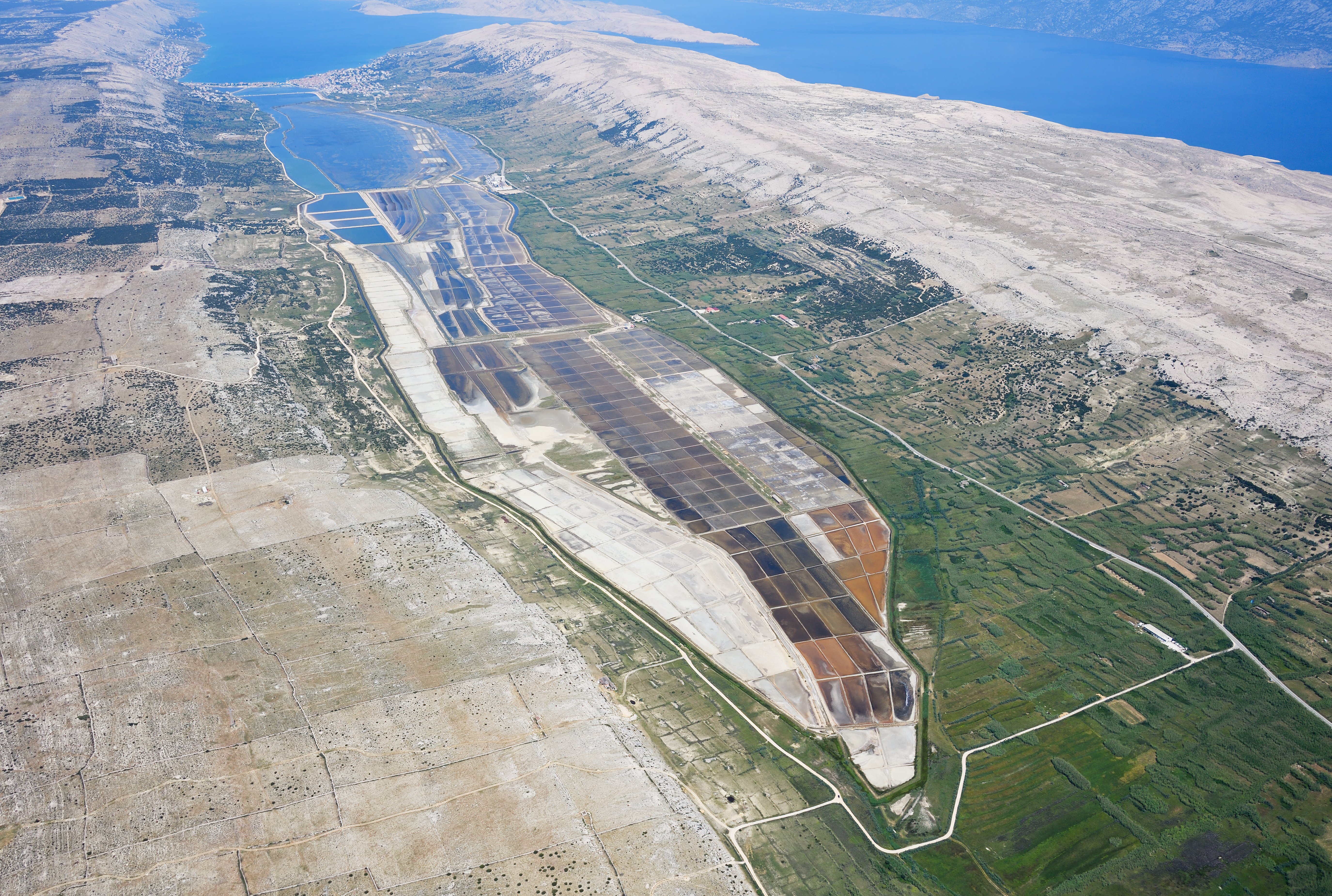
Pag is a long, narrow island in the north-Dalmatian archipelago, stretching some 60 kilometres between the Kvarner Gulf and the Velebit Channel. It is the fifth-largest island in Croatia, yet it feels worlds apart from the lush green islands further south. The landscape is stark and windswept — bare karst rock sculpted by the bora wind that howls down from the Velebit mountains, interrupted by pockets of green where salt-tolerant grasses and olive groves cling on.
What draws visitors is a combination of the unexpected. Pag is famous for its sheep's cheese (paški sir), sharp and salty from the herbs the sheep graze on and the sea spray that seasons the pastures. The Lun olive groves at the island's northern tip contain trees over 1,500 years old. And Novalja and Zrće Beach — one of Europe's best-known open-air clubbing destinations — present an entirely different side of the island.
Pag Town is worth a wander: designed in the 15th century by the architect Juraj Dalmatinac, it retains its Renaissance grid-plan layout with a Gothic church and a museum devoted to the local lace-making tradition (paška čipka), inscribed on UNESCO's Intangible Cultural Heritage list. For the curious, the Pag Triangle near Caska is a mysterious landform of unknown origin visible from the air.
The island is accessible year-round via the Pag Bridge from the mainland near Zadar, or by ferry from Prizna to Žigljen. In summer, the bridge road can get busy — arrive early or late to avoid the queue.