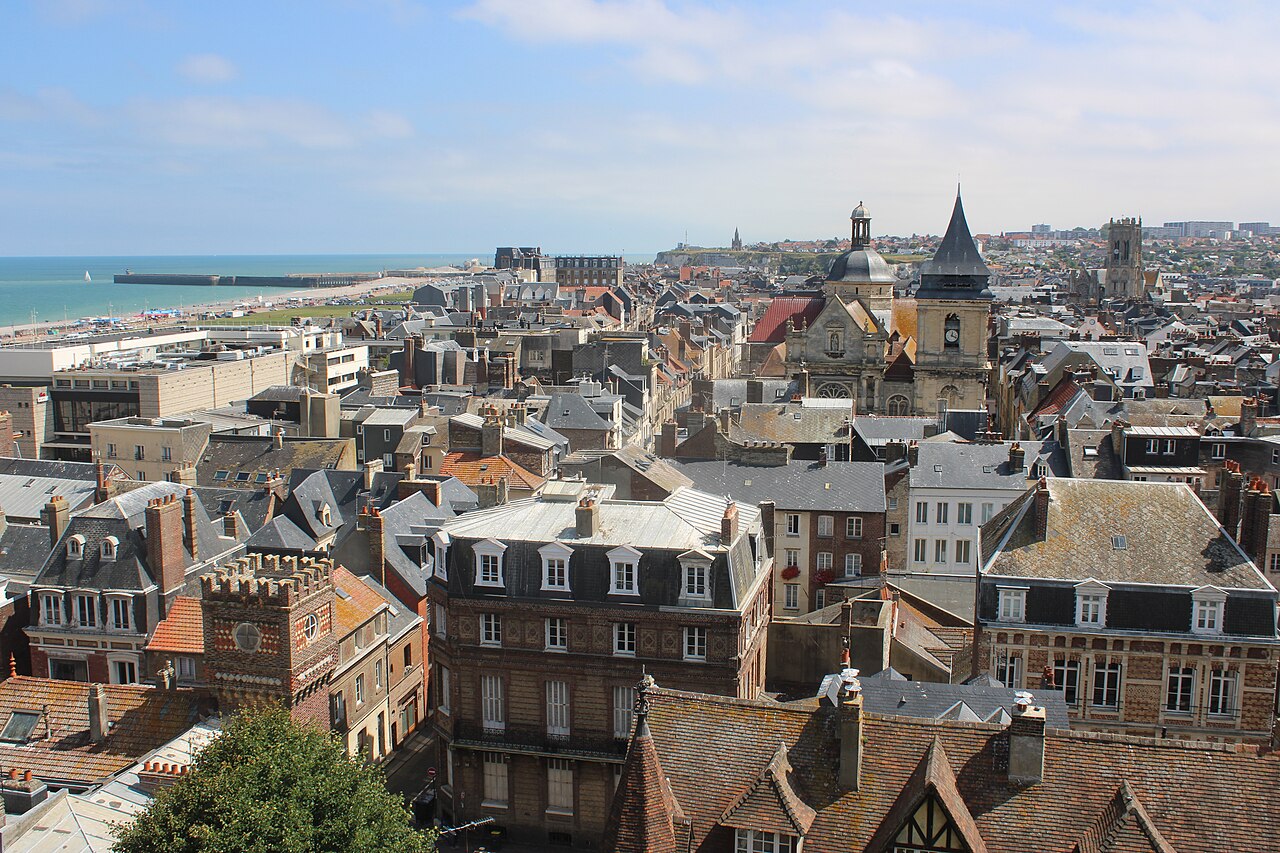
Dieppe
©
Dieppe

Dieppe

Normandy port town facing England, shaped by ferries, fishing, Channel light, and painterly seaside history.

Dieppe is a working port and seaside town on the Normandy coast, the closest point of France to England. Ferries still cross to Newhaven as they have for centuries, making Dieppe a natural gateway — though it rewards a few days' stay rather than a quick transit.

The town has a character shaped by its maritime past: fishing, trade, and an unlikely artistic legacy. In the late nineteenth and early twentieth century Dieppe attracted a colony of painters and writers — Pissarro, Monet, Sickert, Renoir, and Boudin all worked here, drawn by the particular quality of the Channel light. Oscar Wilde came too, to recover after his release from prison. That history sits quietly alongside the working docks and the busy Saturday market.

The seafront promenade stretches along a long pebble beach backed by chalk cliffs. It is not a resort beach in the Mediterranean sense, but it is bracing and beautiful, and the views along the cliffs towards Varengeville are genuinely fine. The beach also carries heavier memories: on 19 August 1942 the Dieppe Raid saw over six thousand Allied troops — mostly Canadian — land here under heavy fire. More than half were killed, wounded, or captured in a single morning. A memorial on the seafront and the graves in the Canadian War Cemetery at Hautot-sur-Mer mark that disaster.

The town centre is compact and walkable. The Grande Rue runs from the harbour up through the old quarter, lined with the kinds of fishmonger, cheesemonger, and market stall that remind you why people still cross the Channel just to shop. The castle on the cliff at the western end of town houses the Musée de Dieppe, which is well worth an afternoon: good maritime history, a strong collection of ivories carved by Dieppe craftsmen in their seventeenth-century heyday, and paintings by the artists who knew the place. The Church of Saint-Jacques in the town centre holds remarkable carvings that reflect the port's role in the age of exploration.

Guide

Eating Out

Dieppe takes seafood seriously. The fishing fleet still operates out of the harbour, and the Saturday market on Grande Rue sells fresh fish alongside cheese, charcuterie, and produce from the surrounding Norman countryside. The town has a cluster of brasseries and restaurants near the harbour that do well-priced fish dishes — moules marinières, sole normande, and herring in various preparations are the standards. The Saturday market is the social and gastronomic centrepiece of the week.

Guide

Getting There

Dieppe is connected to Newhaven in England by a regular ferry service operated by DFDS, making it one of the most direct crossings between England and France. The crossing takes about four hours; several sailings run daily. This is the classic route for travellers who want to arrive in France by sea rather than via the Channel Tunnel.

By rail, Dieppe is connected to Rouen (about an hour) and Paris Saint-Lazare (around two hours, with a change at Rouen in most cases). By road, it is on the D925 and is well signed from the A29 motorway. Coaches from Paris serve the town. There is no airport — the nearest are Rouen and Paris Charles de Gaulle.

Guide

Things to Do

Dieppe's main sights cluster around the harbour and the seafront: the castle museum on its clifftop perch, the Gothic church of Saint-Jacques, the long pebble beach, and the Saturday market that takes over the Grande Rue. The Dieppe Raid memorial is a short walk from the beach. Further afield, the cliff walks toward Varengeville and the Canadian War Cemetery at Hautot-sur-Mer are worth a half-day excursion.

Guide

When to Go

Dieppe is a year-round town but the atmosphere changes dramatically with the seasons. Summer (July–August) brings French holidaymakers to the beach, the cafes are full, and the Dieppe International Kite Festival — held every other year in September — draws enormous crowds and transforms the pebble beach into one of the more colourful sights in Normandy. The festival is one of the largest kite festivals in the world and worth planning around if you can.

Spring and autumn are quieter and often more rewarding for those interested in the food, the museum, and the town itself. The Saturday market runs year-round and is busiest in summer but never small. Winter is cold and damp, and the Channel winds make the seafront bracing, but the town is perfectly agreeable and the restaurants stay open. Ferry traffic from England keeps the harbour busy even in the off-season.