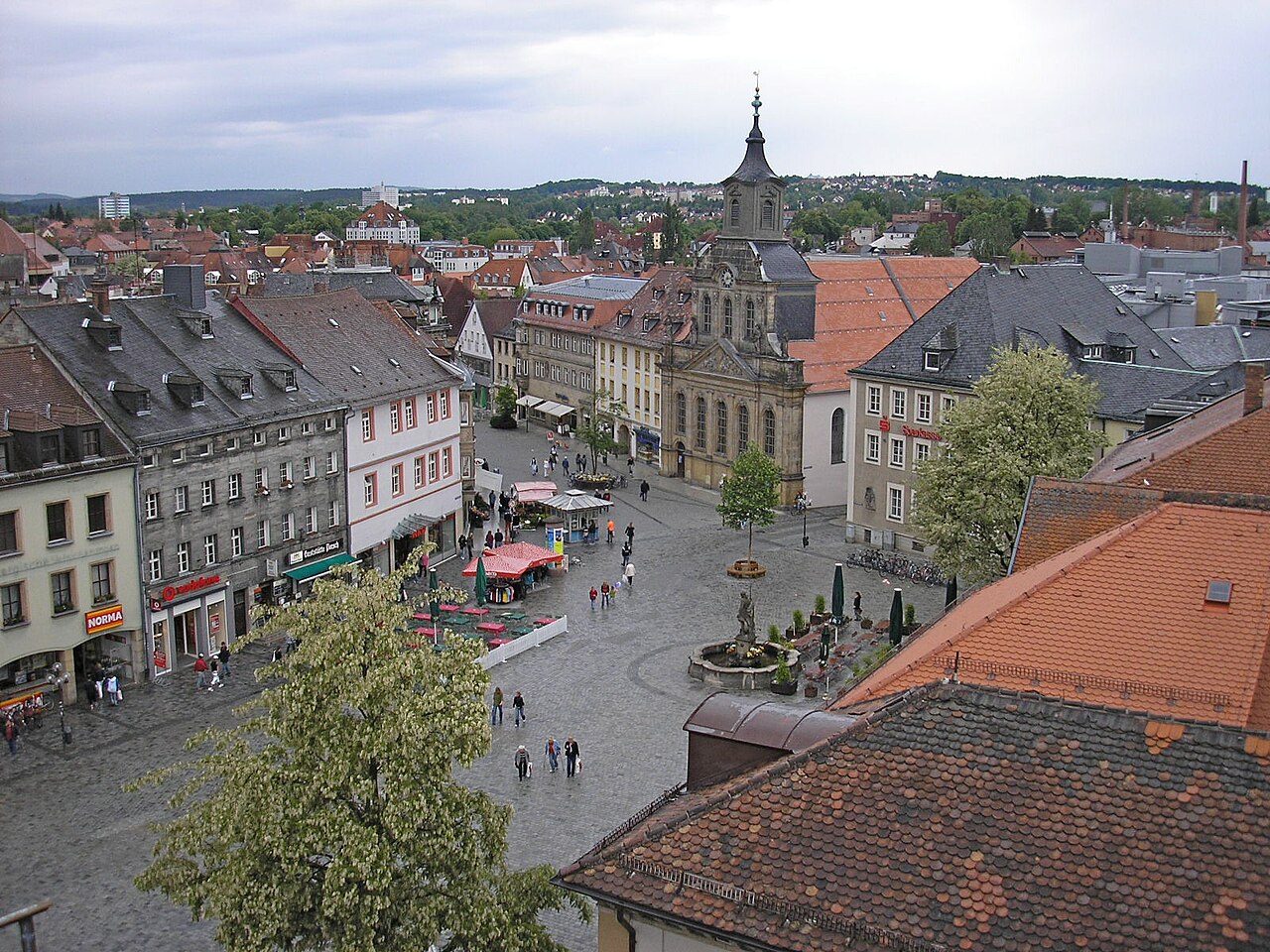
Bayreuth is a Franconian city of about 73,000 people, known throughout the world for one thing: Richard Wagner. The composer moved here in 1872, built his own opera house — the Festspielhaus — on a hill above the city, and inaugurated his festival in 1876. It hasn't stopped since. Every July and August, the Bayreuth Festival draws opera pilgrims from around the world to sit through four- and five-hour Wagner performances in a theatre designed by Wagner himself, with sight lines and acoustics engineered specifically for his music. Tickets are famously hard to obtain — waiting lists run to years.
But Bayreuth offers more than Wagner. The Margravial Opera House (Markgräfliches Opernhaus), built in 1748 for the Margrave of Brandenburg-Bayreuth, is one of the finest surviving Baroque theatres in Europe and a UNESCO World Heritage Site. The ornate interior — tiered boxes, gilded woodwork, painted ceilings — is genuinely breathtaking. Outside the city, the Hermitage gardens were laid out in the early 18th century as a retreat for the Bayreuth court, with fountains, grottoes, and a Chinese teahouse that still feel improbably whimsical.
Wagner's house, Wahnfried, is now a museum dedicated to his life and work. He and Cosima are buried in the garden behind it. The city's historic core around the Stadtkirche and the old market square is pleasant to wander, and Bayreuth's relative obscurity — compared to Nuremberg or Munich — means it's rarely overcrowded. Fans of Franconian beer should seek out Maisel's brewery on Kulmbacher Strasse, which includes one of the best cooperage museums in Bavaria.