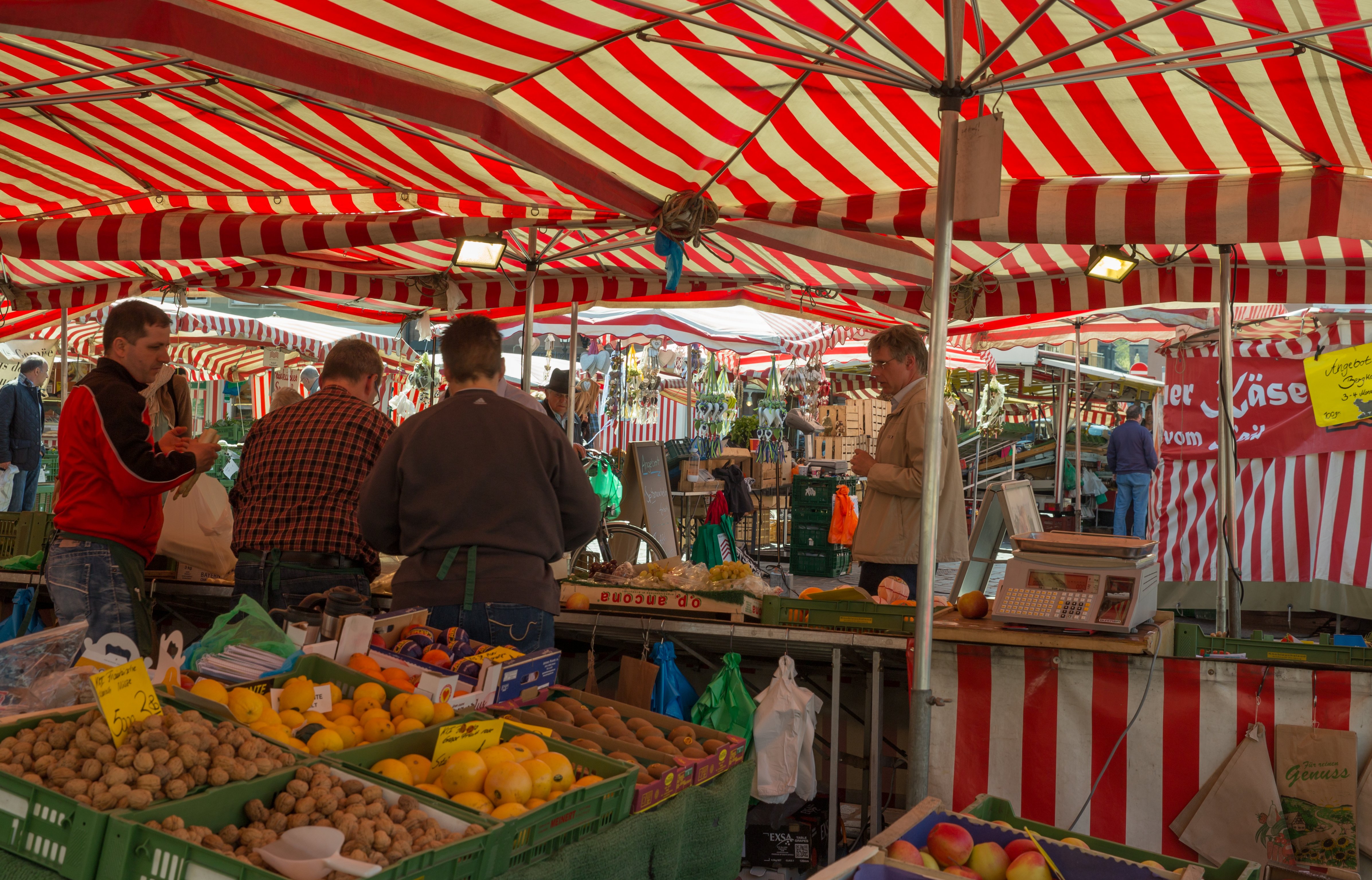
Nuremberg (pop. 520,000) was one of the most powerful cities of the Holy Roman Empire and, seven centuries later, the chosen stage for the Nazi Party's mass rallies — a history the city confronts directly rather than sidesteps. The medieval Altstadt sits inside a complete circuit of 15th-century walls, its red-roofed skyline dominated by the Kaiserburg, the imperial castle that loomed over the city for a thousand years. Much of the old centre was bombed to rubble in January 1945 and rebuilt stone by stone from salvaged material; the streets now look genuinely medieval even where the fabric is post-war.
The city is also the setting for the Christkindlmarkt, Germany's most famous Christmas market, which takes over the Hauptmarkt each Advent with stalls selling Lebkuchen (the local spiced gingerbread), Glühwein, and handmade ornaments. Come at noon any day of the year to watch the Frauenkirche's Männleinlaufen clock animate above the square. In summer, walk the Pegnitz River through the old town, stop at the Schöner Brunnen fountain — spin the golden ring set into its railing for luck — and eat Nuremberg's small, heavily-spiced bratwurst. The Nuremberg trials, which established the legal framework for prosecuting crimes against humanity, were held in the city's Palace of Justice in 1945–46; the Memorium Nürnberger Prozesse, including Courtroom 600, is open to visitors.
Nuremberg lies 150 km north of Munich; the train takes just over an hour. The west side of the old town gives onto Gostenhof, a lively working-class neighbourhood with good bars and cheap restaurants that offers a counterpoint to the tourist-oriented old city.