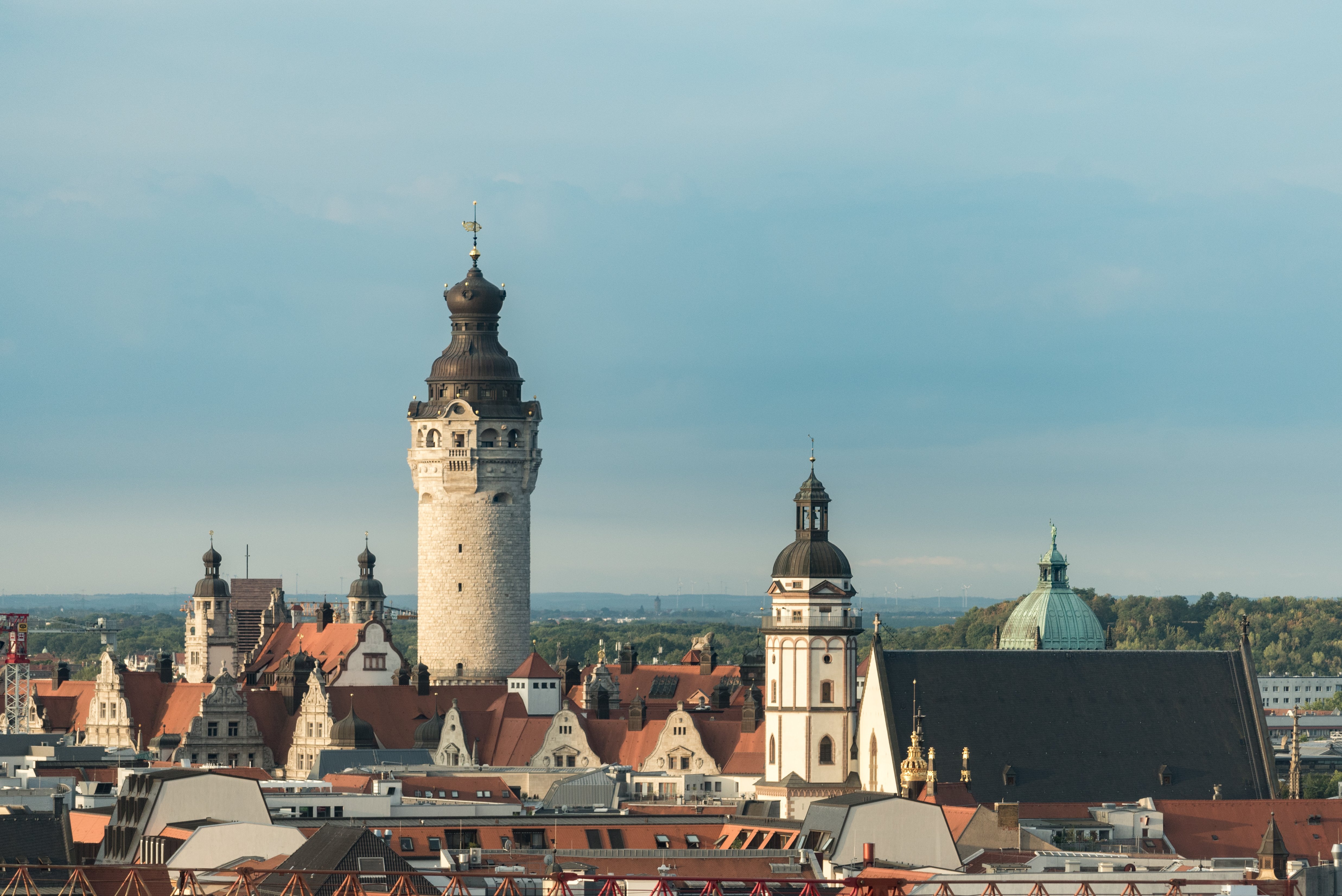
Leipzig is one of the most dynamic cities in eastern Germany — a place with a musical heritage to rival Vienna, a pivotal role in the fall of the Berlin Wall, and a creative energy that has made it a magnet for artists and students since reunification.
The city was home to Johann Sebastian Bach for the last 27 years of his life, and the Thomaskirche where he worked as cantor still hosts performances of his music weekly. The Nikolaikirche is where the peaceful Monday demonstrations began in 1989, setting off the chain of events that brought down the Wall. Both churches are worth visiting even if you are not religious — they are the heart of Leipzig’s story.
The compact old town centres on the Markt, dominated by the handsome Renaissance Altes Rathaus. Good eating and drinking clusters around the Barfußgässchen, and Auerbachs Keller — featured in Goethe’s Faust — is one of Germany’s most famous restaurants. Southeast of the city, the colossal Völkerschlachtdenkmal marks where Napoleon was defeated in 1813 in what was then the largest battle in history.
The Spinnerei in the western Plagwitz district is Leipzig’s most exciting contemporary art complex — a former cotton mill turned gallery quarter that launched the New Leipzig School of painting onto the world stage. The Stasi Museum at the Runde Ecke and the Zeitgeschichtliches Forum give the best account of life in the GDR anywhere in Germany.