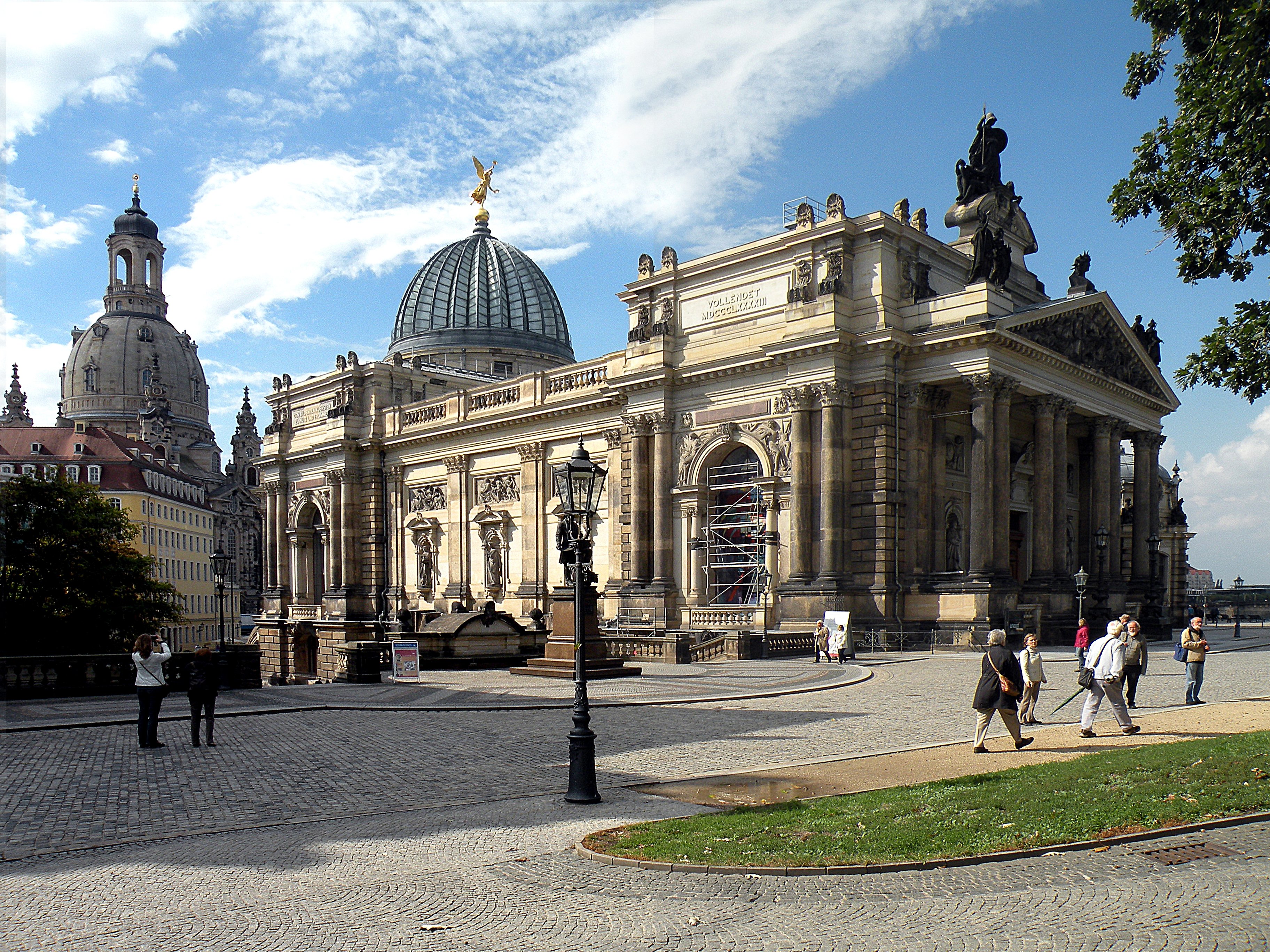
“Florence of the North” is how Dresden has been called. A southern city in the North, a Baroque metropolis. The city experienced its golden age in the first half of the 18th century under the rule of Augustus the Strong, Elector of Saxony and King of Poland. The Zwinger, the cathedral, the Baroque Königstraße, Pillnitz Palace and not least the countless art treasures of the museums and priceless wealth of the "Green Vault" treasure chamber all testify to this era.
In the 19th century painters, sculptors, authors and musicians - representatives of the early romantics - met here. Dresden was an innovative economic location and one of the richest cities in Germany. Today one can discover the largest villa quarter in the country. The district around Martin-Luther-Platz emerged at the turn of the century with an alternative city culture, with its own theatre, modern music and pubs. The picturesque and architecturally interesting Hellerau Garden City provides a worthwhile detour.
The special atmosphere in the City - characterised by the apparent contradictions of the dreamy, almost conventional lifestyle of a royal residence and a creative, cosmopolitan cultural centre - has attracted and inspired countless poets and friends of literature over the centuries. At the end of the 18th and beginning of the 19th centuries Dresden became one of the centres of German literature, especially for the Romantic movement. The salons held by Christian Gottfried Körner, and later the house of Ludwig Tieck, were popular meeting places for great poets such as Goethe, Schiller, Herder, Kleist and Novalis and important philosophers such as Humboldt and the Schlegel brothers.
A further highlight for literature in Dresden came a hundred years later. From 1919 the newspaper "Menschen" was a focal point for such well-known expressionists as Ivan Goll, Friedrich Wolf, Paul Adler and Oskar Kokoschka. Erich Kästner spend his childhood and youth years in Dresden and published his first poems here. Martin Anderson-Nexö, Gerhart Hauptmann and Friedrich Gerstecker produced some of their most important works in Dresden. It was in Radebeul near Dresden that Karl May created the shining characters of his youth novels.
The fine arts as well have enjoyed a long tradition in Dresden. Even back in the Middle Ages, important artists of the time were active in Dresden with commissions from the Saxon court. The Dresden Art Academy, today's College of Fine Arts, whose roots stretch