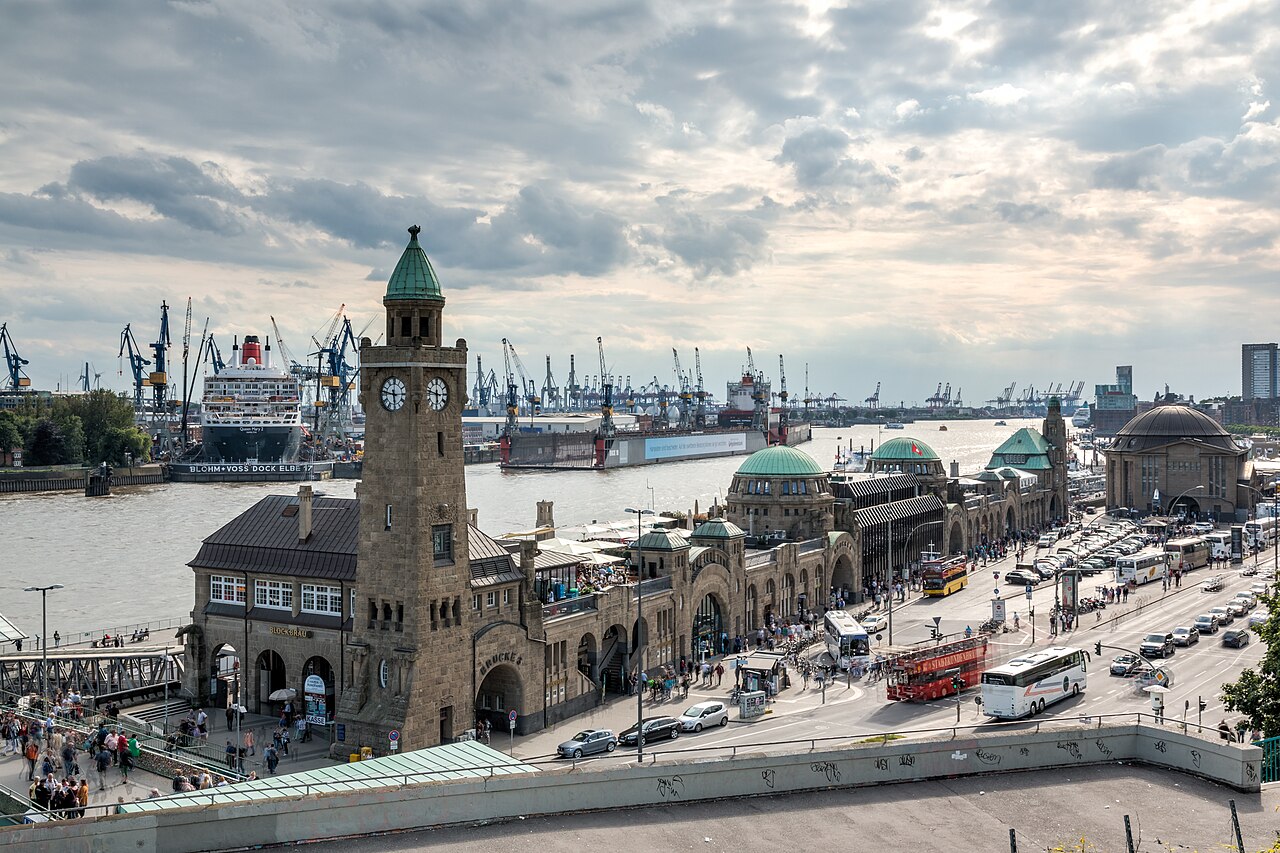
Hamburg is Germany's second city and its great port — a hard-edged northern metropolis built on shipping, trade, and a cheerful disregard for the buttoned-up south. The Elbe brings ocean-going ships a hundred kilometres inland to one of Europe's busiest harbours, and the city's character comes from that maritime traffic: red-brick warehouses, working cranes, ferries crossing the river, and a Hanseatic mercantile pride that has shaped Hamburg for eight centuries.
The historic core wraps around the Binnenalster and Aussenalster, two artificial lakes in the middle of the city where Hamburgers sail dinghies in summer and skate in winter. South of the lakes you reach the Speicherstadt, the world's largest warehouse district, a UNESCO World Heritage Site of seven-storey brick warehouses on oak piles, threaded with canals. Next door, the new HafenCity quarter has risen out of disused docks, crowned by the Elbphilharmonie — Herzog & de Meuron's wave-roofed concert hall on top of an old cocoa warehouse, now the city's defining landmark. Just west, the gutted spire of St. Nikolai — left standing as a memorial to the 1943 firebombing — is the most affecting reminder of what the city went through in the Second World War.
Hamburg's other side is St. Pauli and the Reeperbahn, the most famous red-light district in Germany and the street where the Beatles played their formative club gigs in 1960. It is loud, sleazy, and entertaining, with a strip of music venues, bars, and theatres alongside the sex shops. The neighbouring Schanzenviertel is the alternative scene — graffiti, squats, late-night kebab shops and good restaurants. Altona to the west has the Sunday morning Fischmarkt, going since 1703, and Eppendorf in the north is leafy and bourgeois.
Hamburg is also greener than its industrial reputation suggests, with parks, tree-lined canals and over 2,500 bridges (more than Venice and Amsterdam combined). Planten un Blomen on the western edge of the centre has botanical gardens and summer water-light concerts; Ohlsdorf in the far north is the largest landscaped cemetery-park in the world. Further afield, the Treppenviertel of Blankenese rises in white-painted terraces above the Elbe. It rains a lot — bring a raincoat, learn the word Schmuddelwetter, and don't expect Mediterranean charm. What you get instead is a confident, cosmopolitan port city with serious architecture, serious music, and a serious appetite for fish sandwiches and beer.
Day trips run easily to Lubeck, Bremen and Schwerin, or further afield to the North Sea coast.