Tinos
©
Tinos

Tinos

Cycladic island and major Orthodox pilgrimage centre, also known for marble villages and craft traditions.

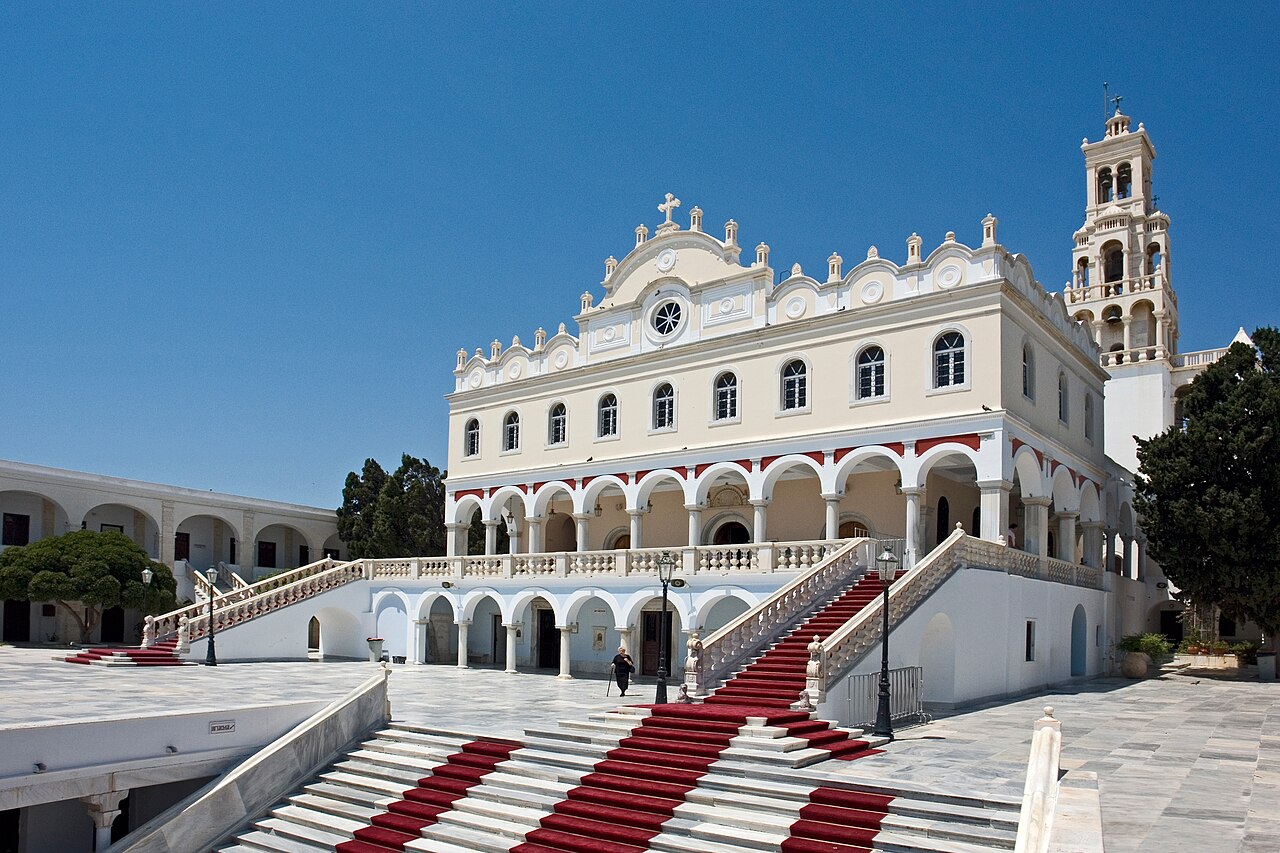
Tinos is one of the most important pilgrimage sites in the Greek Orthodox world. The Church of Panagia Evangelistria in Tinos town houses a revered icon of the Virgin Mary, and on the Feast of the Assumption (15 August) thousands of pilgrims crawl on their knees up the main street from the harbour to the church. It is one of the most extraordinary sights in Greece, and one that most foreign visitors know nothing about.

Beyond the religious significance, Tinos is a quietly lovely island — less developed than its Cycladic neighbours, with beautiful marble villages, a strong artisanal marble-carving tradition, and excellent local food. The Venetians left their mark in the form of the Exomvourgo fortress and the extraordinary dovecotes (peristereones) — around a thousand elaborately decorated stone towers dotting the hillsides. The village of Volax, surrounded by enormous spherical granite boulders, is one of the most surreal landscapes in the Aegean. The island is easy to reach from Athens by ferry and makes a rewarding alternative to the more crowded Cycladic islands.

Guide

Getting There

Tinos is well connected by ferry to the Greek mainland and nearby islands. Ferries run frequently from Piraeus (Athens' main port), with fast catamarans taking about 3.5 hours and conventional ferries 5–6 hours. There are also services from Rafina, which is closer to Athens airport.

From the other Cycladic islands, Tinos is an easy hop: Mykonos is about 30 minutes away, Andros 45 minutes, and Syros about an hour. This makes Tinos easy to combine with island-hopping through the northern Cyclades.

Tinos has no airport. This is not a serious hardship — the ferry connections are good, and the boat arrival into Tinos harbor is a pleasure in itself.

Guide

When to Go

Tinos has a typical Aegean climate: hot dry summers and mild wet winters. The island is busy in summer but far less crowded than neighbouring Mykonos, which makes it more appealing in July and August than many Cycladic islands.

The major exception is 15 August, the Feast of the Dormition of the Virgin Mary. On this day Tinos transforms: tens of thousands of pilgrims arrive by boat, accommodations fill weeks or months in advance, and the main street from the harbor to the church becomes a river of crawling devotees. It is one of the most moving and overwhelming spectacles in Greece. If you want to witness it, book far ahead. If you don't want the crowds, avoid the week around August 15.

March 25, Greek Independence Day, is also significant — the announcement of independence was timed to coincide with the feast of the Annunciation, and Tinos, with its miraculous icon discovered two years earlier, has always had a particular resonance on this date.

Spring (April–June) and early autumn (September–October) offer the best combination of good weather, fewer crowds, and lower prices.