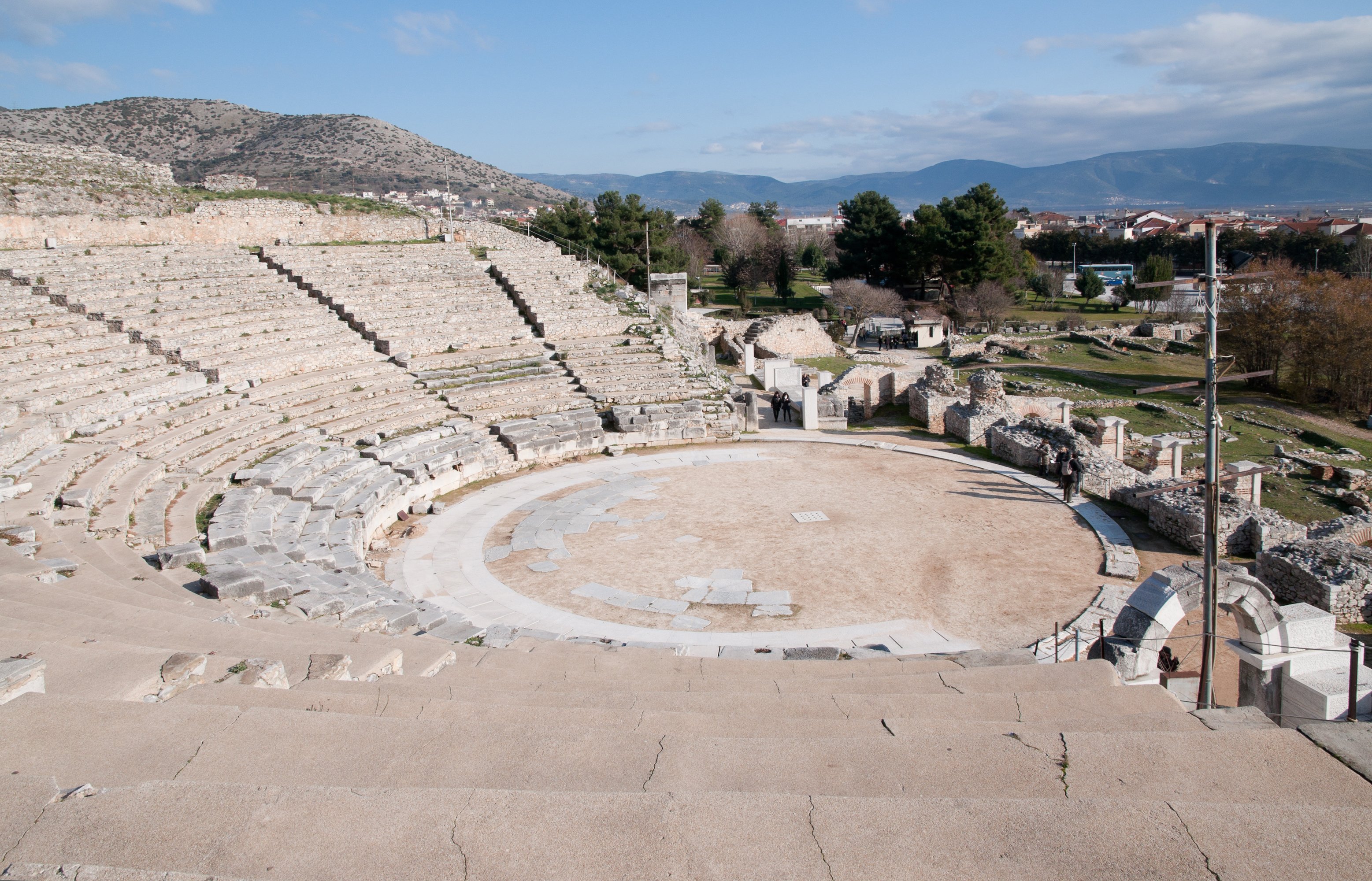
Philippi is one of the most important archaeological sites in northern Greece, lying on the plain of Drama in eastern Macedonia, about 15 kilometres from Kavala. Founded by Philip II of Macedon in 356 BC to control the nearby gold mines, the city later became famous as the site of the battle where Octavian and Mark Antony defeated Brutus and Cassius in 42 BC, ending the Roman Republic.
For many visitors, though, Philippi's significance is religious. This is where the Apostle Paul first preached Christianity in Europe, around 49 AD. The ruins of two large basilicas — one from the 5th century, the other from the 6th — dominate the site, alongside a well-preserved Roman forum, a theatre (still used for performances in summer), and the remains of the Roman road Via Egnatia that once connected Rome to Constantinople. A small stream outside the walls is traditionally identified as the place where Paul baptised Lydia, the first European convert.
The site was inscribed as a UNESCO World Heritage Site in 2016. The on-site museum is modest but helpful for understanding the layout. You will want at least two hours to explore the ruins properly. Philippi is easily visited as a day trip from Kavala, which has better restaurants and places to stay. The site is open year-round, and visiting in spring or autumn means fewer crowds and more comfortable temperatures for walking the exposed ruins.