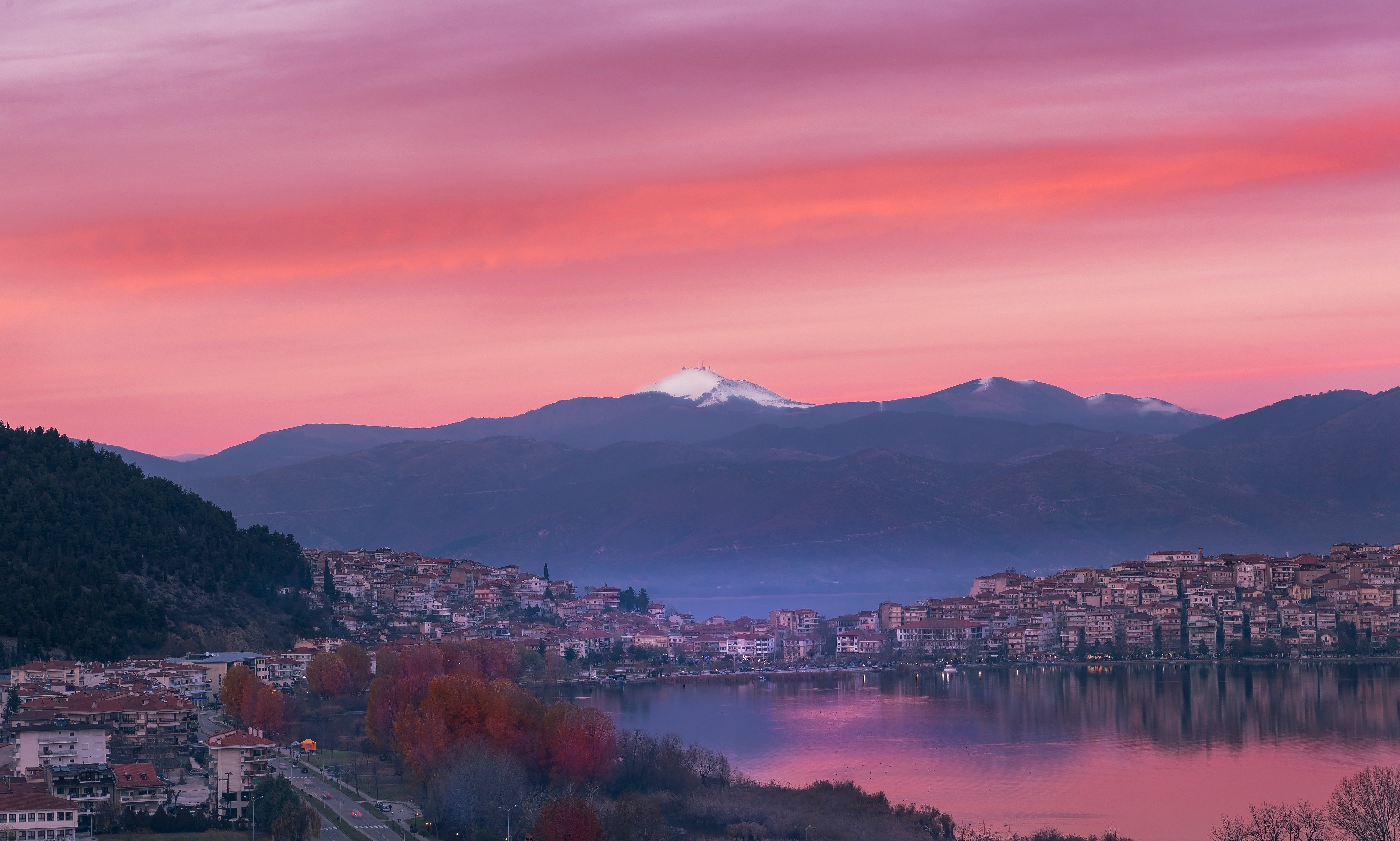
Kastoria is one of the more unusual cities in Greece — it sits on a long narrow peninsula that juts into Lake Orestiada, nearly encircled by water, and from certain angles looks exactly like an island floating in the mountains of northwestern Macedonia. The setting alone would be enough to justify a visit. What lifts it further is an extraordinary concentration of Byzantine churches — roughly 70 survive within the city, some dating from the 10th and 11th centuries — and a fur-trading tradition that made this a wealthy merchant town for several centuries and left behind a neighbourhood of grand stone mansions unlike anything else in northern Greece.
The city's name comes from "kastoro," the Greek word for beaver. For centuries, Kastoria's craftsmen worked beaver and other furs into luxury coats and goods that were traded across the Ottoman Empire and into Western Europe. The industry faded as wild beaver populations collapsed, but Kastoria remained a fur centre, pivoting to mink and other farmed pelts. The fur warehouses and workshops — many on the western shore road — are still active today, and you'll see fur coats advertised in shop windows throughout the city.
The Byzantine Museum holds over 700 icons, murals, and religious artefacts gathered from the city's churches, providing a good introduction before you start walking. Then work through the peninsula on foot: the Monastery of Panagia Mavriotissa on the eastern shore is the single most evocative site, its 11th-century buildings reflected in the lake. The Folklore Museum, housed in the 18th-century Nerantzis-Aivazis mansion, documents the fur-trade era with furniture, textiles, and domestic objects that paint a picture of surprising prosperity.
For most travellers, Kastoria is a one-or-two night destination, and that's about right. The Byzantine churches require time to appreciate — many are locked and need keys obtained from the caretaker — but the overall atmosphere of the lakeside peninsula, the quiet backstreets of the old town, and the reflections on Lake Orestiada at dusk make it one of the more memorable stops in the north of the country.