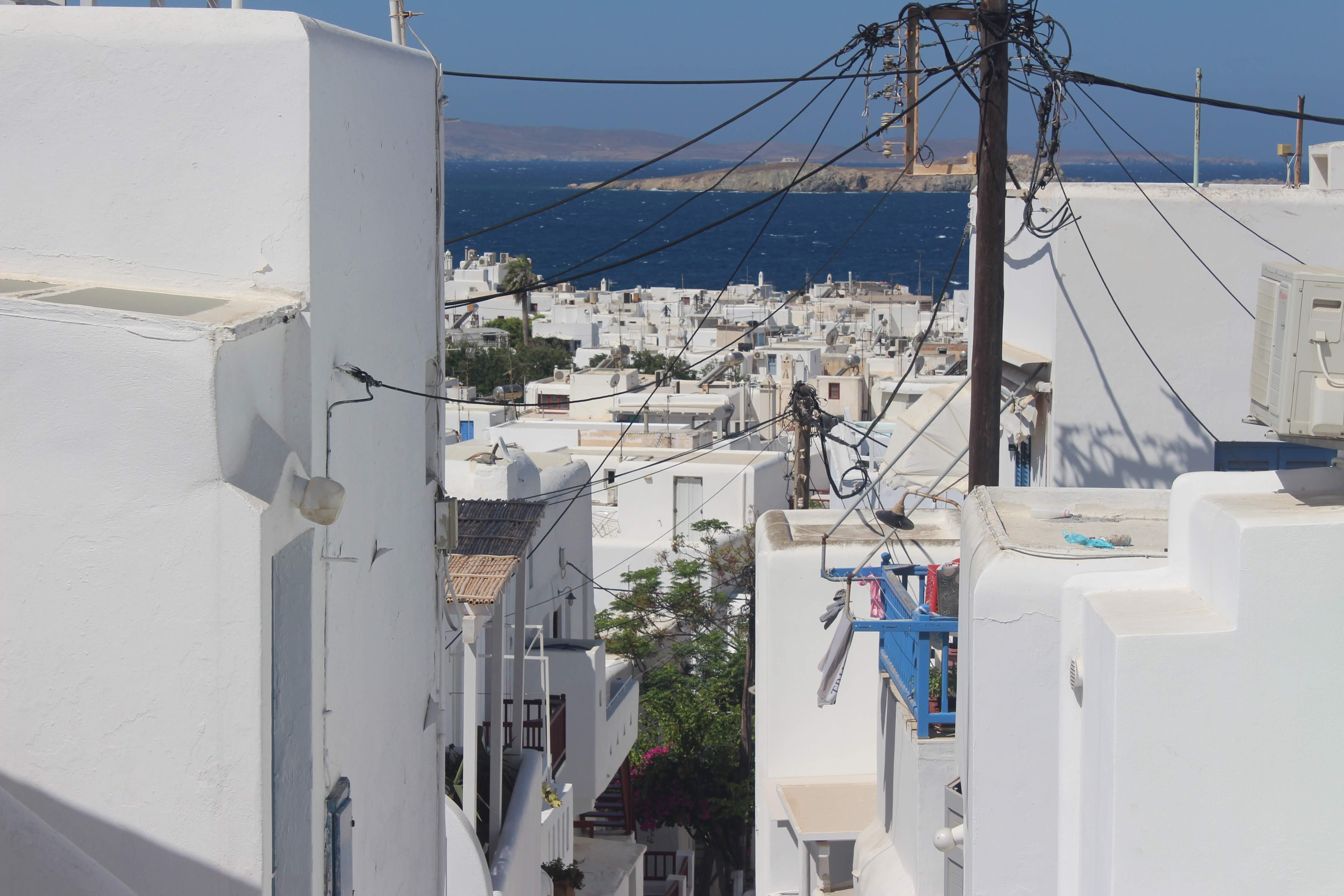
Mykonos is the most famous party island in Greece, but it is also one of the most photogenic. The main town (Chora) is a maze of whitewashed alleys, blue-domed churches, and bougainvillea-draped balconies tumbling down to a harbour where fishing boats and superyachts share the waterfront. The Cycladic architecture is gorgeous and strictly protected — no neon, no tower blocks, everything dazzling white with splashes of colour.
The island's reputation rests on its beaches and its nightlife. Paradise and Super Paradise beaches on the south coast are the epicentre — beach clubs pump music from mid-afternoon until dawn, and the party scene draws an international crowd all summer. But there are quieter beaches too: Agios Stefanos in the north, Agrari on the southeast coast, and Panormos on the north shore for those who want sand without a DJ.
The essential day trip is to Delos, a tiny uninhabited island just two kilometres offshore and one of the most important archaeological sites in Greece. According to myth, it was the birthplace of Apollo and Artemis, and the ruins of temples, houses, and mosaics from its centuries as a sacred site are remarkable. Boats leave from Mykonos harbour every morning.
Little Venice, where 18th-century captains' houses overhang the sea on the western edge of town, is the place for a sunset drink. The windmills on the ridge above are the island's most photographed landmark. And Petros the Pelican — the mascot of Mykonos since 1954 — still patrols the waterfront, posing for photographs with varying degrees of enthusiasm.