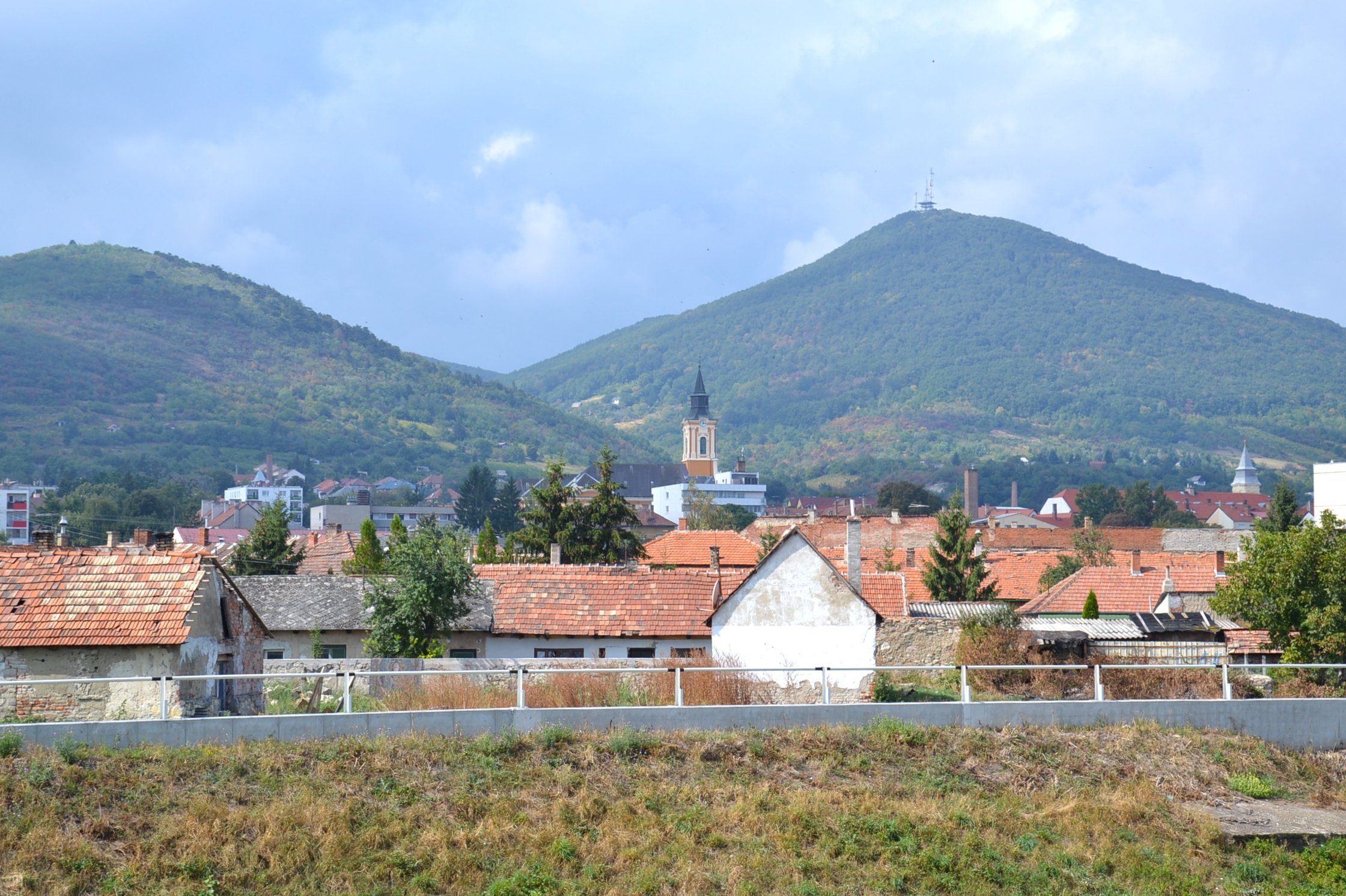
Sátoraljaújhely is Hungary's northernmost town, tucked against the Slovak border at the foot of the volcanic Zemplén Hills. The poet Sándor Petőfi described its setting as "incomparably beautiful," and the hills — often compared by visitors to a miniature Vesuvius — still dominate the view.
The town has been a regional centre since the 13th century, when King Stephen V granted it town privileges in 1261. Sitting on the trade routes between Russia, Poland, Transylvania and central Hungary, it thrived on the famous Tokaj-Hegyalja wine trade. Ferenc Rákóczi II was born nearby in Borsi, and Lajos Kossuth launched his political career here. The linguist Ferenc Kazinczy worked in the town and in neighbouring Széphalom, where his memorial stands today.
Modern Sátoraljaújhely is a town of about twenty thousand people. Industry never became dominant, which has the happy side effect of preserving clean air and unspoiled countryside. The Magas-hegy chairlift above town opens up the Zemplén Hills for walking and, in winter, skiing. The main square retains its Upper Hungarian small-town atmosphere, shaped by the baroque County Hall (now the Town Hall), the Roman Catholic Church, and the Kossuth statue.