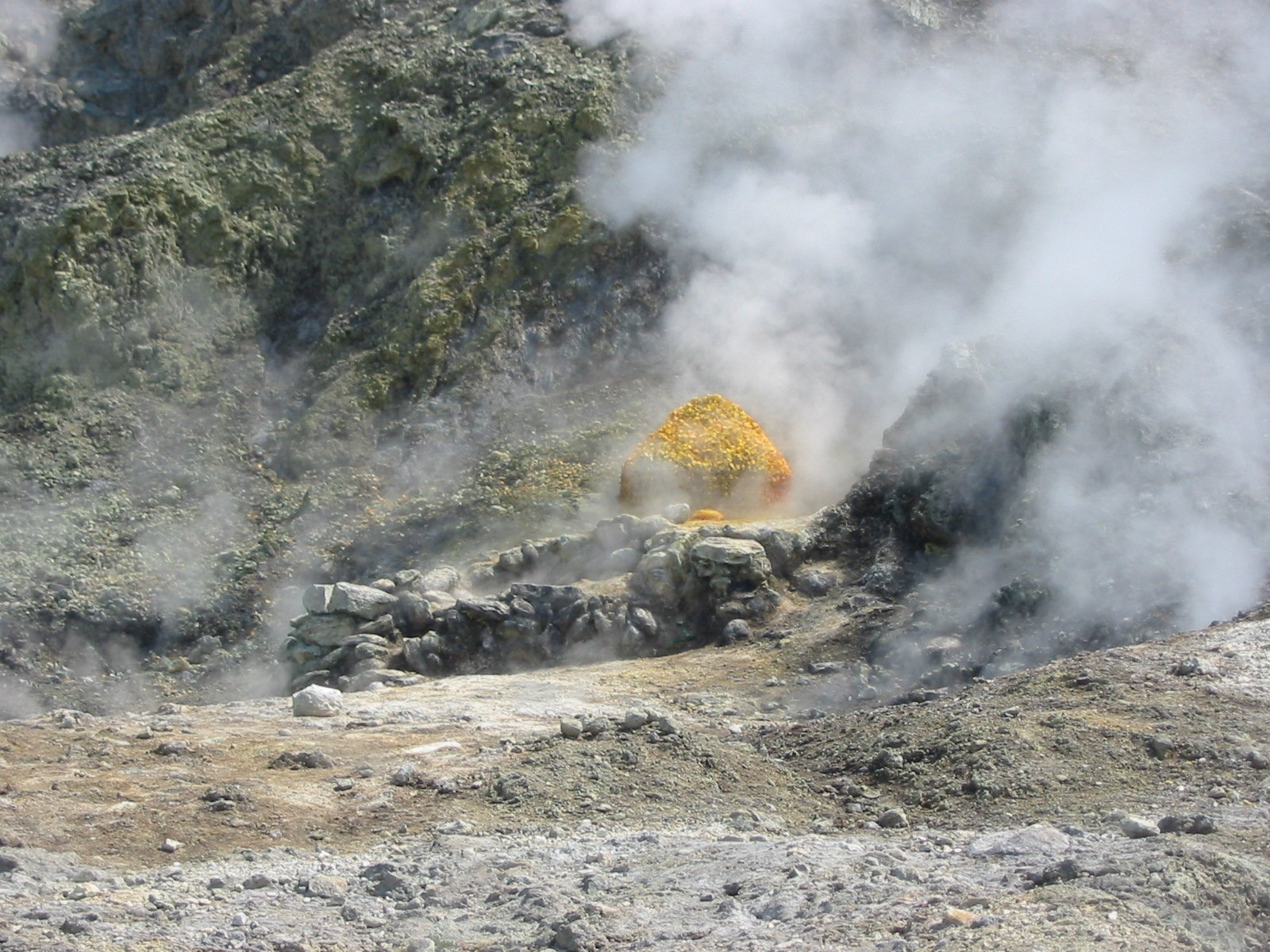
Pozzuoli is a port city just west of Naples, and one of the most geologically strange places in Italy. The entire town sits within the Campi Flegrei — the Phlegraean Fields — a vast volcanic caldera that has been slowly rising and sinking for millennia. The process, called bradyseism, has lifted and submerged the ancient Roman city of Puteoli multiple times; the Macellum of Pozzuoli, the old Roman market building, shows clear marine bore marks halfway up its columns from periods when the floor was completely underwater. Pozzuoli is built on a live volcano, and everyone knows it.
The Roman past is everywhere. The Anfiteatro Flavio is the third-largest Roman amphitheater in Italy after the Colosseum and the one in Capua, with unusually well-preserved underground passages. The Rione Terra is the old rocky promontory where the ancient city was founded, now being slowly excavated to reveal Roman streets beneath the medieval and modern buildings. The Pozzuoli Cathedral, apparently a baroque church, is built directly over the remains of a Roman temple to Augustus.
To the northwest, the volcanic landscape opens up into some of the most dramatic terrain in the region. The Solfatara crater steams and hisses with sulphurous gases. Lake Avernus, a perfectly round volcanic lake, was considered by the Romans to be the entrance to the underworld. Cumae, the first Greek colony in mainland Italy, sits on a cliff above the sea a few kilometres to the west. The whole area can be explored in a full day from Naples, but Pozzuoli also works well as a base in itself — it is less crowded and less expensive than central Naples, with a good fish market and a distinctly local character.