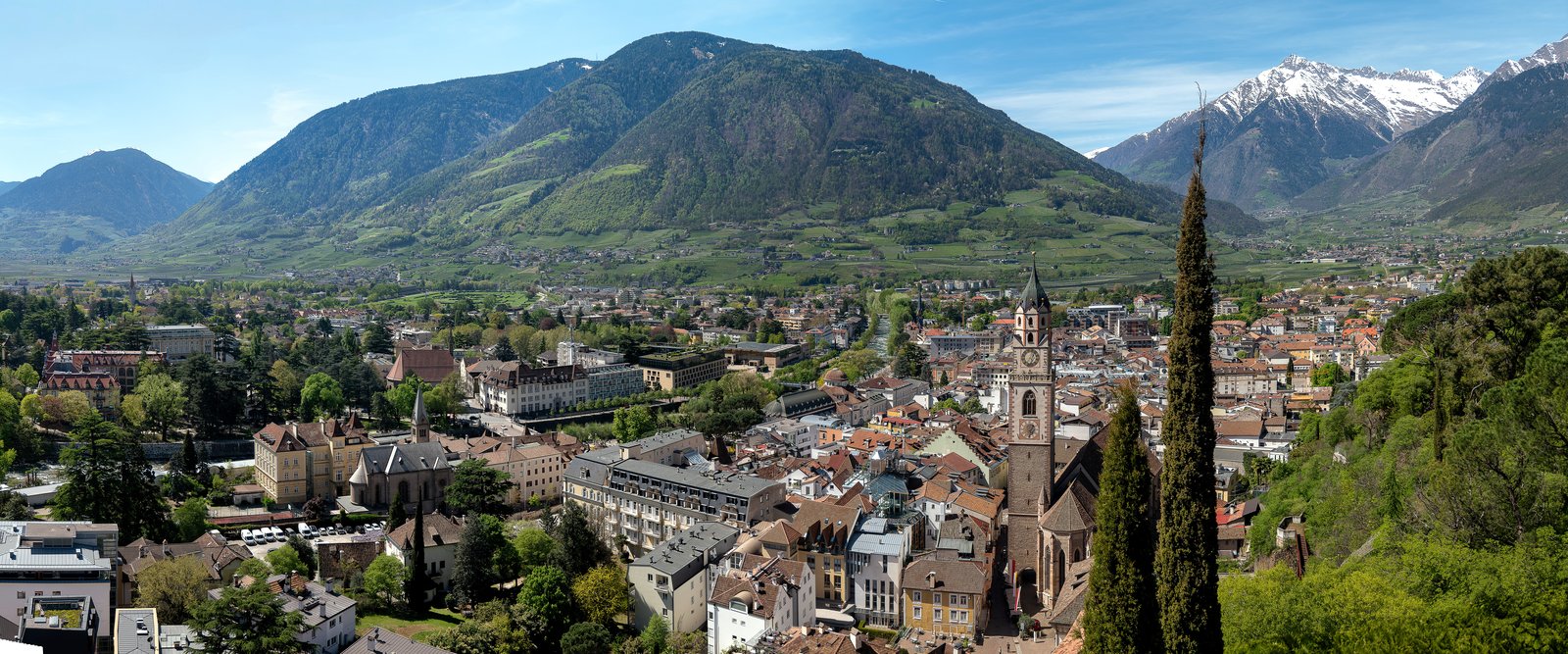
Merano (Meran in German) is a spa town in South Tyrol, nestled in a deep Alpine valley where the Passirio and Adige rivers meet. At under 600 metres of altitude but surrounded by peaks that rise to 3,000 metres, it has an unusually mild microclimate — palm trees and oleander grow in the streets, and the town was a popular winter resort for the European aristocracy in the 19th century. Empress Elisabeth of Austria, known as Sisi, came here to recover from exhaustion in 1870, and her endorsement made the town fashionable.
The Trauttmansdorff Castle Gardens above the town are spectacular — 12 hectares of terraced botanical gardens climbing the hillside, created on the grounds where Sisi stayed. Down in the town centre, the Kurhaus is the focal point of the old spa culture: a grand Belle Époque pavilion on the banks of the Passirio, built in 1874, which now hosts concerts and exhibitions. The riverside promenades — the Passeggiata Lungo Passirio in summer and the covered Passeggiata d'Inverno (Winter Promenade) — are for walking, shopping, and people-watching.
Merano is bilingual in a way that Bolzano is not quite — the German majority and Italian minority coexist here in close proximity, and the signage, menus, and daily life reflect both languages. The food is an interesting blend: Tirolean Knödel and Speck sitting alongside Italian pasta and pizza. The Forst brewery is headquartered just outside town and its beer is ubiquitous in local restaurants. Local wineries produce some good whites from the surrounding Vinschgau and Burggrafenamt valleys.
The town is a good base for hiking in the summer months — the Tappeiner Promenade above the town gives views over the valley, and the mountains around the Merano 2000 ski area are accessible by cable car. In spring, the Easter Market and the Merano Flower Festival bring colour to the town; in November the Christmas market is one of the better ones in South Tyrol.