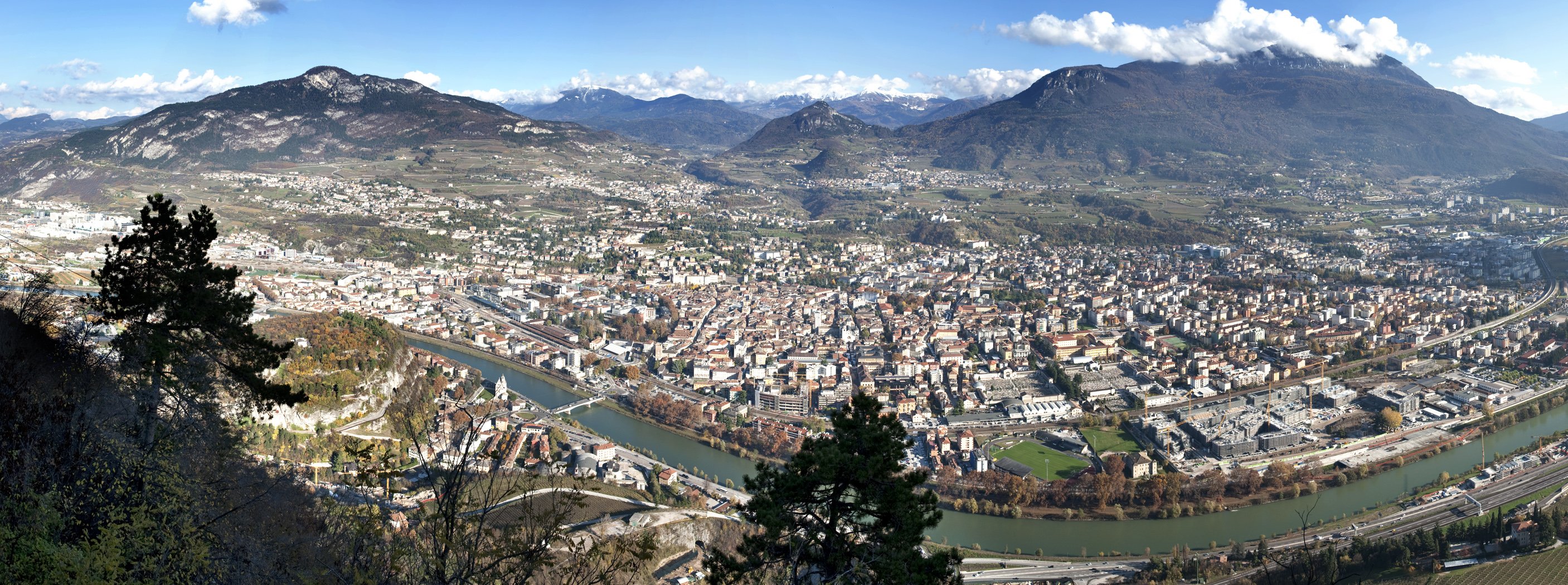
Trento is a prosperous city tucked into the Adige valley in the Italian Alps, with a wealth that comes from farming, wine, and high-tech industry. The town is best known for the Council of Trent (1545–1563), the Catholic Church's marathon response to the Reformation, which met in the Duomo and the Castello del Buonconsiglio over nearly two decades. The castle is now the largest museum in the Trentino region, with medieval art, archaeology, and frescoes — including the spectacular Cycle of the Months in the Torre Aquila.
The historic centre is largely pedestrianised and a pleasure to walk around. The Piazza Duomo anchors the old town, and several streets — most notably Via Belenzani — still carry outdoor Renaissance frescoes on their facades, a distinctive local tradition. Beneath the modern Piazza Cesare Battisti, the SASS underground archaeological space preserves a section of Roman Tridentum. At Easter the surrounding orchards are in bloom with apple blossoms, and the valley scenery is beautiful year-round.
The MUSE, Renzo Piano's stepped science museum, is the city's outstanding modern building — south of the centre in the regenerated Le Albere district, next to the Renaissance Palazzo delle Albere. The MART (Museum of Modern and Contemporary Art), with over 12,000 works including pieces by de Chirico and Severini, has its main venue in nearby Rovereto but maintains a gallery space in Trento. The city sits on the main rail line between Verona and the Brenner Pass, making it an easy stop on the route between Italy and Austria.