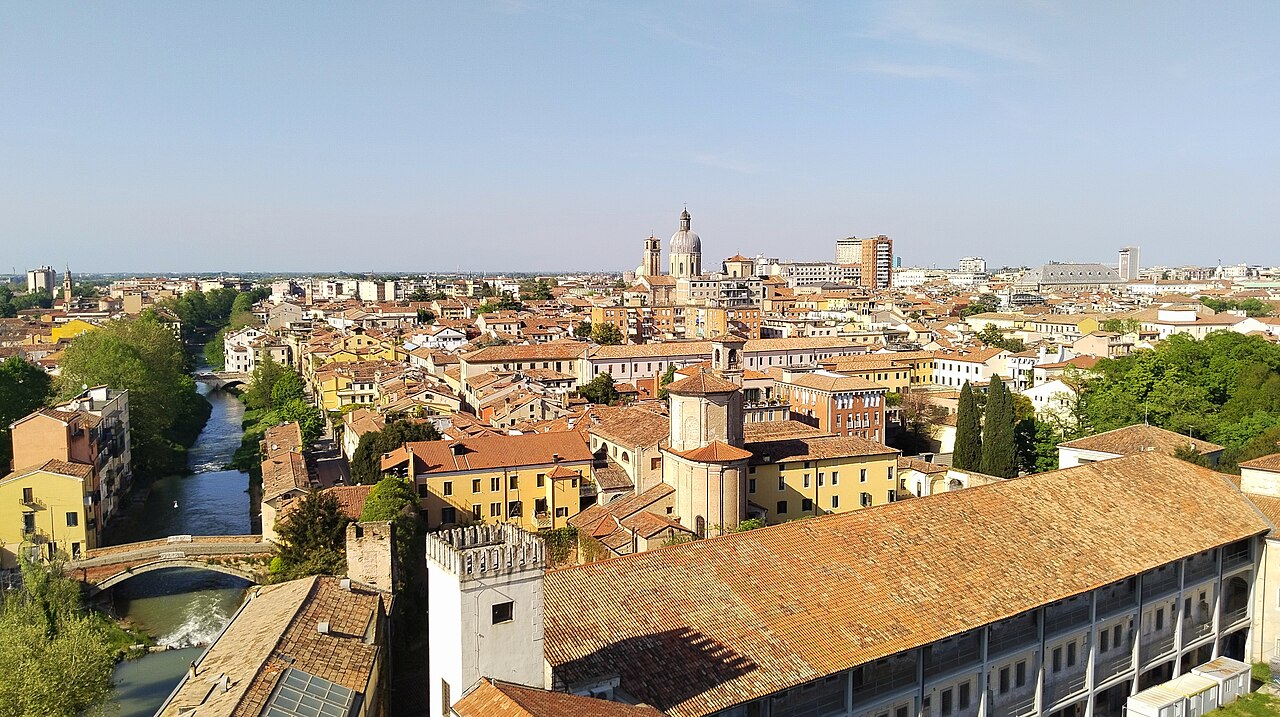
Padua gets overlooked. Visitors to the Veneto rush to Venice and sometimes stop in Verona, but Padua — Padova to the Italians — is where Giotto painted the Scrovegni Chapel, one of the most important works of art in Europe. That alone is worth the detour.
The city has been a centre of learning since 1222, when its university was founded. Galileo taught here for eighteen years. The medical faculty was so advanced that it attracted students from across Europe, and the old anatomical theatre — a steep wooden funnel where students watched dissections — is still intact inside the Palazzo del Bo. The world's oldest academic botanical garden, founded in 1545, is just south of the centre.
Padua is also a pilgrimage city. The Basilica di Sant'Antonio draws millions of visitors each year, drawn by devotion to the saint whose relics rest inside. The basilica itself is an architectural oddity — Romanesque, Gothic, and Byzantine elements piled together with a cluster of domes and minarets that look almost Ottoman from a distance. The square outside is dominated by Donatello's bronze Gattamelata, the first life-size equestrian statue cast in Europe since antiquity.
Beyond the headline sights, Padua is a good city to walk. The Prato della Valle is one of Europe's largest squares, ringed by a canal and statues. The old market squares — Piazza delle Erbe and Piazza della Frutta — are lively every morning, separated by the vast medieval Palazzo della Ragione. Caffè Pedrocchi, open since 1831, was once famous for never closing its doors; intellectuals, students, and conspirators made it their living room.
Padua works as a day trip from Venice, just 25 minutes by train, but it deserves more than that. Stay a night, eat well for half the Venice price, and take your time with Giotto.