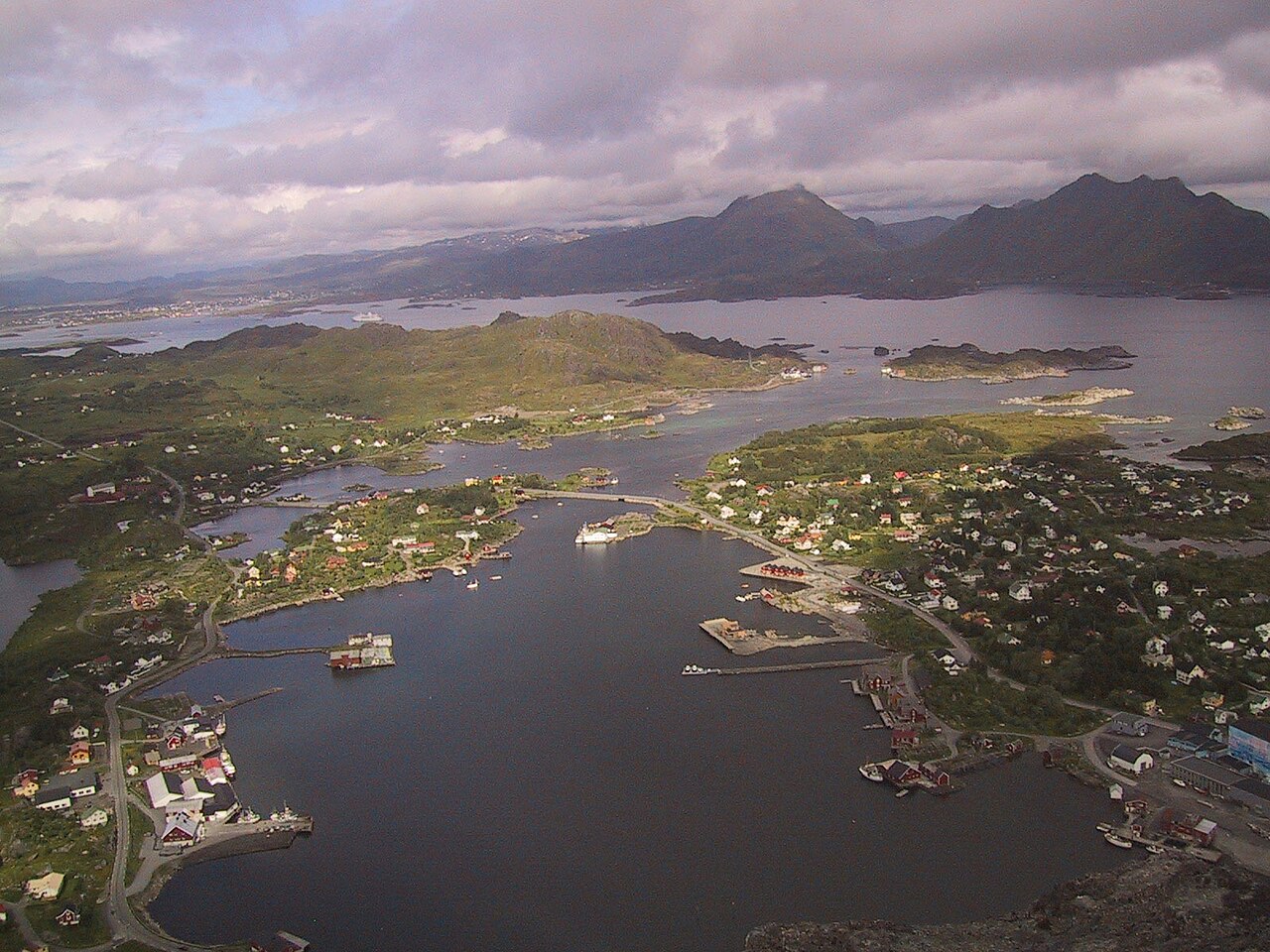
Vestvagoy is the agricultural heart of the Lofoten Islands, a place where steep mountains frame a wide central valley of green farmland — unusual in an archipelago better known for fishing. The island produces some of Norway's best lamb and cheese, and the Vestvagoy dairy is a major producer of butter sold nationwide.
The biggest draw is the Lofotr Viking Museum at Borg, built on the site of the largest Viking Age chieftain's homestead ever excavated in Scandinavia. A full-scale replica of the longhouse has been reconstructed, complete with living quarters and banqueting hall. You can see the original finds, watch demonstrations of Viking-era crafts, and visit the replica Viking ship and boathouse by the water.
The west coast has some of Lofoten's finest beaches. Vik and Haukland are spectacular stretches of white sand backed by mountains — stunning under the midnight sun, dramatic under winter storm clouds. Unstad, reached through a tunnel on the west side, has become a surf destination, with waves big enough to attract serious boarders year-round. The old footpath from Unstad to Eggum along the coast is one of the best short hikes in Lofoten, with views that have attracted European royalty.
Ballstad and Stamsund are the main fishing villages. Both have harbours full of character, traditional fishermen's cabins (rorbuer) available as accommodation, and the Coastal Express calls at Stamsund daily. Leknes, the administrative centre, has practical services — hotel, shops, bakery, cinema — and an airport with daily flights to Bodø. Eggum, a small community beneath tall cliffs, has a beautiful pebble beach and a remarkable outdoor sculpture by Swiss artist Markus Raetz that changes form as you walk around it.