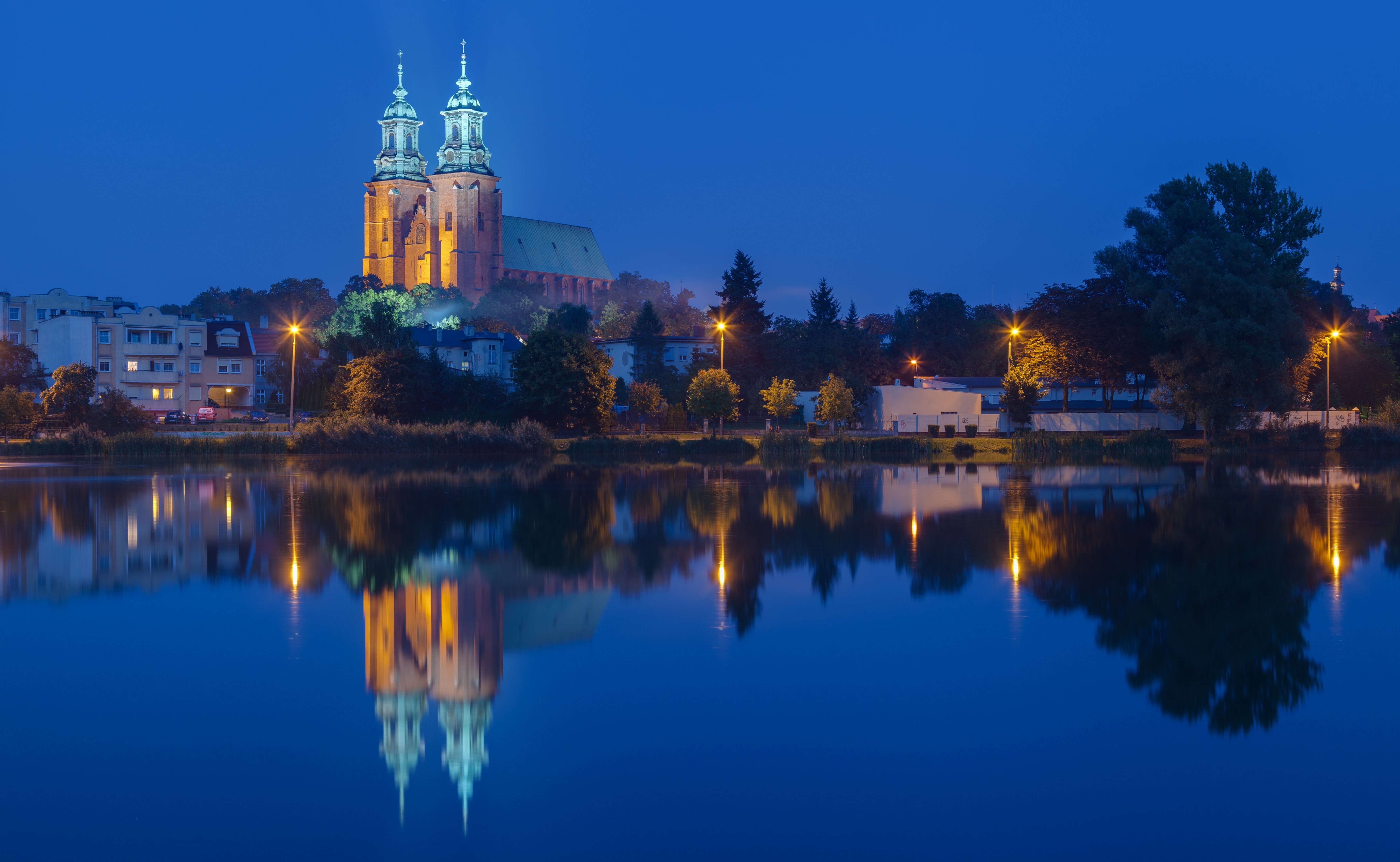
Historic Polish capital east of Poznań, centred on the cathedral and its Romanesque bronze doors.
Gniezno is where Poland began. The country's first historical capital sits on seven low hills about 50 km east of Poznań, and its old town still radiates the quiet gravity of a place that was once the centre of a new kingdom. Duke Mieszko I built his stronghold here in the 10th century, his son Bolesław the Brave was crowned Poland's first king in the cathedral on Lech Hill, and it was here — not Kraków or Warsaw — that the story of Poland started.
The city's greatest treasure is the Romanesque cathedral, home to the bronze Gniezno Doors, a 12th-century masterpiece depicting the life and martyrdom of Saint Adalbert. The doors are one of the finest examples of Romanesque metalwork in Europe, and they draw pilgrims and art historians alike. The adjacent museum hill is compact and walkable, making Gniezno an easy and rewarding day trip from Poznań — though the town deserves an overnight stay if you want to take it at the right pace.
Outside the cathedral district, Gniezno has a pleasant old town market square ringed with colourful facades, a handful of decent restaurants, and a relaxed provincial atmosphere. It doesn't try to compete with Kraków's grandeur; it simply is what it is: the cradle of Poland, well-preserved and undervisited.
Guide
Bars and Cafes
The Rynek has a handful of cafes with outdoor seating in summer, and the atmosphere is low-key and local. You'll find the standard Polish cafe setup: good coffee, cake, maybe a beer in the evening — nothing that demands its own trip, but perfectly agreeable after a morning in the cathedral and museum.
Don't come to Gniezno for nightlife. This is a pilgrimage city and a day-trip destination, not a party town. The evening quiets down early and that's fine — there are worse things than a peaceful square and a beer after a day of history.
Guide
Eating Out
Gniezno's eating scene is modest but genuine. The restaurants around Stary Rynek serve standard Polish fare — żurek, pierogi, kotlet schabowy — at prices that feel reasonable after any time spent in Warsaw or Kraków. Nothing is particularly ambitious, but nothing is bad either. This is a city where people come to see a cathedral and eat lunch, and the restaurants have calibrated themselves accordingly.
A few cafes around the square are good for coffee and cake before or after the cathedral. If you're arriving by train and have a half-day, there's plenty to keep you fed without any prior research or reservations.
Guide
Getting Around
Gniezno is a compact city and the main sights are all walkable from the town centre. The cathedral district on Lech Hill is about ten minutes on foot from the market square. For getting to and from other cities, trains and buses are reliable and cheap.
Railway station
ul. Dworcowa 13 — regular trains to Poznań (around 40 minutes), with connections onwards to Warsaw and other major cities.
Bus station
ul. Dworcowa 15 — regional buses to surrounding towns and villages.
Taxis
Ranks at ul. Dworcowa, ul. Mieszka I, ul. Mickiewicza, ul. Staszica, and ul. Winiary. Radio taxis available on 919 or 426 41 61.
Guide
Getting There
Gniezno is easily reached by train from Poznań — trains run frequently and the journey takes about 40 minutes, making it a comfortable day trip or a quick hop if you're passing through. PKP Intercity also connects Gniezno to Warsaw in around 2.5 hours via Poznań, so it fits neatly into a longer Polish itinerary without requiring a car.
By car, Gniezno is 50 km east of Poznań on the E261/A2 motorway, a straightforward drive. There's no airport in Gniezno itself — the nearest is Poznań Ławica, which handles most international and domestic traffic. From there, the train is by far the easiest option into the city.
Guide
When to Go
April through October is the best window for visiting Gniezno — the old town is pleasant to walk, the cafes put out their terrace furniture, and the cathedral grounds feel alive. June is particularly good: the Lech Fest brings a medieval festival atmosphere to the area around Gniezno Cathedral, with costumed events and craft markets that suit the city's historical character well.
Pilgrims tend to converge in numbers around two key dates: April 23, the feast of Saint Adalbert (Poland's patron), and May 3, the Polish national holiday. If you want the cathedral to yourself, avoid those weekends. Winters are cold and grey, but the cathedral is heated, uncrowded, and arguably more atmospheric when you have it largely to yourself. The bronze doors are equally impressive whether it's June or January.